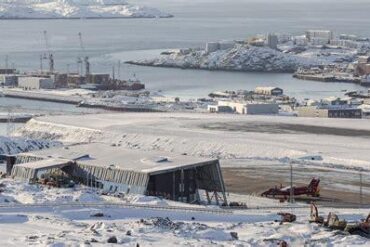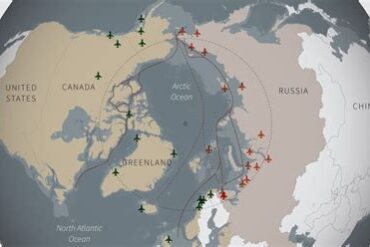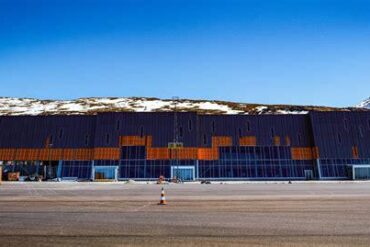
United Airlines’ bold Greenland experiment has stalled. Its nonstop Newark Liberty International Airport (EWR) to Nuuk International Airport (GOH) service, the only scheduled link between the United States and the world’s largest island, carried just 3,709 passengers across 48 flights from June through August 2026. That works out to an average of 77 travelers on a 166-seat Boeing 737 MAX 8, a load factor of 46.5%. More than half of every departure flew empty, and the numbers give Greenland’s new airport a hard lesson: a runway can be built far faster than the ecosystem that sustains travelers once they land.

The Numbers Behind United’s Second Summer
United launched the EWR–GOH route in June 2025, the first nonstop American service to Nuuk, timing it with the opening of the capital’s expanded international terminal in November 2024. That debut summer produced a 54.8% load factor, a modest result that the airline could plausibly call a learning curve. The second summer erased that patience. According to US Department of Transportation T-100 data, demand fell 5.2% year-over-year even as United scheduled 11.6% more capacity. One week of extra flying at the front end of the season pushed June capacity up 50%, and load factor in that month collapsed to 32.8%.
The comparison with United’s wider transatlantic network is brutal. Nuuk’s 46.5% load factor ranked last among the carrier’s European flights by a wide margin, trailing its Washington Dulles (IAD) to Reykjavík Keflavik (KEF) service, which posted 68.2%, by more than twenty percentage points. Routes that launched in the same period performed far better. Newark to Santiago de Compostela reached 73.3%, Newark to Glasgow hit 73.9%, and even a softer Chicago to Reykjavík service managed 74.4%. Nuuk did not simply lose to geography’s harshest route; it lost to every route on the board.
Greenland’s Airport Upgrade Outpaced Its Hotel Beds
Nuuk’s new terminal, built at a reported cost of around $300 million, was designed to double as a tourism engine. The problem is what happens after passengers clear customs. A 2024 capacity analysis commissioned by Visit Greenland counted just 1,039 beds across hotels, apartments, and hostels in and around Nuuk, with roughly 586 hotel rooms and 453 apartment and hostel beds. In peak season, a single 737 MAX 8 can deliver nearly 800 people in a week. The capital’s hotel stock cannot absorb a fraction of that, and room rates of $200 to $400 per night still fail to unlock new supply fast enough.
Greenland Airports has publicly conceded the bottleneck. In explaining lower projected air-traffic revenue, the operator pointed to hotel capacity in both Nuuk and Ilulissat, meaning the very infrastructure the country prioritized with its new airports is being constrained by its shortage of beds. Air Greenland, the national carrier, has likewise named accommodation shortages as a drag on passenger growth. The runway is ready; the hotels are not.

Price, Distance, and a Country Without Intercity Roads
Greenland is not merely remote; it is operationally awkward to tour. The island has no intercity road network, so visitors seeking the ice fjords near Ilulissat or the Norse ruins in the south must book domestic flights or boat passages, with fares commonly $280 to $450 per segment in summer. Visit Greenland’s 2023 market study found that 35% of prospective North American respondents considered the destination too expensive, a figure that helps explain why a Norwegian or Icelandic alternative often wins the family budget. Adding a single beach holiday to a modest trip can make it feel out of reach.
Underneath the cost problem sits an even simpler one: Greenland has only 56,740 residents. United’s European routes lean on business travel, visiting-friends-and-relatives demand, and seasonal émigré flows. Nuuk offers almost none of that year-round base. The flight must live almost entirely on leisure demand concentrated in a short summer window, while the country’s well-established cruise sector intercepts many of the visitors eager to see icebergs without needing a scheduled transatlantic seat.
How the Airline Can Respond
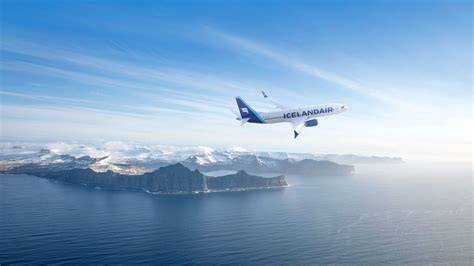
United’s twice-weekly schedule compounds the difficulty. Greenland’s weather is notoriously fickle, and the absence of a second daily frequency leaves passengers with thin rebooking options when fog or wind closes Nuuk. Icelandair, by comparison, feeds Greenland from its Reykjavík hub with greater frequency and reaches four destinations, allowing tourists to pair Greenland with Iceland in one itinerary. On the American side, the exotic-sounding route may also suffer from a perception problem: one weekly crossing requires a connection and a long domestic hop, which often pushes travelers toward a packaged tour instead.
The demand picture has been further muddied by geopolitics. President Donald Trump’s renewed interest in acquiring Greenland dominated headlines during the late 2025 and early 2026 booking window, an unwelcome distraction for a destination trying to sell itself on nature rather than sovereignty. Tour operators reported a split verdict: Aurora Reizen saw bookings fall 20-30%, Polar Routes noted a 20% decline followed by a rebound in inquiries, while Intrepid Travel recorded Greenland searches up 93% and Air Greenland reported rising interest from U.S., U.K., and German travelers. The confetti of attention did not reliably convert into booked seats.
New Airports, a Higher Fee, and the 2027 Test
Greenland is not standing still. International airports have now opened at Qaqortoq and Ilulissat, which should eventually spread visitors beyond the capital and reduce dependence on costly domestic hops. But one policy move cuts directly against that hope. From January 1, 2027, Greenland Airports will more than double its summer international passenger fee to DKK 1,182 ($171), and the operator’s own justification is that revenue has come in lower than planned, partly because hotel capacity in Nuuk and Ilulissat remains the limiting factor. Hiking the cost of arrival to patch a shortfall is a difficult message for a destination that already struggles to look affordable.
United has reportedly kept the EWR–GOH service in its 2027 schedule, which gives the route a third chance. Real improvement, however, will not arrive from marketing alone. It requires more beds, a cheaper way around the island, and plausible shoulder-season demand that does not depend on summer weather. Until Greenland can house, move, and affordably host the travelers United brings, the carrier’s Arctic nonstop will remain a proud symbol of connectivity that still flies with more empty seats than filled ones.