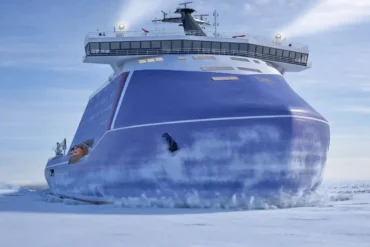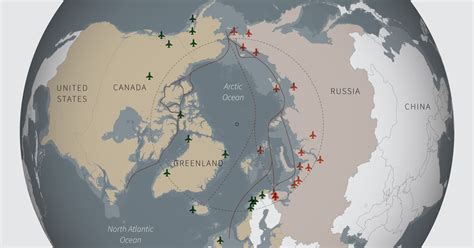
The Arctic has long been portrayed as a frozen backwater of global politics, a place of ice sheets, research vessels, and patient submarines sliding silently beneath the polar cap. That illusion is cracking. Greenland—remote, vast, and strategically priceless—has abruptly become a focal point of geopolitical signaling, and Ukraine has inserted itself into that conversation with a statement designed to echo far beyond the ice.
Ukrainian President Volodymyr Zelenskyy’s declaration that Ukraine could “sink Russian warships near Greenland just as they do near Crimea” was not rhetorical excess. It was a calculated reminder that Kyiv has already rewritten the rules of naval warfare once—and could do so again under the right political conditions. The caveat was deliberate and sharp: if Ukraine were part of NATO.
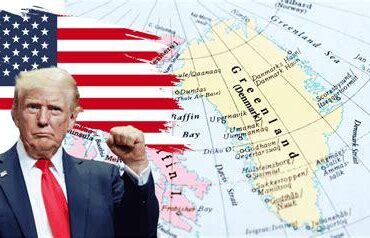
This was not a threat launched into a vacuum. It came amid renewed Western anxiety over Arctic security, long-standing NATO frustrations with Denmark’s limited military reach in Greenland, and months of speculation fueled by U.S. President Donald Trump’s comments about Russian and Chinese activity in the High North. Zelenskyy’s message was aimed less at Moscow than at Western capitals still debating whether Ukraine is a liability—or a force multiplier.
The Arctic, it seems, has entered the age of asymmetric warfare.
By the time Zelenskyy spoke at the World Economic Forum in Davos, the immediate drama around Greenland had already cooled. Trump had publicly stepped back from confrontational rhetoric after discussions with NATO Secretary-General Mark Rutte, emphasizing diplomacy over force and unveiling a framework for Arctic security cooperation. Yet Ukraine’s intervention reframed the entire debate. Instead of asking who controls Greenland, Kyiv posed a different question: who is capable of defending it in the modern era?
Ukraine’s answer was unambiguous.
Greenland’s Strategic Gravity in a Warming Arctic
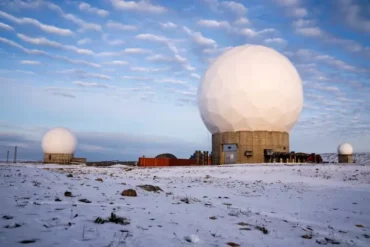
Greenland’s importance is no longer theoretical. As Arctic ice retreats, new maritime corridors are opening, shortening transit routes between Europe, Asia, and North America. Beneath the ice lies access to rare earth minerals, energy reserves, and undersea cables critical to global communications. Militarily, Greenland anchors the northern flank of NATO, hosting early-warning radar systems essential for missile defense and space surveillance.
For decades, NATO has quietly pressed Denmark to strengthen its Arctic posture. The problem has never been intent but capability. Greenland’s sheer scale—larger than Western Europe—renders traditional naval patrols inefficient and exorbitantly expensive. Russian activity, though limited, has exploited that reality, maintaining research vessels, submarines, and long-range aviation patrols that test NATO’s situational awareness without crossing red lines.
Trump’s earlier remarks accusing Denmark of failing to address Russian threats were blunt but not novel. What changed was Ukraine’s offer. Zelenskyy did not promise aircraft carriers or destroyers. He offered something far more unsettling to traditional navies: cheap, precise, deniable lethality.
Ukraine’s Black Sea Campaign: Proof, Not Theory
Ukraine’s credibility rests on what it has already done in the Black Sea. Without a conventional navy, Kyiv systematically dismantled the Russian Black Sea Fleet’s operational freedom, forcing Moscow to withdraw high-value warships from Crimea and Novorossiysk. The sinking of the Moskva, Russia’s flagship cruiser, was only the opening chapter.
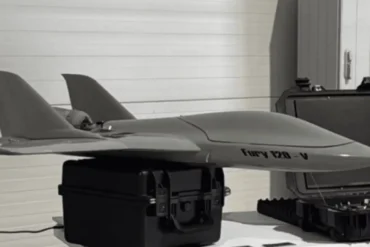
The real revolution came with unmanned surface vessels, or USVs—small, fast, and increasingly intelligent naval drones that cost a fraction of a single missile interceptor. Platforms such as the Magura V5, Magura V7, and Sea Baby evolved from explosive boats into modular weapons systems capable of reconnaissance, electronic warfare, missile launches, and drone deployment.
These USVs transformed the maritime battlefield into a distributed kill zone. By 2024, Ukraine had begun mounting R-60 and R-73 infrared-guided missiles on drone boats, enabling them to engage helicopters and aircraft without traditional targeting systems. On December 31, 2024, a Magura V5 shot down a Russian Mi-8 helicopter—an event that stunned naval planners worldwide.
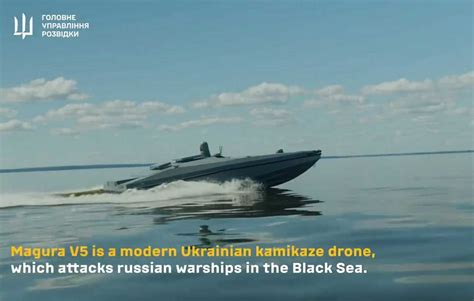
By 2025, Ukraine pushed the envelope even further. Extended-range drone boats capable of traveling 1,700 kilometers allowed strikes deep into Russian-controlled waters. Some variants functioned as floating motherships, launching FPV drones against air defenses and missile sites. In May 2025, a Magura V7 armed with AIM-9X Sidewinder missiles downed a Russian Su-30SM fighter jet—an unprecedented moment in naval and aviation history.
The capstone came later that year, when Ukraine reportedly used an underwater drone—the Sub Sea Baby—to strike a Russian Improved Kilo-class submarine in Novorossiysk. Whether fully confirmed or not, the message was unmistakable: no naval platform was safe.
Why Greenland Changes the Equation
Transposing this model to the Arctic is not as implausible as it sounds. The Arctic favors stealth, range, and persistence over sheer tonnage. Large warships are constrained by ice, weather, and logistics. Unmanned systems thrive there. A small number of long-range USVs, supported by satellite guidance and dispersed launch points, could deny access to vast maritime zones without maintaining a visible fleet.
Ukraine’s claim was not that Russian warships are currently swarming Greenland. Denmark’s Joint Arctic Command has been clear that no immediate Russian or Chinese naval presence threatens the island. The nearest Russian research vessel was hundreds of nautical miles away. Zelenskyy’s point was preemptive, not reactive.
He was signaling capability in advance of crisis.
This is where NATO enters the frame. Ukraine has argued for years that its battlefield experience strengthens the alliance. Western skepticism has focused on escalation risks and political commitments. By tying Arctic defense to NATO membership, Kyiv reframed accession as a net security gain, not a burden.
NATO, Neutrality, and the Politics of Exclusion
Russia’s invasion of Ukraine was partly justified by Moscow as a response to NATO expansion. Vladimir Putin has repeatedly insisted that Ukraine must remain neutral, framing the alliance’s eastward growth as an existential threat. Ironically, Russia’s actions have accelerated NATO’s northern expansion, with Finland and Sweden joining precisely because neutrality no longer guarantees safety.
Yet Ukraine remains outside the door. U.S. officials, including Secretary of War Pete Hegseth, have publicly called Ukrainian NATO membership unrealistic as part of a negotiated settlement. Trump himself reiterated after his Alaska summit with Putin that Ukraine would not enter NATO under a peace deal.
Zelenskyy’s Arctic statement challenged that logic without directly confronting it. If Ukraine can deliver strategic effects that NATO members struggle to achieve—at minimal cost and risk—then the alliance’s reluctance begins to look less strategic and more political.
Asymmetric Warfare as Strategic Currency
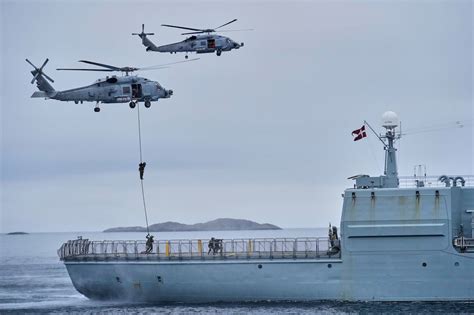
Ukraine’s greatest export is no longer grain or steel. It is operational innovation. Kyiv has demonstrated how a state under siege can neutralize a superior navy through adaptability, software-driven warfare, and relentless experimentation. These are precisely the capabilities NATO needs in the Arctic, where traditional force projection is inefficient and visibility is limited.
The implication is subtle but powerful. Ukraine does not need aircraft carriers to matter in the Arctic. It needs access, coordination, and political legitimacy. NATO, in turn, gains a partner that has already stress-tested the future of naval combat against a peer adversary.
Whether that partnership materializes remains uncertain. Greenland’s immediate security environment is calm, and Trump’s de-escalation rhetoric suggests a preference for managed competition rather than confrontation. But the strategic landscape has shifted. The Arctic is no longer insulated from the wars of the south.
Ukraine has made sure of that.
In a world where cheap drones can sink billion-dollar ships, geography offers no sanctuary. Greenland’s ice may still be thick, but the assumptions that once protected it are melting fast.