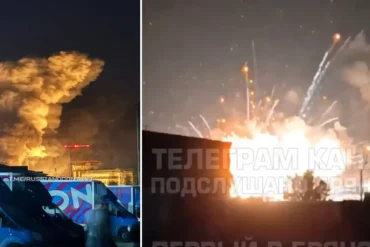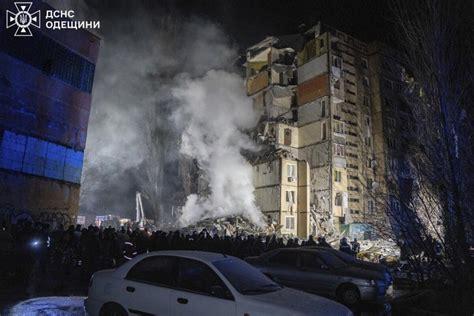
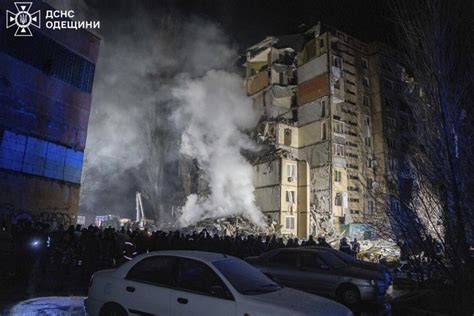
In the early hours of Saturday, the city of Odesa once again bore the brunt of Russia’s intensifying drone warfare, as an unmanned aerial vehicle slammed into a residential high-rise, killing two civilians and injuring at least 17 others, including three children. This latest assault underscores the devastating human toll of a conflict that, now in its fourth year, is increasingly defined by asymmetric warfare and drone-based technology.
The victims were a married couple, whose lives were claimed when the drone exploded on impact, destroying multiple floors of the building and triggering a massive rescue operation. Emergency crews rushed to the scene, battling debris and fires to extract residents trapped amid the wreckage. Ukrainian officials confirmed that the drone strike directly damaged three floors of the structure, leading to chaos and panic in the densely populated port city.
Russia’s Relentless Aerial Assault on Odesa
The southern port city of Odesa, historically a hub of maritime trade and cultural significance, has become a frequent target in Russia’s drone and missile campaigns. With its strategic location on the Black Sea, Odesa holds immense symbolic and tactical value. Moscow’s latest drone offensive fits into a pattern of attempting to cripple Ukrainian port infrastructure, civilian morale, and key logistical routes.
Ukrainian officials reported that the drone in question was part of a larger barrage of unmanned systems deployed overnight. Russia’s Defense Ministry later claimed that over 40 Ukrainian drones were shot down over western Russia and Crimea, but offered no commentary on the Odesa strike, maintaining its usual silence on civilian casualties caused by its own operations.
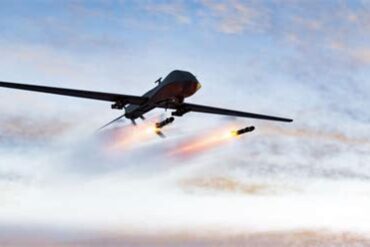
While exact details about the type of drone used in the Odesa attack remain undisclosed, analysts suggest the weapon may have been a Shahed-type kamikaze drone, widely used by Russian forces and known for its ability to deliver precise strikes against urban targets.
Devastation in Crimea: Ukraine Strikes Back
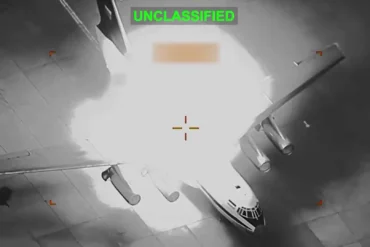
Even as Odesa mourned its losses, Ukrainian forces struck a devastating blow against Russian military assets in Crimea, targeting the Kirovske military airfield with a precision drone operation. According to a Ukrainian security official, speaking under condition of anonymity, Ukrainian drones destroyed a range of high-value assets including Mi-8, Mi-26, and Mi-28 helicopters, along with a Pantsir-S1 self-propelled anti-aircraft missile and gun system.
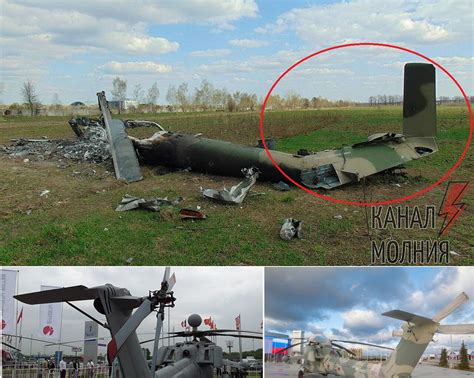
The Kirovske base, located in the Russian-occupied eastern part of Crimea, has long been considered a strategic hub for rotary-wing operations and air defense systems. The elimination of multiple multi-purpose and attack helicopters significantly hampers Russian aerial mobility in the region. The Pantsir-S1 system, often used to intercept aerial threats, being neutralized highlights the growing precision and stealth of Ukrainian drone capabilities.
This operation is part of Kyiv’s increasingly bold strategy to strike deep within occupied territories, often using low-cost, high-impact drones. The objective is twofold: degrade Russian operational capacity and send a clear message that even heavily fortified regions like Crimea are no longer beyond reach.
The Drone War: Ukraine’s Tactical Shift
Ukraine’s drone operations have evolved from mere reconnaissance to strategic deep-strike capabilities. Recent months have witnessed a dramatic escalation in Kyiv’s use of unmanned systems, both in occupied areas and inside Russian territory. At the start of June, Ukrainian drones managed to inflict severe damage on Moscow’s strategic bomber fleet, reportedly damaging or destroying nearly a third of its aircraft.
This latest strike in Crimea reaffirms that trend, illustrating how drones—once peripheral tools—have become central to Ukraine’s battlefield doctrine. Kyiv has leaned heavily into asymmetric warfare, using inexpensive drones modified for combat roles to erode Russian air superiority and logistical coherence. These drones have the added advantage of anonymity and deniability, often allowing Kyiv to maintain operational ambiguity.
Civilian Toll: The Human Cost of Drone Warfare
According to the U.N. Human Rights Monitoring Mission in Ukraine, drone attacks—particularly short-range ones—have claimed the lives of at least 395 civilians and injured 2,635 since the war began in February 2022. A staggering 90% of these casualties have been attributed to Russian forces. The monitoring body further noted that indiscriminate use of drones in urban areas, such as the Odesa incident, often leads to disproportionate civilian suffering.
The overall civilian toll of the war is nothing short of catastrophic. The U.N. Office of the High Commissioner for Human Rights stated in a June 11 report that more than 13,300 civilians have been killed and over 34,700 injured as a result of hostilities since the Russian invasion. The shift toward drone warfare, while technologically advanced, has not mitigated the war’s brutal impact on the civilian population—in many cases, it has intensified it.
Strategic Implications: The Battle for the Skies
The incidents in Odesa and Crimea offer stark insight into the broader strategic dynamics of the war. Both Russia and Ukraine are heavily investing in unmanned aerial technologies, seeking to outpace each other in a rapidly evolving domain. Drones have become more than tools; they are symbols of adaptability and modern warfare.
For Russia, drone strikes on cities like Odesa are designed to instill fear, disrupt daily life, and undermine Ukrainian resistance. These attacks are often timed to coincide with broader offensives or diplomatic events, aiming to sway public opinion and apply psychological pressure. Meanwhile, Ukraine’s retaliatory strikes aim to degrade critical Russian assets and push the battlefield further into occupied and hostile territory.
The destruction of helicopters in Crimea is particularly significant. Rotary-wing aircraft are essential for troop movement, resupply missions, and close air support. Their loss could limit Russia’s ability to reinforce positions in southern Ukraine, especially in contested regions like Kherson and Zaporizhzhia.
Children Among the Wounded: Psychological Warfare and Trauma
The fact that three children were injured in the Odesa drone strike serves as a tragic reminder of the war’s indiscriminate reach. Images from the scene show emergency workers carrying bloodied children wrapped in blankets, their faces marked by fear and confusion. These are not isolated incidents; across Ukraine, thousands of children have been traumatized by the sounds of drones overhead and the explosions that follow.
According to UNICEF, over 1.5 million Ukrainian children are at risk of psychological distress stemming from exposure to conflict. In war zones, drones often create an ever-present sense of danger, hovering just out of sight but never out of mind. Their buzzing engine noise, once a technological marvel, now represents a death knell in many communities.
Russia’s Response and Information Control
Despite the scale of destruction reported in Crimea, the Kremlin has yet to issue an official statement on the airfield attack. Russian media, tightly controlled and heavily censored, rarely acknowledges Ukrainian successes. Instead, the Ministry of Defense chose to highlight its own alleged success in intercepting Ukrainian drones, a narrative designed to reassure domestic audiences and maintain morale among military personnel.
This information asymmetry highlights a key front in the war: propaganda and perception management. By controlling what is acknowledged and what is denied, both sides shape internal narratives. For Ukraine, broadcasting the success of the Kirovske strike is as much about morale as it is about military efficacy. For Russia, silence can serve to delay acknowledgment, minimize embarrassment, and forestall domestic scrutiny.
Conclusion: A Conflict Defined by Drones and Determination
Saturday’s dual incidents in Odesa and Crimea encapsulate the war’s current phase: one where the skies are as dangerous as the front lines. The civilian tragedy in Odesa underscores the human suffering wrought by indiscriminate drone use, while the strike on Kirovske airfield represents a high-profile tactical victory for Ukraine in its battle to reclaim lost territory.
As both nations double down on drone development, deployment, and defense, the war is likely to become even more reliant on automated systems and remote-controlled precision strikes. In such a conflict, civilians remain the most vulnerable, caught between invisible enemies and technological advancements that, for all their precision, often miss the mark of humanity.
Ukraine’s resilience in the face of loss, and its determination to counter-strike even as cities burn, defines the nation’s narrative. But the cost—paid in lives lost, children wounded, and cities shattered—is a price that no amount of tactical gains can truly justify.