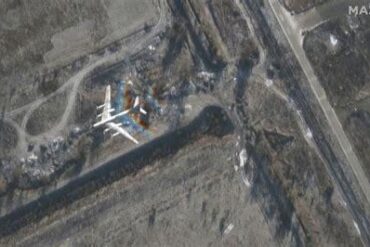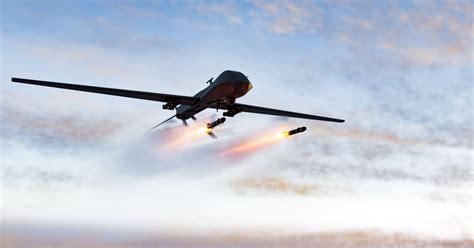
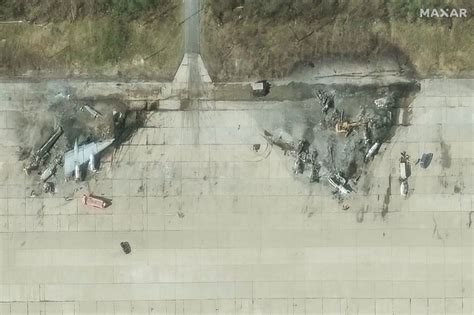
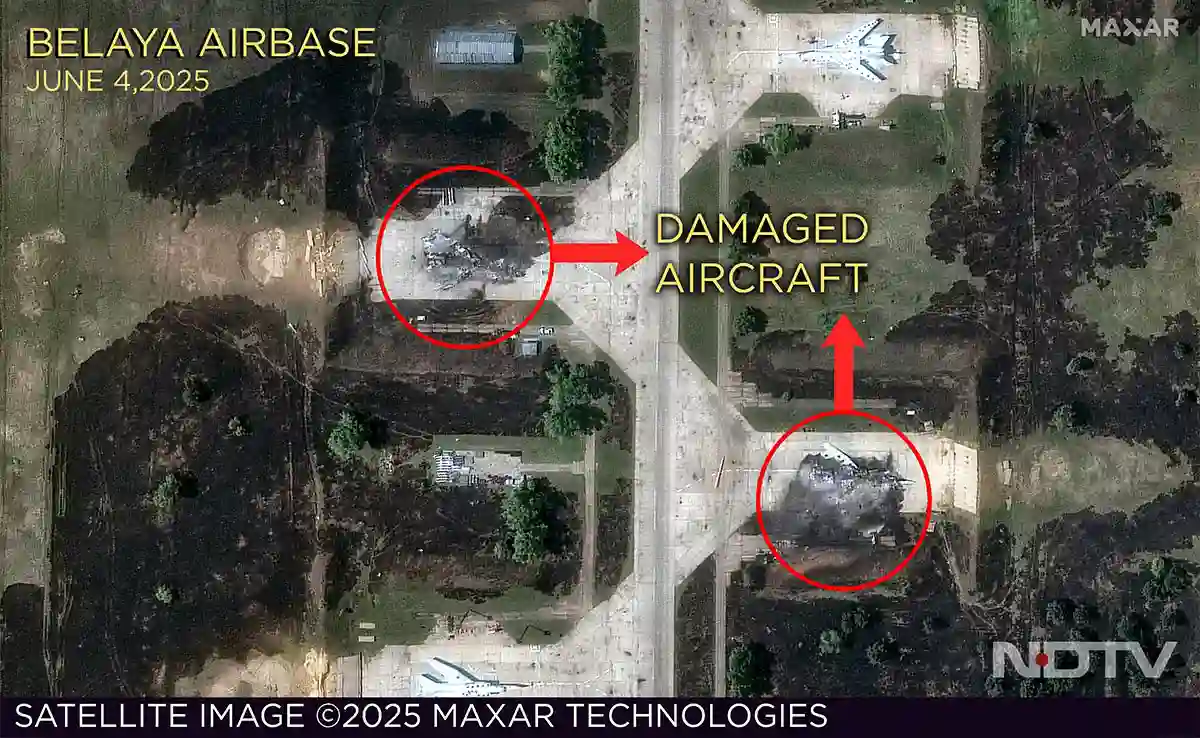
Ukraine’s bold drone attack on multiple Russian airbases has reignited global interest in the future of modern warfare. Dubbed Operation Spider’s Web, the meticulously coordinated mission reportedly destroyed or damaged numerous Russian strategic bombers, including Tu-95 and Tu-22 aircraft. Ukrainian officials claimed the destruction of aircraft valued at more than $7 billion, marking what many hailed as a significant blow to Moscow’s military capabilities. However, Russian sources and defense analysts dispute this assessment, raising critical questions about the actual scale of destruction and the operational value of the aircraft targeted.
The Anatomy of a Shock Strike: Inside Operation Spider’s Web
The Ukrainian drone assault, orchestrated by the Security Service of Ukraine (SBU) under the leadership of Vasyl Malyuk, was the product of 18 months of clandestine planning. Involving 117 drones launched from trucks covertly stationed inside Russian territory, the operation showcased a level of tactical deception and innovation rarely seen in conventional military engagements. These drones, often equipped with low radar signatures and stealth flight patterns, successfully reached deep into Russian territory, striking airbases located in Siberia and the Kola Peninsula—regions previously considered untouchable.
The successful navigation and coordinated strikes by these drones underscore a new chapter in asymmetric warfare, one where relatively low-cost and disposable platforms can wreak havoc on high-value assets. According to Ukrainian President Volodymyr Zelensky, all operatives involved in the mission have returned safely, further punctuating the mission’s operational success.
Strategic Bombers Targeted: Tu-95 and Tu-22 in the Crosshairs
Kyiv’s official narrative emphasized the targeting of Russia’s Tu-95MS and Tu-22M3 strategic bombers, aircraft designed during the Cold War for long-range nuclear and conventional missions. These planes form a critical part of Russia’s nuclear triad, capable of launching cruise missiles from distances well beyond Ukraine’s borders. Destroying even a handful of these bombers could theoretically constrain Russia’s ability to carry out long-range strikes and undermine its nuclear deterrent posture.
Military researcher Yohann Michel from France’s Lyon-3 University called the losses “a serious blow to Russian offensive capabilities,” noting that the Soviet-era aircraft are no longer in production. Spare parts are scarce, making repairs slow and difficult. According to Maxim Starchak of Queen’s University in Canada, Russia’s slow and inefficient aircraft production pipeline means any replacement effort will take years, not months.
The Counter-Narrative: Russian Sources Claim ‘Mostly Scrap’ Was Hit
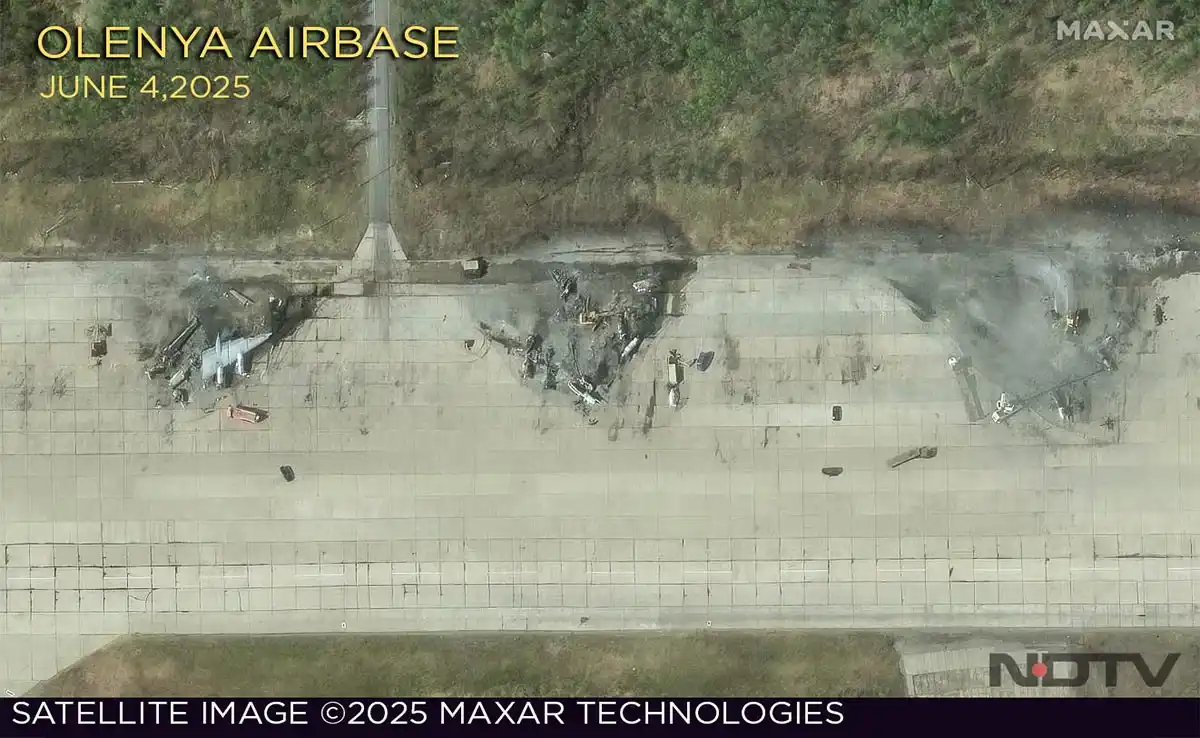
Despite Ukraine’s triumphalist tone, several Russian commentators and Western skeptics challenge the extent of the reported damage. Former IAF pilot and Russian military observer Vijainder TK Thakur suggests that Ukraine may have been misled by its own assumptions. He asserts that a majority of the bombers hit were likely decommissioned airframes, often referred to as “Christmas Trees“—aircraft stripped for parts and long out of service.
Footage released by Ukraine itself depicts several strikes on what appear to be non-operational aircraft, some lacking engines or fluid systems. The absence of fires or explosions—common with active aircraft holding fuel or hydraulic fluid—further undermines claims of hitting fully operational bombers. Russian Telegram channel FighterBomber, closely aligned with the Kremlin, echoed this, saying: “You could have attacked monuments with the same effect.”
This discrepancy raises the critical question: Was Ukraine’s drone operation a tactical masterstroke or an elaborate display of pyrotechnics on derelict hardware?
Technological Evolution: Drones, AI, and Asymmetric Warfare
Regardless of the actual tally of destroyed assets, the operation has rattled defense strategists worldwide. The use of small, truck-launched drones able to penetrate deep into Russian airspace illustrates how conventional air defense systems are struggling to adapt. Former CIA officer Michael Shurkin likened the threat to stealth technology—”emerging near the target and too small and low to be picked up by radar systems.”
Adding a futuristic dimension to this scenario, a French defense industry executive hinted that Ukraine may have leveraged AI algorithms to recognize and target aircraft, potentially mitigating jamming and deception techniques. If true, this indicates a significant leap in automated targeting and drone swarm coordination.
Strategic Implications for Russia’s Nuclear Triad
The symbolic and psychological value of this operation is indisputable. By demonstrating the vulnerability of high-value assets deep within Russian territory, Ukraine has upended assumptions about strategic depth and airbase security. The implications go beyond bomber fleets. As Maxim Starchak warned, if strategic airbases can be hit, so too can nuclear submarine bases, missile silos, and other vital nodes in Russia’s deterrent infrastructure.
This exposure threatens to undermine the credibility of Russia’s nuclear triad, potentially forcing a doctrinal shift in how Moscow conceives of its second-strike capability. The conventional wisdom that vast geography guarantees protection has been shattered. Monitoring vast swaths of Russian hinterland is not just impractical—it may be impossible.
Geopolitical Reverberations and the Road Ahead
The strike’s global resonance has not gone unnoticed in diplomatic circles. John Herbst of the Atlantic Council’s Eurasia Center framed the operation as a powerful counter to the narrative that Russia holds the upper hand. He suggested that Ukraine’s ability to launch such a bold and disruptive strike gives Western leaders, particularly in the United States, new diplomatic leverage in engaging with Moscow.
This success, or perceived success, comes at a pivotal moment. With frontline combat slowing into attritional warfare and both sides digging in, asymmetric operations like Spider’s Web serve to reshape the strategic landscape without escalating to full-scale confrontation.
Russia’s Military Posture and Base Security in Question
In the aftermath of the attacks, questions abound about the state of Russia’s base security protocols. The drone strikes revealed that aircraft dispersal strategies and perimeter defenses may be inadequate for modern threats. Even as Russia attempted to park aircraft across various fields to avoid clustering, the drones struck multiple sites with impunity.
The Russian Defense Ministry has yet to produce comprehensive damage reports, but unofficial admissions from aligned sources concede that “quite a few” aircraft did burn. However, they maintain that long-range aviation did not suffer critical losses, though caution that repeated strikes of this nature could change that equation dramatically.
The Psychological Dimension: Morale and Perception
For Ukraine, even a partial success is a morale-boosting achievement. In a war defined by grinding trench battles and punishing artillery exchanges, the ability to project force far behind enemy lines is symbolically potent. It restores agency to Kyiv’s strategic planners and proves to both domestic and international audiences that Ukraine can still deliver unexpected, high-impact blows.
Conversely, for Russia, the optics of the strikes are damaging. Footage showing drones hitting aircraft at multiple bases—no matter their actual value—exposes vulnerabilities in Russia’s ability to secure its own territory. Whether these aircraft were operational or scrap, the fact that drones could penetrate and strike them remains deeply embarrassing for the Kremlin.
Conclusion: Symbolism, Strategy, and the Future of Warfare
The Ukrainian drone assault on Russian airbases straddles the line between psychological warfare and tangible military success. While the true scale of damage remains hotly debated, the strategic, technological, and symbolic ramifications are profound. The operation signals a transformative moment in the evolution of drone warfare, with implications that extend far beyond the Ukrainian battlefield.
As both sides reassess their doctrines and defenses, one fact remains clear: the rules of war have changed, and they will not revert. Whether it was a calculated strike on billion-dollar assets or a fiery light show on decommissioned hulks, Spider’s Web will be studied, emulated, and feared for years to come.