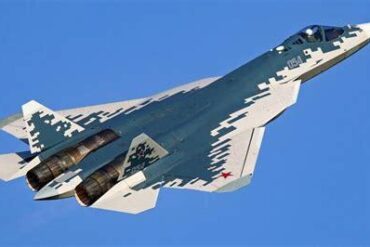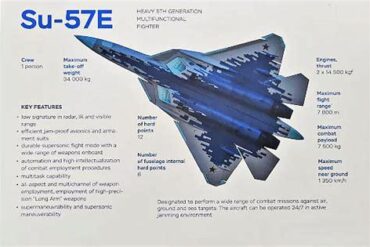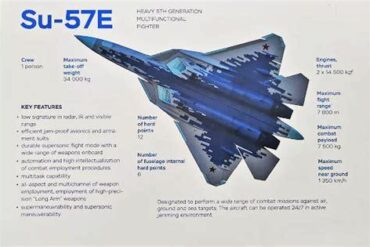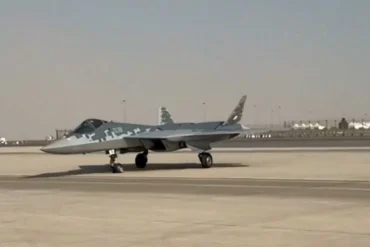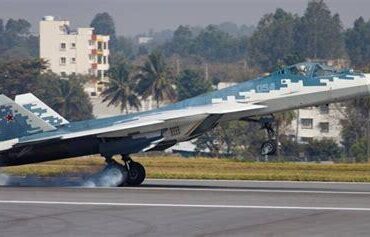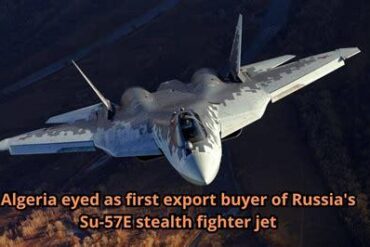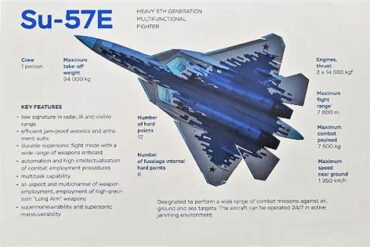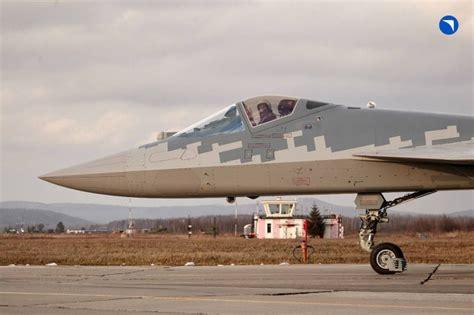
In recent days, reports about Russia offering the Su-57E stealth fighter to India — complete with access to its source codes — have made headlines, reigniting debate about the feasibility, credibility, and long-term value of such a deal. While the offer might seem attractive on paper, deeper analysis reveals it to be not only strategically questionable but logistically implausible. The reality behind Russia’s fifth-generation fighter and its internal state of defense affairs paints a bleak picture.
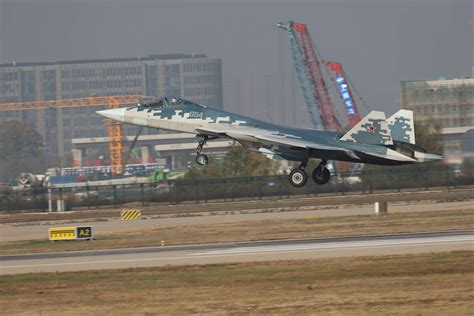
The Su-57’s Software: A Flawed and Incomplete Foundation
One of the most jarring aspects of this purported offer is the claim that Russia is ready to hand over source codes to India. At first glance, that seems like a groundbreaking gesture of trust. But what exactly is Russia offering? The truth is grim: Russia’s United Aircraft Corporation (UAC), controlled by the Kremlin, has a long history of locking foreign partners out of its research and development ecosystem — by law. No international party has ever had open access to Russian fighter development programs. Even India, which co-developed the Su-30MKI, has long struggled with opacity and bureaucratic resistance.
Adding to that, the Su-57’s sensor fusion and avionics software are nowhere near mature. Over the last five years, Russian engineers have scrapped and restarted development on the aircraft’s sensor-integration software not once, but three times. The first two versions completely failed to function reliably. The third attempt is ongoing amid war-driven resource constraints. Any promise of delivering “source codes” would be tantamount to offering a half-finished, barely functioning prototype with an unstable backbone.
The Mirage of Stealth and Armament Capabilities
Russia’s claims of the Su-57’s stealth capabilities are severely overstated. The aircraft’s design remains plagued by incomplete R&D across multiple domains: rear fuselage shaping, engine integration, stealth skin coating, and RAM (Radar Absorbent Material) paint all fall below modern stealth standards. A senior Russian aviation director even admitted, “We’ve forgotten how to make engines,” emphasizing the loss of critical technical documentation and manufacturing know-how.
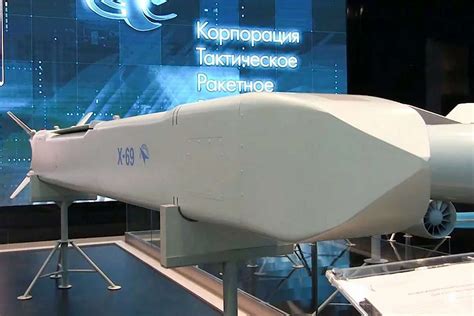
The weapons situation is even more dire. Russia lacks stealth-compatible precision-guided munitions. The much-touted Kh-69 missile exists more as a concept than a combat-ready weapon. There is no serial production of any stealth-suitable air-to-ground missile. The only guided weapon of any note in recent production is the Izdeliye-305 (LMUR), limited to helicopter deployment.
Compatibility Nightmares with Indian Systems
Even if India were to seriously consider integrating the Su-57 into its fleet, the aircraft is inherently incompatible with Indian weapon systems. The powerful but large BrahMos missile cannot be fitted internally without violating stealth integrity, and external mounting would entirely defeat the purpose of low observability. The smaller BrahMos-NG is still in development, and even its hypothetical integration would require structural overhauls.
Similarly, Indian-origin air-to-air missiles like Astra Mk I, Mk II, Mk III, or Gandiva would necessitate a massive redesign of the Su-57’s internal architecture, avionics and even its power supply system — a complex and costly undertaking. Such challenges are already evident in Russia’s own Su-30s, which suffer from power deficits that prevent their radars from operating at full capacity.
Russia’s Electronics and Supply Chain Crisis
Beyond compatibility issues, Russia’s overall technological ecosystem is in a downward spiral. Due to sanctions and geopolitical isolation, Russian defense manufacturers have been unable to procure the foreign electronics critical for building advanced avionics and sensors. The cancellation of the A-100 AWACS program in 2023 is a glaring example — not due to budget or demand, but because of an inability to obtain U.S.-made chips.
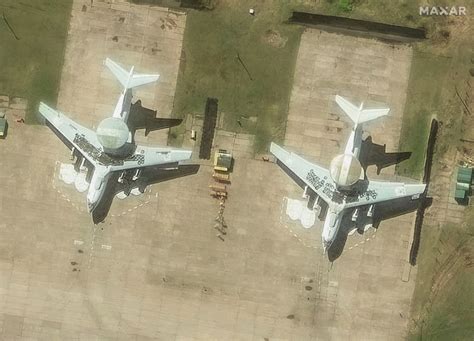
This supply chain fragility bleeds directly into the Su-57 program. Without Western electronic components, Russia’s ambitions of fielding advanced fighters are largely stuck in neutral. For India, this means any acquisition would carry huge risks of international backlash, especially from the U.S., which might reconsider technology transfers to India such as GE engines for the Tejas fighter program.
Diverging Doctrines: Su-57 vs IAF’s Requirements
Another critical issue is a mismatch between the Su-57’s intended combat role and India’s operational needs. Russia envisions the Su-57 primarily as an air superiority platform, a single-seat hunter designed for air dominance. The Indian Air Force, on the other hand, is more focused on acquiring a twin-seat multi-role striker capable of delivering precision munitions deep into hostile territory — a role better suited for aircraft like the Rafale or the upcoming AMCA.
This doctrinal divergence severely undermines the long-term viability of the Su-57 in Indian service. Investing in such a platform would not just require buying airframes, but rebuilding the entire system architecture — training, logistics, supply chain, and software suites — from scratch.
India’s Past Burn Scars with Russian Defence Deals
India’s military-industrial history with Russia is littered with examples of delays, opacity, and poor ROI. From the drawn-out Su-30MKI program to the problematic Gorshkov aircraft carrier refit, Indian taxpayers have repeatedly paid the price of overpromised and underdelivered Russian military projects.
Even Russian internal projects have suffered from blatant corruption. The Russian Air Force (VKS), for instance, allocated funds for hardened aircraft shelters, only for much of the money to vanish without a trace. Fighter jets were left parked under thin aluminum sheeting, dangerously exposed.
Any future joint effort on Su-57E would likely meet similar fate — massive cost overruns, endless delays, and questionable accountability.
The Chinese Precedent: Copy, Replace, Dominate
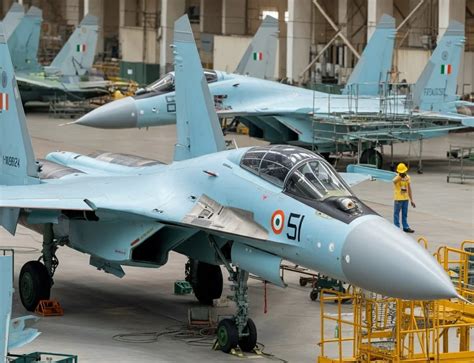
China offers an illuminating case study in this debate. After purchasing Su-27s and Su-30s from Russia, the Chinese military reverse-engineered the airframes, replaced nearly every component with indigenous tech, and fielded entirely new platforms like the J-11, J-16, and the J-20.
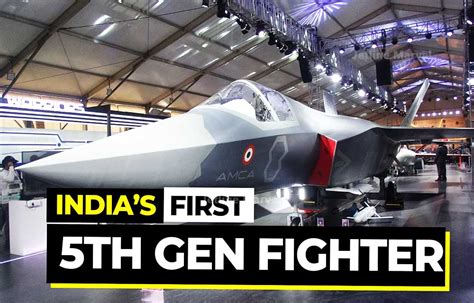
This was only possible because China invested in its own supply chains, electronics, and design capability. India, too, has the capability — but not if it wastes another decade entangled in opaque Russian partnerships. It’s far more strategic to invest in local programs like the AMCA or collaborate with the West on projects such as the Franco-German FCAS, where India’s IT and software edge can provide real, accelerated returns.
The Hidden Costs of Russian Dependency
Ultimately, the Su-57E deal isn’t about bolstering India’s air power. It’s about prolonging Russia’s defense exports and securing financial relief amid international sanctions. For India, the cost is not just measured in rupees, but in time, opportunity, and strategic autonomy.
A possible Su-57 partnership would devour 10–15 years of development, cost billions, and still yield an aircraft technologically a generation behind its peers. The smarter path is the harder one: push for a fully indigenous stealth platform, or buy into a Western framework that offers access to global tech, supply chains, and political capital.
Conclusion: India Needs Vision, Not Illusion
The allure of owning a fifth-generation fighter is understandable, especially amid growing Chinese aerial dominance. But succumbing to the Su-57E mirage would be a strategic regression. The future of Indian airpower lies not in retrofitting foreign aircraft to meet local needs, but in building sovereign capability — through the AMCA, the Kaveri engine revival, and strategic partnerships that elevate India’s own ecosystem.
At a time when China’s J-20s are in serial production and its doctrinal support system (AWACS, ECM, long-range missiles) is fully integrated, India must resist outdated temptations and invest in its own future as a 21st-century aerospace power.