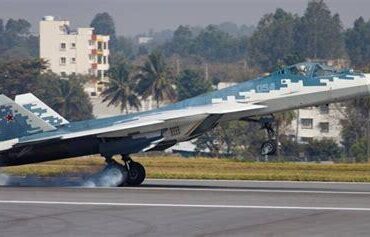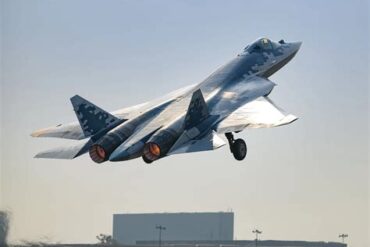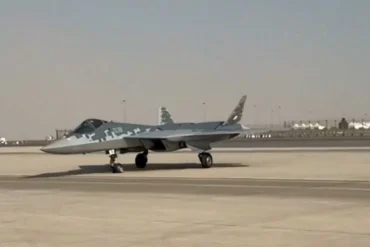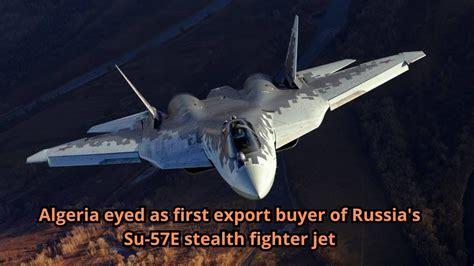
The Russian-made Su-57E fifth-generation stealth fighter has officially entered operational service with its first foreign customer, marking a new chapter in Russia’s combat aviation export narrative. While the Russian state remains tight-lipped about the buyer’s identity, overwhelming evidence suggests Algeria has become the inaugural international operator of the Su-57E, Russia’s most advanced fighter jet to date.
Su-57E Officially in Service with First Export Partner
In a televised announcement, Vadim Badekha, Director General of United Aircraft Corporation (UAC), confirmed the delivery of two Su-57E units to a foreign partner, stating that the aircraft have been placed on combat duty. While he did not disclose the recipient, contextual cues point to Algeria. The nation had already disclosed plans to receive the jets by year-end, with pilot training underway in Russia earlier this year.
Additionally, leaked Rostec documents from October 2025, reportedly obtained by the hacker group “Black Mirror,” validated a contract between Russia and Algeria for the delivery of 12 Su-57s and 14 Su-34ME fighter-bombers. Despite no formal acknowledgment by either side, all circumstantial evidence supports the assertion that Algeria is the first country besides Russia to deploy a fifth-generation stealth jet that is not a U.S.-made F-35.
This milestone is significant not only for Algeria but for Russia, which has struggled to gain traction in the fifth-generation fighter export domain. The successful deployment could serve as the catalyst the Su-57E needs to shake off its troubled developmental past and attract broader international attention.
The Su-57’s Dubai Air Show 2025 Debut: A Public Relations Triumph
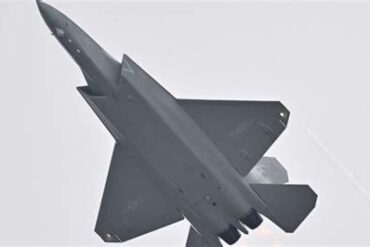
Russia’s strategic revelation about the Su-57E’s operational export delivery coincided perfectly with its aerial debut at the 2025 Dubai Air Show. Piloted by the celebrated Sergey Bogdan, the Su-57E performed a series of breathtaking aerobatic maneuvers that highlighted its supermaneuverability and technological edge.
🇷🇺 Su-57E wows Dubai Airshow crowds with tight loops, an upside-down falling-leaf descent — and at 0:50, a clear look at the missiles tucked inside.
Russia’s industry minister says the jet includes onboard AI to aid pilot decision-making. https://t.co/BoM9CWFDy6 pic.twitter.com/eaWrtGTj11
— Sputnik (@SputnikInt) November 17, 2025
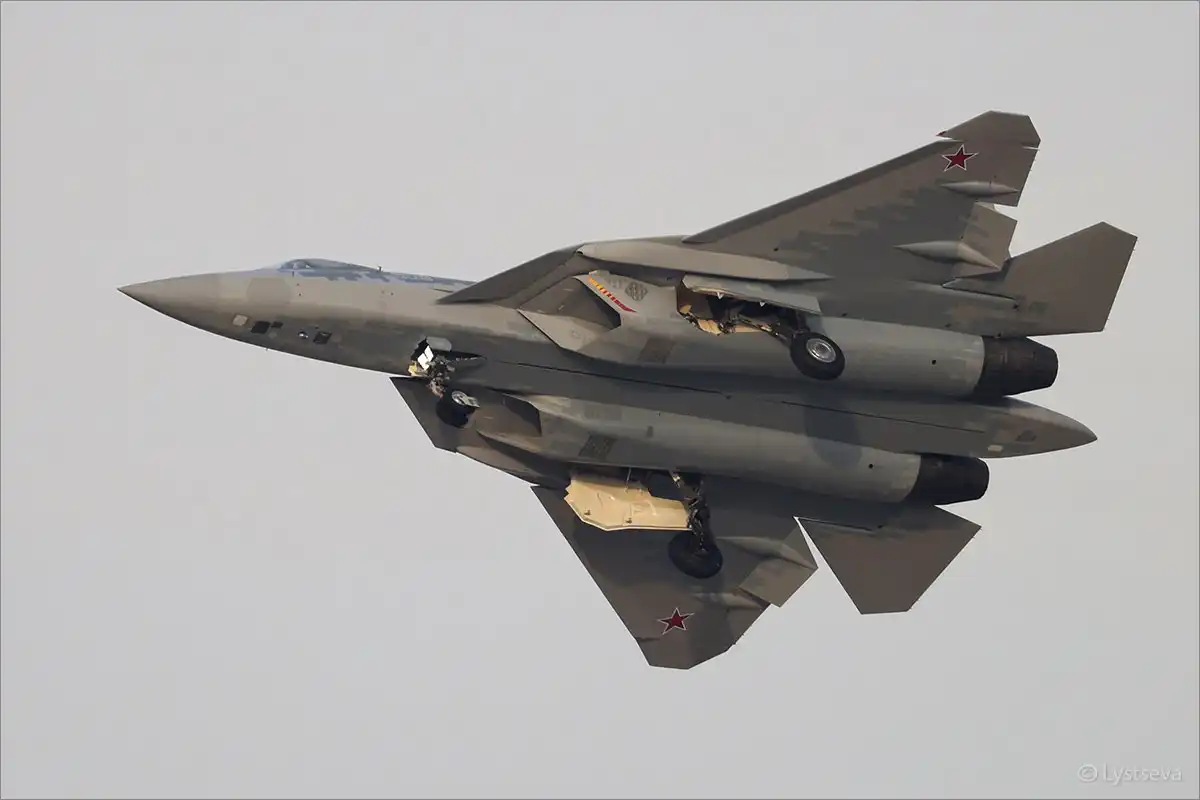
The crowd, reportedly erupting into chants of “Go, Russia!” during the flight, witnessed the Su-57 demonstrate control at extreme angles of attack, near-zero speeds, and high-spin scenarios—feats made possible by its dual thrust-vectoring AL-41F1 engines. Bogdan emphasized that these maneuvers, aside from showcasing agility, reflect a deeper advantage in dogfight scenarios.
Operational Superiority: Inside the Su-57E’s Technological Arsenal
The Su-57E is designed not merely as a stealth platform but as an integrated combat system capable of fulfilling a diverse range of roles. Among its most striking features are:
- Advanced thrust-vectoring engines allowing extreme agility
- Internal weapons bays supporting stealth-compatible payloads
- Stealth-enhancing radar cross-section design
- Multispectral sensors and targeting systems
- Artificial Intelligence integration for decision-making and situational control
Most recently, Russian First Deputy Prime Minister Denis Manturov revealed that AI technologies are now embedded into the aircraft’s core operational structure. AI systems reportedly assist with real-time weapons control, flight parameter management, and enhanced pilot situational awareness—further closing the cognitive loop between human and machine.
Confronting the F-35 in the Sky: Symbolism and Strategy
In a poetic twist of aerial diplomacy, the Su-57E’s Dubai debut followed just 90 minutes after an F-35 Lightning II demonstration. This marked the second public fly-off between the two fifth-generation fighters, the first being at India’s Aero India 2025 event in Bengaluru.
While the U.S. F-35 program remains the world’s most widely exported stealth platform, the Su-57’s reappearance in international airshows underlines Russia’s aggressive export strategy and intent to challenge the monopoly of American stealth dominance.
Stealth, Firepower, and Evolving Design
Beyond its public appearances, the Su-57E has undergone a notable transformation in design and capabilities aimed at appealing to the export market. Among the recent improvements are:
- A redesigned stealth nozzle system for the engine, featuring a three-panel telescopic mechanism and triangular side panels to reduce radar signature.
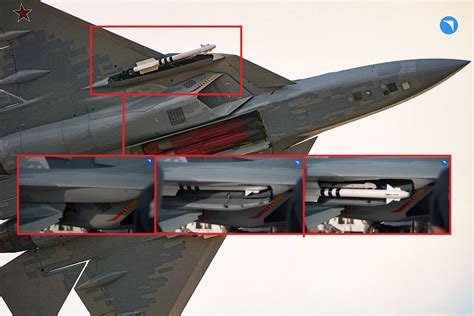
- The first-ever public footage of the Su-57E’s weapons bay in mid-flight, revealing internal carriage of Kh-58UShK anti-radiation missiles, underscoring its SEAD (Suppression of Enemy Air Defenses) role.
These improvements were prominently featured during the static display at the Dubai Air Show, where the Su-57E was shown alongside its open weapons bays—positioning the fighter as a stealth platform with high internal payload capacity.
Strategic Timing: Export Diplomacy in the Middle East
The timing of these displays and announcements is anything but coincidental. As the Dubai Air Show commenced, Russia’s military-technical cooperation agency confirmed ongoing negotiations with multiple potential clients interested in the Su-57E.
This forms part of a broader push to diversify Russia’s defense partnerships in light of sanctions and geopolitical frictions with the West. By offering attractive export terms, including co-development opportunities, Russia hopes to draw interest from states with limited access to Western fifth-generation platforms.
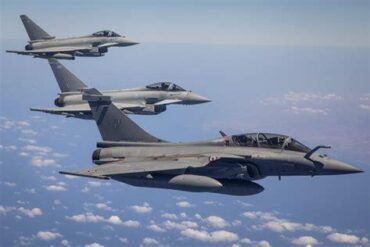
India remains a major target in this export push. Earlier this year, Russia offered joint production rights for the Su-57E, promised upgrades to India’s Su-30MKI fleet, and support for the indigenous AMCA program. However, India’s subsequent decision to procure 114 Rafale fighters may have dampened enthusiasm for the Su-57 in New Delhi.
Lessons from the Past: A Rocky Path to Relevance
The Su-57’s story has been a turbulent one. From its prototype debut in 2010, the program endured lengthy delays, limited production orders, and the collapse of the much-hyped FGFA project with India in 2018. Domestic acquisition numbers remained low, with only a handful of aircraft inducted into Russian service since 2020.
Despite this, the aircraft gained valuable—albeit limited—combat exposure during the ongoing Ukraine conflict, where it was used primarily in standoff strike roles and air defense patrols within Russian airspace. Analysts note that the absence of full-scale air-to-air combat experience continues to affect the Su-57E’s perceived value in some foreign military circles.
Nonetheless, Algeria’s early commitment—if officially confirmed—offers a potential turning point. As the first non-Western operator of a fifth-generation fighter, Algeria’s use of the Su-57E could provide invaluable operational feedback to Russian developers while serving as a case study for future export campaigns.
The Road Ahead: Will the Su-57E Succeed in the Global Market?
The Su-57E’s success in the international arms market hinges on several critical factors:
- Proof of reliability and combat efficacy, especially in real-world operations.
- Expanded production capacity to ensure timely delivery.
- Political flexibility and financing options for countries under Western sanctions.
- Integration with indigenous or Russian-made weapons systems.
Russia is also working on incorporating sixth-generation technologies, further enhancing the platform’s future appeal. These include swarming drone integration, extended-range sensors, and pilot-optional capabilities.
Whether the Su-57E becomes a true competitor to the F-35 or remains a niche export for select countries remains to be seen. However, with its dazzling display in Dubai, credible deployment reports, and a revitalized marketing campaign, the Su-57E is finally shaking off the image of an unrealized prototype and stepping into the realm of active deployment and global influence.
Conclusion: A Defining Moment for Russian Aviation Exports
The operational deployment of the Su-57E by Algeria, coupled with the aircraft’s stellar Dubai Air Show debut, marks a significant milestone for Russian aviation. The stage is now set for the Su-57E to either rise as a viable fifth-generation alternative to Western jets or remain an impressive, yet limited, feat of aerospace engineering. As geopolitical divides deepen and nations seek diversified defense suppliers, the Su-57E might just find its place among the skies it so masterfully commands.