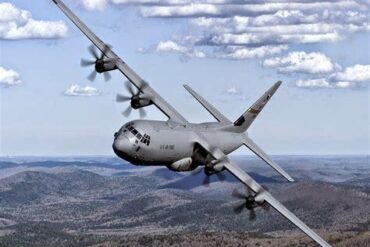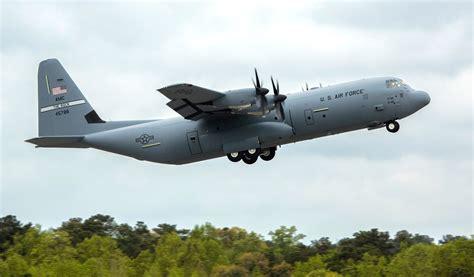
Mexico has taken a decisive step in modernizing its airlift capability by acquiring Latin America’s first C-130J-30 Super Hercules, marking a regional milestone in military aviation. Announced by Lockheed Martin on January 21, 2026, the delivery introduces the C-130J variant into service with the Fuerza Aérea Mexicana (FAM) and signals a long-term commitment to fleet renewal, operational readiness, and disaster-response resilience. The selection of the stretched -30 configuration reflects Mexico’s focus on payload flexibility, efficiency, and continuity with decades of Hercules operations.
The acquisition is framed by Mexican authorities as a recapitalization effort rather than a doctrinal shift. Mexico’s geography—spanning deserts, mountains, jungles, and extensive coastlines—demands reliable tactical airlift that can operate from short or austere runways while carrying meaningful loads. The C-130J-30 answers that requirement by expanding internal volume without changing propulsion or avionics, preserving performance in demanding environments while boosting throughput for logistics and humanitarian missions.
Operational context matters. Mexico’s air transport forces are routinely called upon for domestic disaster response following hurricanes, floods, and earthquakes, often at short notice and into damaged infrastructure. The Hercules family has long been central to these efforts. Introducing a new-generation Super Hercules stabilizes readiness, reduces sustainment friction associated with aging airframes, and ensures that lift capacity keeps pace with national needs.
A Strategic First for Latin America
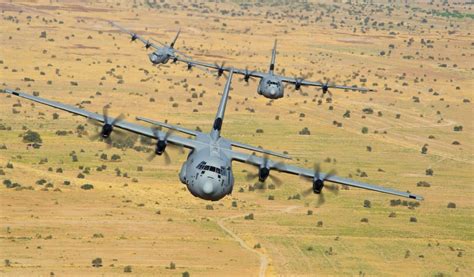
Becoming the first Latin American operator of the C-130J-30 carries strategic weight. It places Mexico at the forefront of regional tactical airlift modernization and strengthens interoperability with allied air forces already flying the Super Hercules. The acquisition was finalized as one of two international C-130J contract awards concluded in 2025, underscoring sustained global demand for the platform. For Mexico, it also reinforces long-standing defense-industrial ties with the United States while delivering immediate operational benefits.
The -30 stretch, adding 15 feet of fuselage length over the standard C-130J, increases internal cargo volume significantly. That additional space translates directly into fewer sorties for the same lift requirement—an efficiency gain that matters in time-critical relief operations and sustained logistics. Importantly, the aircraft retains identical engines and avionics to the base model, simplifying training and maintenance while preserving commonality across the C-130J family.
Recapitalizing a Proven Airlift Backbone
Mexico’s transport fleet is structured around medium and light airlift optimized for domestic and regional missions. Legacy C-130 Hercules aircraft form the backbone of heavy and medium transport, complemented by Airbus C-295M and CN-235 aircraft for lighter roles, surveillance, and utility tasks. The Leonardo C-27J Spartan adds tactical flexibility for short or austere strips where larger aircraft are less suitable.
Fleet renewal priorities emphasize availability, payload flexibility, and short-field performance rather than strategic intercontinental lift. Within that framework, the C-130J-30 slots naturally as a stabilizing force—boosting capacity while addressing airframe age and sustainment constraints. The result is a balanced force capable of supporting civil authorities, military logistics, and rapid response across Mexico’s varied terrain.
Continuity Built on Five Decades of Hercules Operations
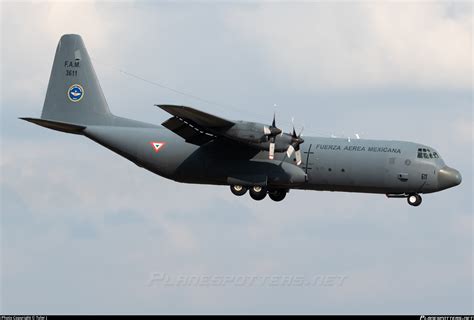
Mexico’s relationship with the Hercules dates back to the early 1970s, when the FAM introduced the aircraft to meet expanding airlift demands. Over more than 50 years of service, successive variants supported troop transport, cargo delivery, aeromedical evacuation, and disaster relief nationwide. That longevity created deep institutional expertise: established maintenance units, mature training pipelines, and logistics systems tailored to the Hercules ecosystem.
This continuity shapes procurement logic. By choosing a new-generation Hercules, Mexico preserves accumulated knowledge while modernizing performance and efficiency. The decision minimizes transition risk and accelerates operational payoff, ensuring that crews and maintainers can leverage familiar workflows enhanced by digital avionics and improved propulsion.
From 1950s Workhorse to Digital Super Hercules
The Hercules story began in the early 1950s, when Lockheed developed a rugged tactical transport for short, unprepared runways. The prototype flew in August 1954, entering service in December 1956. Early variants evolved through the C-130E and C-130H, adding power, range, and payload while retaining the high-wing layout, rear ramp, and robust landing gear that define the type.
By the late twentieth century, the Hercules had become one of the most widely operated military transports worldwide. That global footprint set the stage for a comprehensive modernization rather than incremental upgrades—culminating in the C-130J Super Hercules program.
The C-130J Leap: Performance, Efficiency, and Crew Reduction
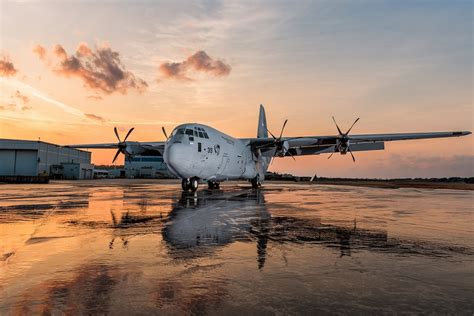
First flown on April 5, 1996, and entering service in 1999, the C-130J introduced a step-change in capability. Rolls-Royce AE 2100D3 turboprop engines paired with six-bladed composite propellers deliver higher cruise speeds—approximately 640–670 km/h—and improved climb performance. A fully digital cockpit with head-up displays reduces workload and enhances situational awareness.
One of the most consequential changes is crew reduction. The C-130J operates with three crew members instead of five, improving efficiency and lowering lifecycle costs. Range extends to roughly 3,300 km at maximum normal payload, and the aircraft is certified across 20 mission types, including transport, airdrop, medical evacuation, firefighting, weather reconnaissance, and special operations support.
Why the C-130J-30 Matters for Mexico
The C-130J-30 amplifies these advantages through its stretched fuselage. Internal capacity increases to eight standard 463L pallets, up from six on the base model. Configurations support up to 128 troops, 92 paratroopers, or 97 medical litters, while maximum payload reaches approximately 19.9 tonnes. Service ceiling under heavy load approaches 8,000 meters, and all gains are achieved without altering propulsion or avionics.
For Mexico, that means faster response with fewer aircraft, better adaptability for mixed cargo-passenger loads, and improved efficiency during sustained operations. In disaster scenarios, the ability to move more relief supplies per sortie directly translates into lives saved and communities stabilized sooner.
Global Adoption and Interoperability Benefits
As of 2026, more than 560 C-130J and C-130J-30 aircraft are in service with over 20 countries, including the United States, United Kingdom, France, Germany, Italy, Australia, India, Japan, South Korea, and now Mexico. This scale underpins robust sustainment networks, shared training standards, and high interoperability during multinational operations.
For the FAM, joining this community enhances access to best practices, spares availability, and coalition readiness. It also future-proofs the fleet, ensuring relevance as mission demands evolve and technologies mature.
A Measured Modernization with Immediate Impact
Mexico’s acquisition of the C-130J-30 Super Hercules is a measured, capability-driven modernization that respects institutional experience while embracing efficiency and capacity gains. By selecting the stretched Super Hercules, Mexico strengthens its ability to deliver military logistics, humanitarian assistance, and disaster response at scale—today and for decades ahead. The result is not just a new aircraft, but a reinforced national lifeline in the air.