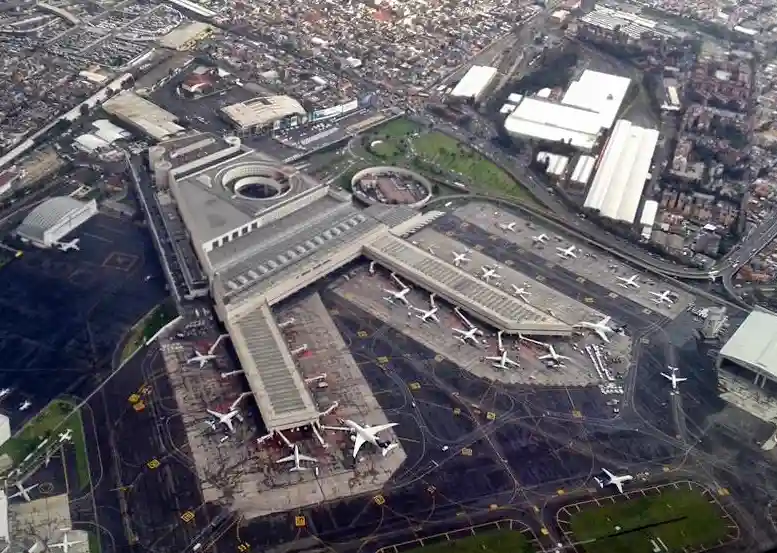
Mexico City International Airport (IATA: MEX, ICAO: MMMX), officially known as Aeropuerto Internacional Benito Juárez, is the most significant aviation hub in Mexico. Located just 5 kilometers east of downtown Mexico City, this airport serves as the primary international gateway for the nation’s capital and the Greater Mexico City metropolitan area. With over 45 million passengers in 2024, it remains Mexico’s busiest airport and is ranked as the third-busiest in Latin America, trailing only São Paulo and Bogotá.
Owned by the Mexican Navy and operated by Grupo Aeroportuario de la Ciudad de México, the airport supports a complex ecosystem that includes two passenger terminals, two parallel runways, and several federal aviation agencies, including SENEAM and AFAC.
Historical Roots of Aviation at Llanos de Balbuena
Aviation at the site known as Llanos de Balbuena dates back to 1910, when Alberto Braniff completed Mexico’s first powered flight. One year later, President Francisco I. Madero became the world’s first head of state to fly in an airplane. The location was formalized into Balbuena Military Airport by 1915.
By 1928, a civilian airfield opened nearby, and commercial operations began in 1929, with the airport officially inaugurated on May 15, 1931. The airport was granted international status in 1943, with Mexicana de Aviación launching service to Los Angeles. Throughout the 1950s and 60s, the airport expanded significantly, adding runways, a modern terminal, and a control tower, eventually adopting its current name in 1963.
Infrastructure Challenges and Decentralization
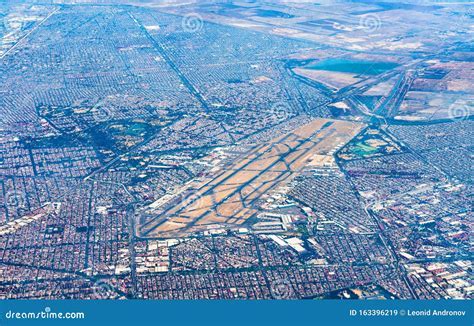
The airport’s urban location within the borough of Venustiano Carranza poses severe expansion constraints. Its two runways, separated by less than 300 meters, prevent independent parallel operations, contributing to congestion. Infrastructure developments in 1980, 1990, and 2001 expanded terminal space and added a satellite concourse, but the growth has not kept pace with demand.
In the 1990s, to reduce congestion, Mexicana began shifting flights to Guadalajara, Monterrey, and Mérida, while general aviation was moved to Toluca International Airport in 1994. All non-commercial flights are now banned at MEX.
Terminal 2 and the Metropolitan Airport System
By the early 2000s, the airport faced political and operational scrutiny. A failed proposal to construct a new airport in Atenco and Texcoco collapsed under fierce community resistance in 2002. Instead, the government expanded the existing infrastructure, and in 2007, Terminal 2 was inaugurated, boosting capacity by 15% and introducing modern amenities.
To ease air traffic pressure, the Metropolitan Airport System was devised to integrate regional airports like Puebla, Querétaro, Cuernavaca, and Toluca as supplementary hubs.
Texcoco Controversy and the Rise of Felipe Ángeles Airport
In 2014, airspace congestion forced authorities to cap operations at 61 per hour. The Texcoco Airport project was announced, featuring six runways and a massive new terminal designed to replace MEX. However, President López Obrador campaigned against it, citing cost and corruption concerns. A public referendum led to the project’s cancellation, replaced by Felipe Ángeles International Airport (AIFA), which opened in 2022 but has yet to match expectations in passenger volumes.
Terminal Facilities and Layout
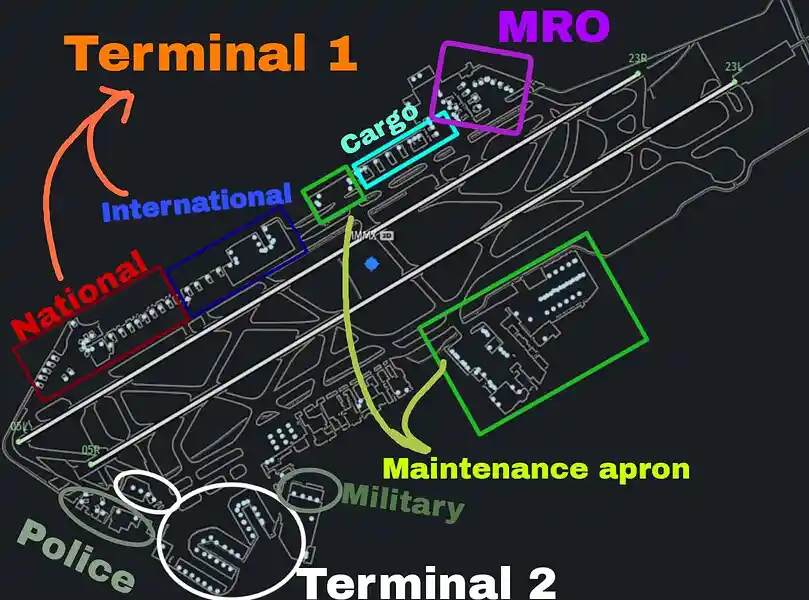
The airport spans 747 hectares and is divided into Terminal 1 (north) and Terminal 2 (south), with both terminals linked by a shuttle bus and the Aerotrén, a high-capacity people mover restricted to ticketed passengers.
Terminal 1
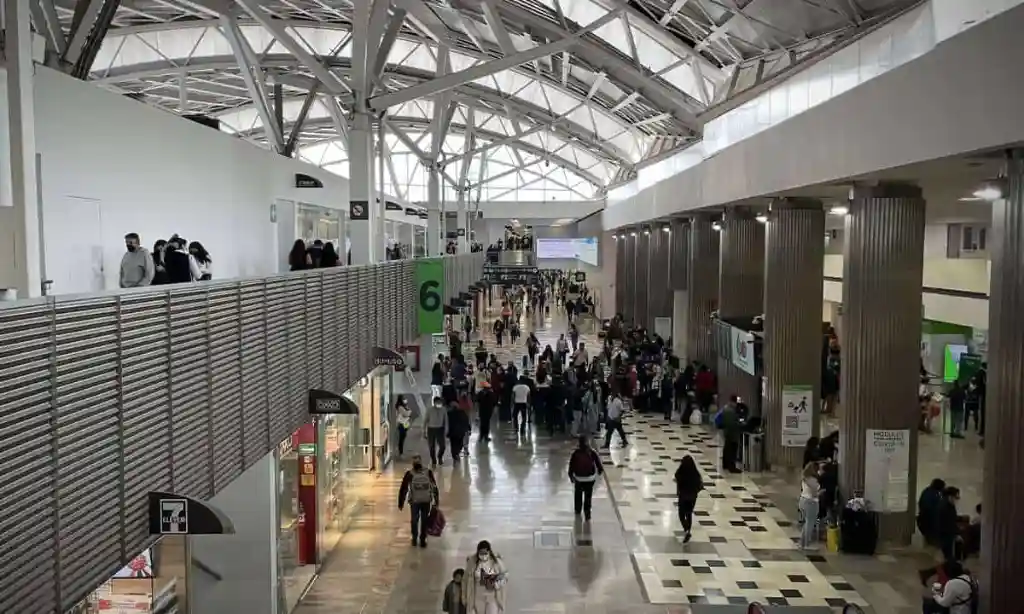
First opened in 1958, Terminal 1 now covers 542,000 m² and supports domestic and international services via 33 contact gates and 20 remote stands. It includes 22 baggage carousels, a 900-meter departure concourse, and a satellite building (gates 29–36). Amenities feature VIP lounges for American Airlines, Air France-KLM, ANA, Iberia, and more. Hotel options include the Camino Real, Hilton, and Courtyard by Marriott.
Terminal 2
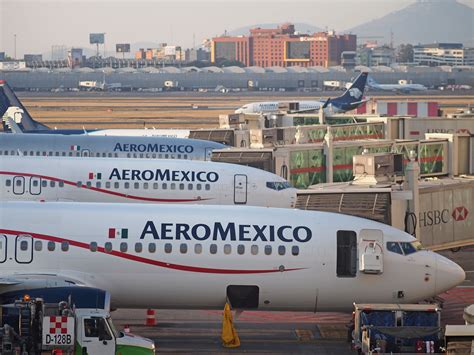
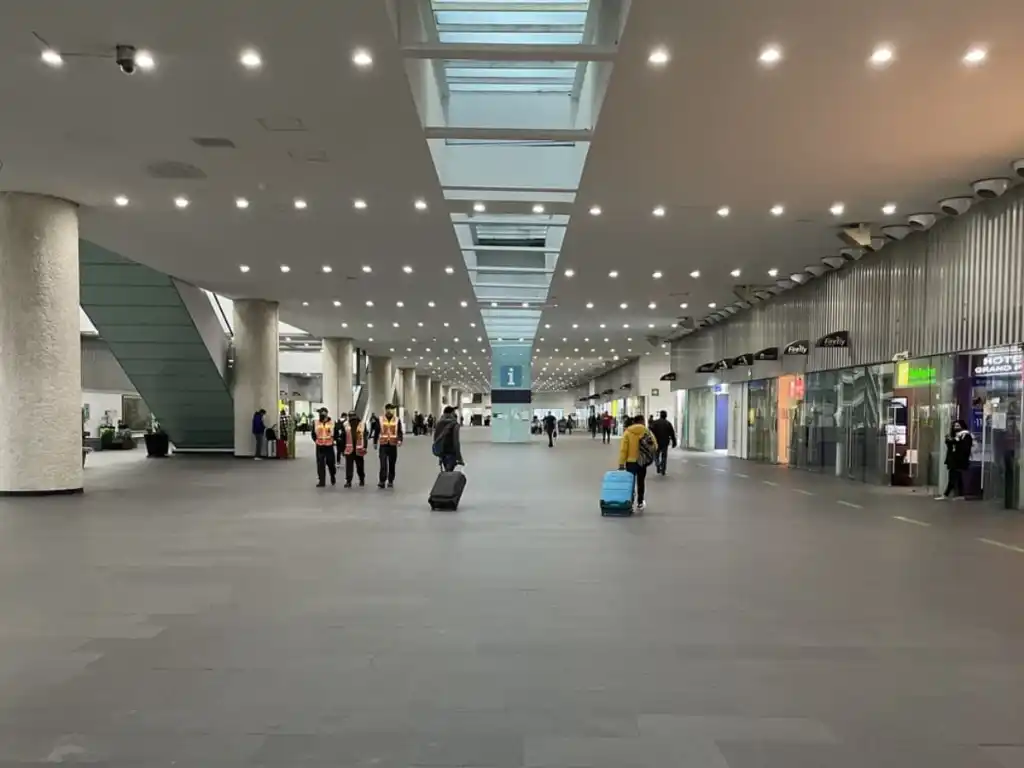
Completed in 2008, Terminal 2 spans 288,000 m² and acts as the main Aeroméxico hub, serving both its mainline and Connect branches. It includes 30 jet bridge gates, three piers (including Pier L, opened in 2020), and 10 remote stands. VIP services include lounges by HSBC, Citibanamex, and Aeroméxico’s Salón Premier.
Military Operations and Control Services
Air Force Base No. 19 (B.A.M. 19) is located adjacent to Terminal 2. It houses aircraft used by the High Command Special Air Transport Unit (UETAAM) and the Presidential Air Transport Unit, including Boeing 737s and Black Hawk helicopters. Air traffic control is managed by Mexico City ACC, one of four major control centers in the country, under SENEAM.
Airline Network and Passenger Traffic
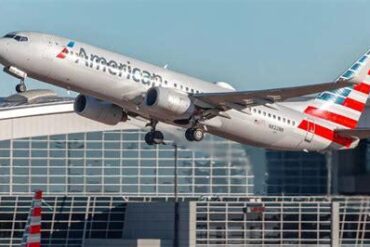
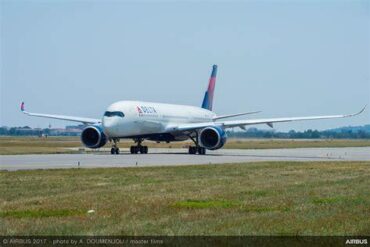
As of 2024, the airport serves 44 domestic and 62 international destinations. Aeroméxico operates the broadest network, flying to 93 cities, while other major players include Volaris, United Airlines, American Airlines, Delta, and Avianca.
Prominent long-haul routes include:
- Madrid (Iberia, Aeroméxico)
- Los Angeles (multiple carriers)
- Paris–Charles de Gaulle (Air France, Aeroméxico)
- Tokyo–Narita (All Nippon Airways)
- Seoul–Incheon (Aeroméxico via Monterrey)
- Shenzhen–Mexico City (China Southern, 14,124 km – 9th longest route globally)
Cargo Operations
Up to July 2023, the airport handled over 240,000 metric tons of cargo annually. However, a presidential decree mandated the relocation of all cargo services to Felipe Ángeles Airport, drastically altering MEX’s role as a freight hub.
Traffic Data and Economic Impact
With 323,025 aircraft movements in 2024, the airport maintains its status as the busiest two-runway airport in Latin America. Total passenger traffic reached 45.3 million, with 17.1 million international travelers. The broader airport system, including AIFA and Toluca, served over 53 million passengers in 2024, placing it second in Latin America and 34th globally.
The airport directly supports 35,000 jobs and indirectly another 15,000, underscoring its role as a major economic engine for Mexico City and the surrounding region.
Domestic and International Route Highlights
Top Domestic Routes (2024):
- Cancún: 1,665,578 passengers
- Monterrey: 1,578,366 passengers
- Guadalajara: 1,414,248 passengers
Top International Routes (2024):
- Madrid: 577,191 passengers
- Los Angeles: 470,894 passengers
- Bogotá: 442,118 passengers
- Houston–Intercontinental: 423,418 passengers
Ground Transportation and Access
MEX is exceptionally well-connected:
- Metrobús Line 4 links both terminals to San Lázaro metro and TAPO long-distance bus station. Stops are at Entrance 7 (T1) and Entrance 2 (T2).
- Metro Line 5 services Terminal Aérea station, connected to T1 via walkway.
- Pantitlán Metro Station, about 800 meters from T2, connects to Lines 1, 5, 9, and A.
- Long-distance buses operate from two major terminals within T1 and T2, linking passengers to cities like Puebla, Querétaro, Toluca, and Veracruz.
Safety Incidents and Historical Context
The airport has had a few notable aviation incidents. In 1949, a Mexicana DC-3 crashed into Popocatepetl volcano, killing 23, including actress Blanca Estela Pavon. In 1968, an Aerovías Rojas R4D-3 crashed during its inaugural flight from Aguascalientes, killing all 18 onboard.
Conclusion
Mexico City International Airport is a cornerstone of Latin American aviation. Despite spatial and operational challenges, it continues to connect millions of passengers across continents, playing a central role in Mexico’s economy, diplomacy, and tourism. With infrastructure investments underway and a rich historical legacy behind it, MEX is poised to retain its leadership position, even as Mexico City’s air transport future grows more multi-nodal with the expansion of Felipe Ángeles and Toluca International Airport.