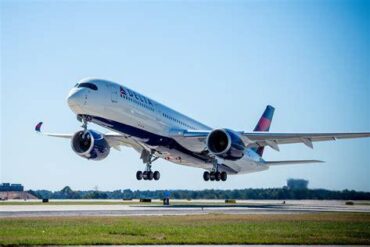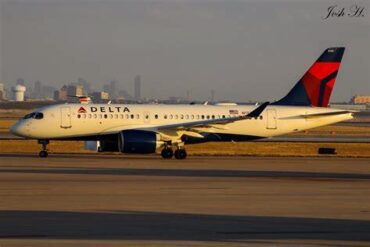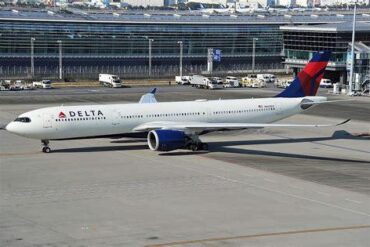
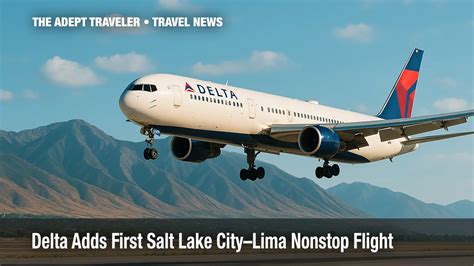
Delta Air Lines has announced a trailblazing new nonstop route between Salt Lake City International Airport (SLC) and Jorge Chávez International Airport (LIM) in Lima, Peru, marking the first direct link ever between the two cities. Set to begin on December 4, 2025, and running through January 25, 2026, this new international service signals a powerful expansion in Delta’s global reach and reinforces Salt Lake City’s position as a pivotal Western hub in the airline’s strategic map.
Uniting Two Cultures with a Single Flight
This new service is not just another route on the map—it’s a major cultural and economic bridge connecting the American Mountain West with South America’s thriving travel hub. The demand speaks volumes: Over 23,000 round-trip passengers made the journey between Salt Lake City and Lima over the past year alone, despite the lack of direct connectivity. With Delta stepping in to fill this gap, travelers can now access Lima’s vibrant cultural life, architectural wonders, and proximity to Machu Picchu without cumbersome overnight layovers.
A Strategic Move for Delta’s Western Expansion
Salt Lake City is increasingly becoming a launchpad for Delta’s international ambitions. This route to Lima comes hot on the heels of another milestone—the June 2025 debut of nonstop flights from Salt Lake City to Seoul Incheon (ICN), Delta’s first direct link to Asia from this hub in over 14 years. These developments reinforce Salt Lake City’s role as Delta’s secondary stronghold, behind its primary base in Atlanta.
Delta’s Western hub now serves as a gateway to over 90 global destinations, offering travelers across the Western U.S. more streamlined access to Latin America, Asia, and beyond. The addition of Lima to this network not only strengthens international options for Utahns but also offers a convenient one-stop connection for passengers from cities like Denver, Seattle, Portland, Sacramento, Boise, and Las Vegas.
Premium Comfort on Delta’s Boeing 767-300ER
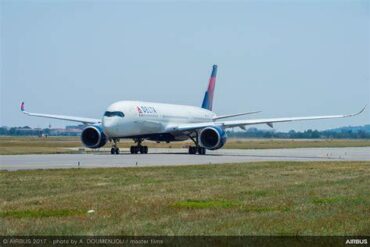
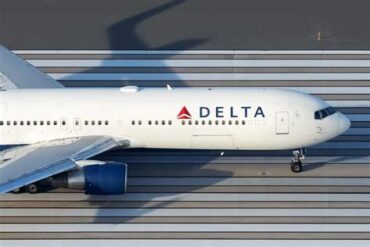
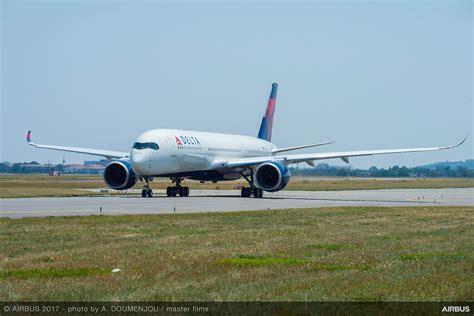
The new Lima service will be operated by Delta’s Boeing 767-300ER, a reliable widebody aircraft with an established reputation for transcontinental and international operations. This aircraft features four cabin classes—Delta One (business), Premium Select (premium economy), Comfort+ (economy plus), and Main Cabin (economy)—ensuring a range of seating options tailored to different budgets and preferences.

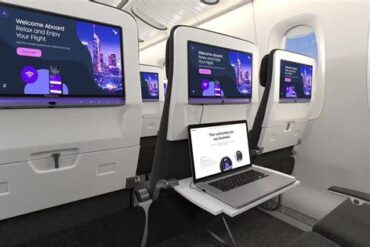
The flight, which covers approximately 3,704 nautical miles (6,860 kilometers) in 7 to 8 hours, will offer passengers ample comfort and amenities. Despite the average age of Delta’s 767-300ER fleet being 29 years, these aircraft remain meticulously maintained and regularly updated to meet today’s expectations for in-flight comfort and entertainment.
Breaking Barriers in U.S.–South America Connectivity
Until now, Salt Lake City lacked a direct route to South America, despite significant traveler demand. The introduction of this Lima service represents a strategic correction to that oversight. Tourism to Peru—particularly for iconic sites like Machu Picchu, Cusco, and the Sacred Valley—has been on the rise among U.S. travelers, and Utahns in particular now have a far easier path to access these marvels.
The impact stretches beyond leisure travelers. This route is expected to foster greater business and cultural exchange between Peru and the Mountain West, opening the door for increased investment and bilateral cooperation. For Salt Lake City, this means more inbound tourism, stronger airport throughput, and elevated international visibility.
Delta’s Broader Investment in Salt Lake City
The new Lima route is not an isolated move—it’s part of a larger strategic investment by Delta into Salt Lake City’s airport infrastructure and aviation ecosystem. The airline recently unveiled a brand-new terminal, enhancing passenger flow, retail space, and digital amenities. In addition, Delta opened a state-of-the-art pilot training facility, underlining its long-term vision of growing local operations.
This wave of investment is positioning Salt Lake City not only as a domestic hub but also as a serious player in global air traffic. By anchoring more international long-haul routes here, Delta ensures that Salt Lake City evolves in step with the demands of the modern global traveler.
Strong Financial Performance Fuels Route Expansion
Delta’s robust financial health plays a critical role in enabling new long-haul routes like the one to Lima. In Q2 2025, the airline reported a net profit of $2.1 billion, marking a 63% year-over-year increase. With such a strong performance, Delta has both the financial muscle and strategic confidence to invest in emerging routes.
President Glen Hauenstein emphasized that steady travel demand is expected to continue into Q3 2025 and beyond. This stability allows Delta to invest in service innovations, enhance customer experience, and expand their footprint across under-served markets such as South America from the U.S. West.
A Convenient One-Stop Gateway for Western Travelers
For many in the Western United States, getting to South America previously meant transiting through Houston, Atlanta, or Los Angeles—often with long layovers or complex itineraries. With the new Salt Lake City–Lima route, Delta simplifies this journey for passengers from:
- Seattle
- San Francisco
- Las Vegas
- Denver
- Portland
- Boise
- Sacramento
These travelers can now connect through Salt Lake City and fly directly to Peru without needing to route through coastal mega-hubs. The convenience of a single-stop itinerary is likely to drive higher adoption and loyalty among Delta’s core Western market segment.
Boosting Peru’s Profile as a Global Tourism Hotspot
This route is also a significant win for Peru. As the country continues to gain global attention for its culinary revolution, archaeological heritage, and natural diversity, easier access from major U.S. markets will only accelerate tourism growth. Delta’s presence in Lima enhances the capital’s connectivity with global tourism trends and introduces more U.S. visitors to one of South America’s most vibrant cultural centers.
Expect to see surges in U.S. visitors to Peru’s gastronomic districts, colonial architecture, and eco-tourism zones. And with Delta’s global network, Lima becomes a more connected hub for onward travel throughout Latin America.
Looking Ahead: More International Ambitions on the Horizon
Delta’s nonstop service to Lima marks a significant step in what appears to be an evolving international strategy for Salt Lake City. As infrastructure improves and traveler appetite for international exploration grows, more direct routes to Latin America, Europe, and Asia seem inevitable.
Salt Lake City’s potential is immense. The combination of Delta’s strategic foresight, financial strength, and robust infrastructure investment paints a promising future—one where the city transitions from a domestic hub to a truly intercontinental aviation center. If the success of the new Lima route is any indication, this transformation is already well underway.
Conclusion: A Bold Leap Forward in Global Connectivity
Delta’s nonstop route between Salt Lake City and Lima is far more than a logistical adjustment; it’s a declaration of intent. It shows Delta’s belief in the long-term viability of Salt Lake City as a global hub, and it opens unprecedented opportunities for leisure, business, and cultural exchange.
For travelers in the Western U.S., this means fewer connections, shorter travel times, and smoother journeys to one of the most compelling destinations in the Southern Hemisphere. For Salt Lake City, it marks another stride in its emergence as a global gateway.
With the inaugural flight just months away, all eyes are now on Delta—and what new international frontier they’ll conquer next.