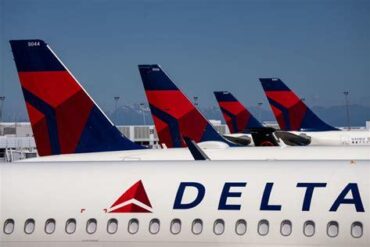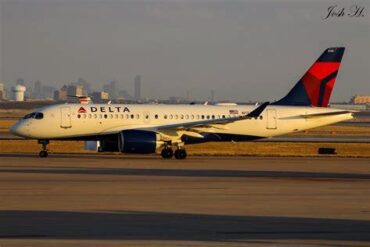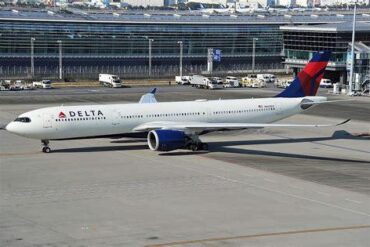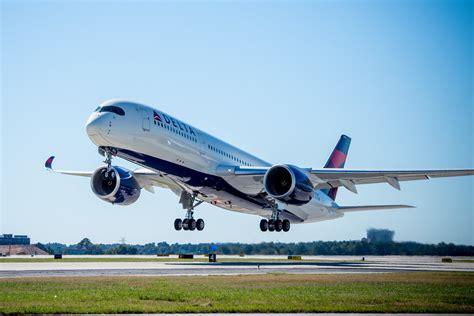
Delta Air Lines has boldly expanded its international network by launching its longest nonstop flight ever from Salt Lake City, Utah—its fourth-busiest hub by flight volume. This historic milestone sees the carrier connecting Salt Lake City International Airport (SLC) to Seoul Incheon International Airport (ICN), South Korea, ushering in a new chapter in transpacific travel for the Western U.S.
The inaugural flight on June 12, 2025, marked a return of nonstop service to Asia for Salt Lake City after a 14-year hiatus. Not only does this route serve as a bridge between Utah and South Korea for the first time, but it also sets a record as the longest nonstop route to ever operate out of SLC.
The Route: A Historic Leap Across the Pacific
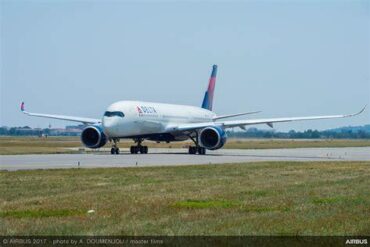
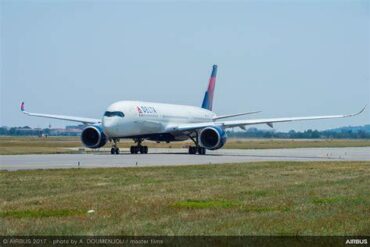
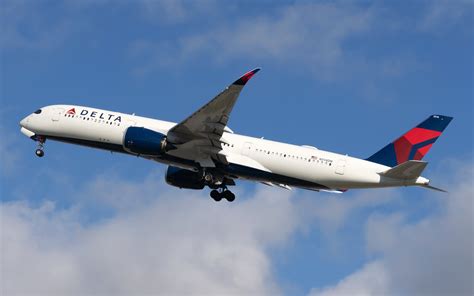
Covering 5,132 nautical miles (9,504 km) one-way, the SLC–ICN route is being operated with Delta’s most premium and lowest-capacity widebody aircraft: the Airbus A350-900. The 275-seat aircraft is equipped with Delta One Suites, Premium Select, Comfort+, and Main Cabin classes, tailored to provide exceptional comfort on this ultra-long-haul journey. The specific aircraft for the launch flight—tail number N527DN—is one of the airline’s newest deliveries and sports a special 100 Years livery, commemorating Delta’s centennial.
Flights are scheduled daily during the summer and three times per week in winter, with the outbound leg (DL173) departing SLC at 11:40 AM and arriving in Seoul the following day at 3:20 PM local time. The return leg (DL172) departs Seoul at 7:40 PM and lands in Salt Lake City on the same day at 4:00 PM, thanks to favorable westbound tailwinds and the crossing of the International Date Line.
Strategic Importance: Seoul as a Gateway to Asia
The launch of the Salt Lake City–Seoul route is not merely about direct connectivity. It is a strategic move deeply tied to SkyTeam alliance synergies, particularly with Korean Air, Delta’s joint venture partner. Seoul Incheon, already SkyTeam’s busiest international hub in Asia, offers Delta customers access to more than 30 Asian destinations through codeshares with Korean Air and Taiwan’s China Airlines.
This new flight opens up a seamless two-way travel corridor: Korean Air passengers can now access over 50 North American cities via Salt Lake City using Delta’s extensive domestic network, while Delta flyers can connect to cities across Asia through Incheon.
Delta’s Expanding Seoul Network
With the addition of Salt Lake City, Delta now operates five U.S. gateways to Seoul Incheon:
- Atlanta – Two daily flights (04:00 and 14:10 arrival in Seoul)
- Detroit – One daily flight
- Minneapolis – One daily flight
- Seattle – One daily flight
- Salt Lake City – One daily flight in summer
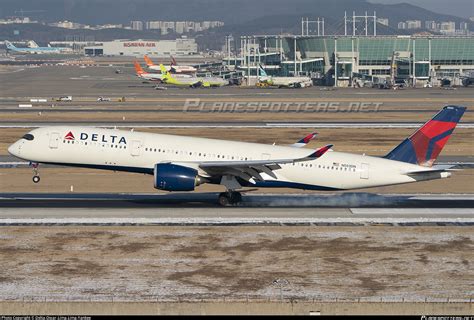
Each of these routes uses the A350-900, underscoring the importance Delta places on this aircraft for premium long-haul service. Unlike its competitors, such as United Airlines which uses Tokyo Narita as a mini-hub to connect intra-Asian routes, Delta’s Seoul operations are North America-centric, relying heavily on transpacific codeshares and interline partnerships.
The Road to Asia: Delta’s Second Attempt From Utah
This isn’t the first time Salt Lake City has seen Asian service. In 2009, amid the Delta–Northwest merger, flights were launched from SLC to Tokyo Narita using an Airbus A330-200. The service, however, was short-lived and discontinued in 2011 due to limited demand and network restructuring.
The current Seoul service is far more robust in its alliance integration, with far-reaching codeshare options and a clearer strategic purpose. Unlike the Tokyo route, which relied heavily on connecting passengers within Japan and limited onward options, Seoul Incheon offers an unmatched Asian gateway, thanks to its SkyTeam partner infrastructure.
Long-Haul Flights From Salt Lake City: A Rarity
Despite being a major Delta hub, Salt Lake City is relatively underserved in terms of long-haul international flights. As of the 2025 summer schedule, there are just four intercontinental destinations served nonstop from SLC:
- Amsterdam (AMS) – 10 weekly flights (Delta A350-900 and KLM 777-200ER)
- London Heathrow (LHR) – Five weekly flights (Delta A330-200)
- Paris Charles de Gaulle (CDG) – Daily (Delta A330-900)
- Seoul Incheon (ICN) – Daily (Delta A350-900)
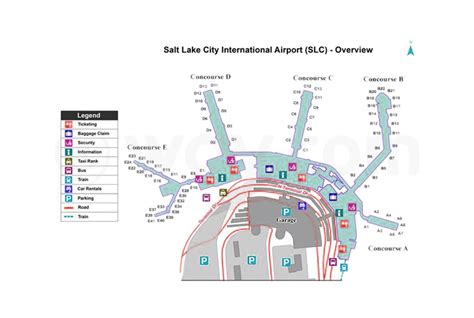
Though Salt Lake City had four long-haul routes as recently as 2023—including a now-discontinued route to Frankfurt, Germany—the current route to Seoul marks a distinct shift towards transpacific emphasis. Before the pandemic, the airport had never served more than three long-haul destinations concurrently.
Aircraft Spotlight: Delta’s Airbus A350-900
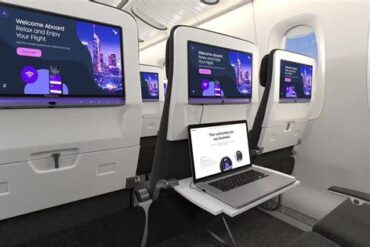
The A350-900 used on the Salt Lake–Seoul route is central to Delta’s global ambitions. These aircraft offer a competitive edge with features including:
- Delta One Suites with full-flat beds and sliding doors
- Premium Select seats with extra recline and legroom
- Advanced air quality and lighting systems to reduce jet lag
- Fuel-efficient Rolls-Royce Trent XWB engines enabling longer ranges with lower emissions
The use of this aircraft also helps Delta meet environmental benchmarks while maintaining premium cabin profitability, which is essential for long-haul route sustainability.
Demand & Market Dynamics: Betting on Connectivity
In 2024, only about 13,000 passengers flew between Salt Lake City and South Korea indirectly. This is minuscule compared to the traffic at Delta’s other Seoul-connected hubs. However, the airline’s bet isn’t on local traffic alone.
Instead, the route’s viability rests on a hub-to-hub strategy, allowing feeder traffic from smaller Western U.S. cities (e.g., Boise, Spokane, Reno, and Phoenix) to connect through Salt Lake City to reach Asia. The same is true in the reverse direction, with Seoul serving as a hub for connecting flights throughout East Asia.
This approach aligns with Delta’s broader international strategy: leveraging partnerships and optimizing fleet deployment, rather than launching point-to-point routes based solely on origin-destination demand.
Implications for the Competitive Landscape
By expanding its Seoul presence and reviving Asian service from Salt Lake City, Delta is drawing a clear contrast with rivals. United Airlines has leaned heavily into Tokyo Narita as a base for intra-Asia flying, while American Airlines has concentrated more on partnerships through Tokyo Haneda and Hong Kong.
Delta, by contrast, positions Seoul as its central Asian gateway, entirely focused on transpacific interconnectivity. Its joint venture with Korean Air creates one of the most seamless East-West transit systems between the Americas and Asia.
Conclusion: A Bold Step for Delta’s Western Hub
The Salt Lake City–Seoul route marks a transformative milestone for both Delta Air Lines and Salt Lake City International Airport. It solidifies the airline’s commitment to growing its international presence from strategic domestic hubs while leveraging its strongest alliances to make long, thin routes viable.
The launch of this record-breaking flight is a calculated and visionary move that reinforces Delta’s ambition to remain a dominant player in the global aviation landscape. With strong alliance backing, a premium-configured fleet, and a growing demand for global travel, Salt Lake City is now firmly on the map—not just as a regional connector, but as a gateway to the world.