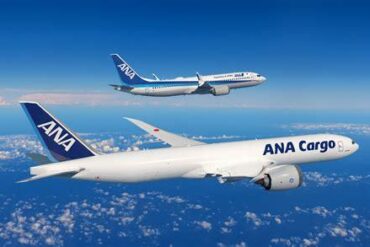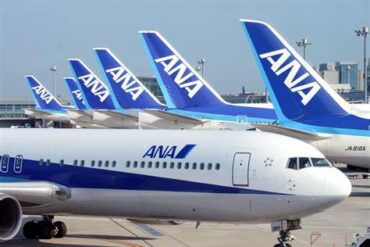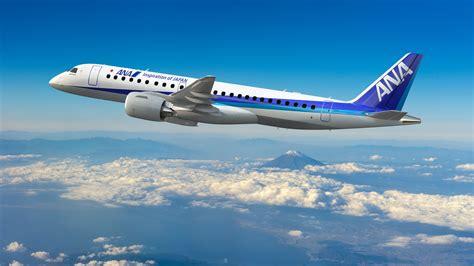
All Nippon Airways (ANA) has taken a decisive leap into the future of regional aviation, becoming Japan’s first operator of the Embraer E2 family with a landmark firm order for 15 E190-E2 aircraft, confirmed on Day 1 of the 2025 Paris Air Show. This pivotal move marks a historic milestone in ANA’s fleet evolution and reflects a broader shift toward efficiency, passenger comfort, and right-sizing for domestic demand.
ANA’s Regional Strategy Reimagined With the E190-E2
All Nippon Airways’ decision to introduce the Embraer E190-E2, the smallest member of Embraer’s next-generation regional jet lineup, is a calculated step toward modernizing its domestic and short-haul offerings. While the airline is no stranger to domestic dominance—supported by its robust fleet of Dash 8-Q400 turboprops, Boeing 737-800s, and even widebody 787s on popular routes—the introduction of the E190-E2 provides a perfect mid-size solution for routes that demand more than a turboprop but fall short of full narrowbody capacity.
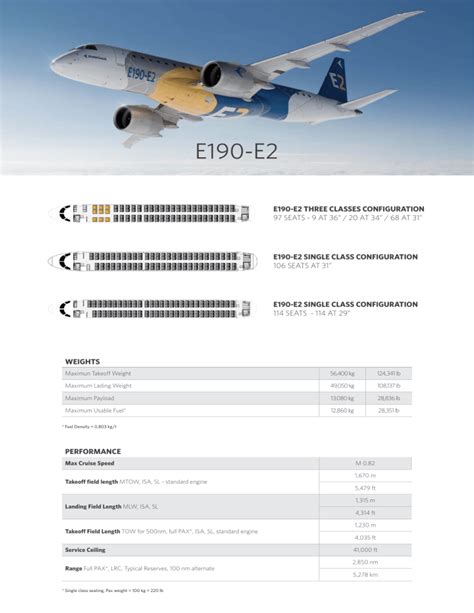
With around 100 seats, the E190-E2 fits strategically between the 74-seat Dash 8-Q400 and the 166-seat Boeing 737-800, enabling ANA to right-size aircraft to demand more precisely. This is particularly relevant in Japan, where regional air travel is critical, and aircraft utilization needs to match the country’s varied geography and passenger flows.
Order Finalized at the Paris Air Show: A Long-Awaited Milestone
While the formal announcement came during the Paris Air Show, the journey to this historic order began in February 2025, when ANA unveiled a 77-aircraft mega order aimed at reinventing its entire fleet structure. The breakdown included Airbus A321neos, A321XLRs, Boeing 737 MAX aircraft, Boeing 787 Dreamliners—and notably, the 15 firm orders for the Embraer E190-E2, with an additional five aircraft held as options.
The finalization of the deal at Le Bourget underscores ANA’s commitment to the E2 platform and further solidifies Embraer’s growing role in the Asia-Pacific market. Deliveries are scheduled to begin in 2028 and extend through 2033, giving ANA ample time to integrate the jets seamlessly while phasing out older equipment.

A First for Japan: Opening the Embraer Chapter
This landmark deal also marks the first time ANA—or any Japanese carrier—has ordered Embraer aircraft from the E2 generation, a significant development in a country where Bombardier and Boeing have long dominated the regional segment. ANA had never operated the original E-Jet family, which makes its leap directly to the E2 series both bold and symbolic.
This decision reflects not just a fleet refresh but a paradigm shift in aircraft selection philosophy, with ANA embracing Embraer’s promises of fuel efficiency, low noise, and passenger-focused design. According to Martyn Holmes, Chief Commercial Officer of Embraer Commercial Aviation:
“We are honoured that Embraer’s E190-E2 small narrowbody aircraft will join ANA’s fleet… The E2’s cabin will appeal to ANA’s passengers as it offers outstanding comfort and space with no middle seats.”
Technical Excellence Meets Passenger Appeal
The Embraer E190-E2 has been globally recognized for its cutting-edge technology and passenger-friendly design. It incorporates the Pratt & Whitney PW1900G geared turbofan engines, delivering 17.3% lower fuel burn compared to its predecessor. ANA’s environmental initiatives align well with this green profile, especially in a region increasingly sensitive to carbon emissions and noise pollution.
The aircraft’s four-abreast seating with no middle seats, oversized windows, personal lighting and air vents, and enhanced baggage space cater perfectly to Japan’s detail-oriented customer base. ANA’s commitment to quality cabin service finds a natural partner in the E190-E2’s quiet cabin, optimized airflow, and ergonomically designed interiors.
Fleet Positioning: Where the E190-E2 Fits
ANA’s current fleet paints a clear picture of size diversity—from the Airbus A320neo to the double-deck Airbus A380. Yet, a notable gap existed in the 90-110 seat range, which the E190-E2 now fills.
This strategic capacity niche gives ANA multiple operational advantages:
- Better route matching: Perfect for thin routes with moderate demand.
- Operational flexibility: High-frequency scheduling with lower unit costs.
- Fleet efficiency: Reduces overcapacity and boosts load factor on undersized routes.
- Environmental responsibility: Lower emissions and quieter landings near dense urban airports.
ANA is expected to utilize these aircraft primarily on domestic and short-haul regional routes, potentially freeing up larger aircraft like the Boeing 737-800s and 787s for higher-capacity routes or international legs. This smart redistribution of resources enables ANA to maximize fleet utilization across all aircraft families.
The E190-E2 in Japan’s Unique Aviation Landscape
Japan’s aviation market is unlike any other. Domestic demand is robust, driven by a combination of geography, business travel, tourism, and cultural preferences for punctuality and safety. Yet, many regional airports struggle with declining populations and aging infrastructure.
The Embraer E190-E2’s short runway performance, smaller noise footprint, and lean operating economics allow ANA to service underserved or emerging airports without compromising on passenger experience. Additionally, the E2 provides an excellent substitute on routes where turboprops may be seen as less appealing, but narrowbodies are excessive.
Embraer’s Win and the Broader Implications
Embraer’s breakthrough with ANA is more than a sales win—it is a strategic beachhead into Japan, a notoriously hard market to penetrate. The country’s flag carriers have traditionally leaned toward Boeing and Airbus products. Embraer’s inroads here suggest a rising confidence in mid-market jets, which offer versatility and profitability in increasingly competitive and environmentally regulated markets.
For ANA, it also represents a symbolic embrace of global aircraft diversity, favoring function and form over brand familiarity. This trend aligns with what many analysts consider the next phase of fleet strategy worldwide: multifaceted fleets tailored not just to route length but to traffic patterns, environmental conditions, and cost dynamics.
A Vision of 2030 and Beyond
ANA’s announcement extends far beyond a simple aircraft order. It reflects a multi-decade strategic blueprint, anchoring flexibility, sustainability, and passenger experience as key pillars of its future growth.
By the time deliveries complete in 2033, ANA’s fleet will be a finely tuned ecosystem of long-haul widebodies, efficient narrowbodies, and versatile regional jets like the E190-E2. The operational data collected during the E2’s service life will inform route design, maintenance cycles, crew utilization, and even airport infrastructure decisions for years to come.
Final Thoughts: ANA Charts a New Course
All Nippon Airways’ decision to adopt the Embraer E190-E2 is a bold but calculated move that elevates both ANA and Embraer into a new era of regional aviation in Asia. It exemplifies the airline’s ability to make forward-looking, passenger-focused decisions grounded in operational logic and sustainability targets.
As other carriers across Asia-Pacific face similar challenges—shrinking regional margins, changing passenger expectations, and environmental pressures—ANA’s strategic bet on the E190-E2 could set a precedent that reshapes regional fleet dynamics across the continent.
Japan’s skies are poised for transformation, and leading that change, for the first time, is an aircraft with Brazilian roots and a Japanese flag on its tail.