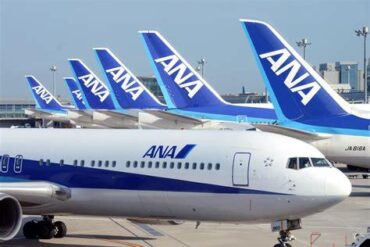
All Nippon Airways (ANA), Japan’s largest airline, stands as a paragon of technological advancement, operational excellence, and customer-centric service in global aviation. With a fleet exceeding 216 aircraft and service to over 90 destinations, ANA’s expansive reach and strategic agility position it as a regional leader and a global competitor. Its trajectory from a modest post-war helicopter service to a world-renowned Star Alliance member exemplifies strategic foresight, persistent innovation, and adaptive modernization.
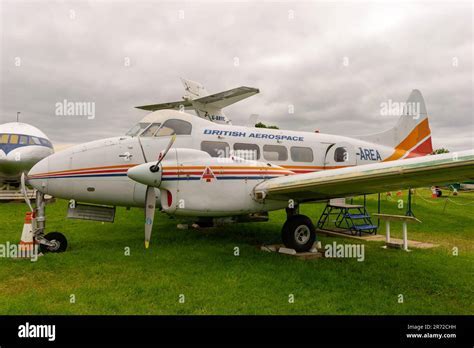
Founded on 27 December 1952 as Nippon Helicopter and Aeroplane, ANA’s early years were grounded in short-haul passenger and cargo operations. The merger with Far East Airlines in 1958 marked a turning point, as the new entity adopted the All Nippon Airways name and solidified its NH flight code. The airline’s first foray into passenger operations commenced on 1 February 1954, following an inaugural cargo run in December 1953 using a de Havilland Dove aircraft.
Domestic Dominance and Rapid Growth
Throughout the 1960s and 70s, ANA’s growth was tethered to Japan’s post-war economic miracle. The airline expanded rapidly, acquiring a versatile domestic fleet that included Douglas DC-3s, Fokker F27s, and the NAMC YS-11, which became a backbone of Japan’s regional connectivity. In 1976, ANA introduced the Boeing 747SR, specifically designed for Japan’s high-density domestic routes, further cementing its presence in the national market.
The strategic merger with Fujita Airlines in 1963, and ANA’s debut on the Tokyo Stock Exchange in 1961, signaled an aggressive corporate expansion. By 1974, ANA boasted the largest domestic air network in Japan, enabling consistent profitability and market saturation well before its international ambitions took flight.
International Expansion and Star Alliance Prestige
The breakthrough into scheduled international services came in 1986, with flights from Tokyo to Guam, Los Angeles, and Washington D.C. Within five years, ANA had added major routes to London, New York, Singapore, and Beijing, evolving rapidly from a domestic operator to a long-haul powerhouse. The introduction of wide-body aircraft like the Lockheed L-1011 and Boeing 747-400 during the 1980s and 1990s enabled ANA to compete effectively on transpacific and intercontinental routes.
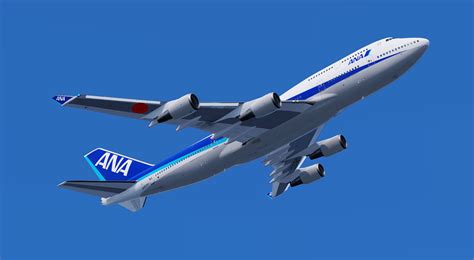
ANA’s 1999 induction into Star Alliance, the world’s largest airline alliance, reinforced its global status and opened new opportunities for code-sharing, joint ventures, and customer loyalty integration. Strategic joint ventures with Lufthansa and Singapore Airlines provided further access to lucrative European and Southeast Asian markets.
Modern Fleet and Future Orders
ANA’s present-day fleet exemplifies its commitment to efficiency, sustainability, and passenger comfort. The airline operates a mix of modern Airbus and Boeing aircraft, including:
- Airbus A320neo / A321neo for short-haul operations
- Boeing 737-800 and MAX 8 for regional routes
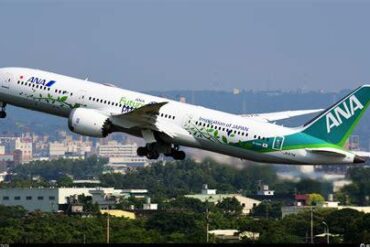
- Boeing 767, 777-200ER/300ER, and 787-8/9/10 Dreamliners for long-haul and premium services
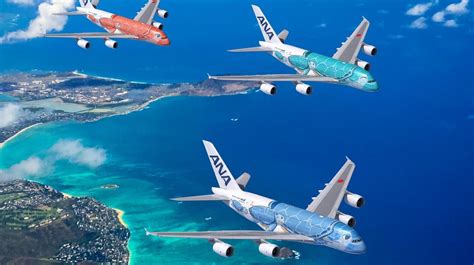
- Airbus A380 “Flying Honu” for the Tokyo–Honolulu market
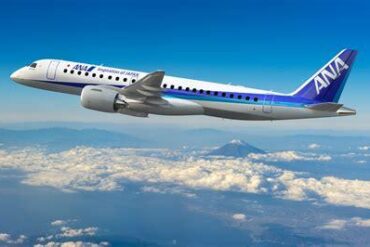
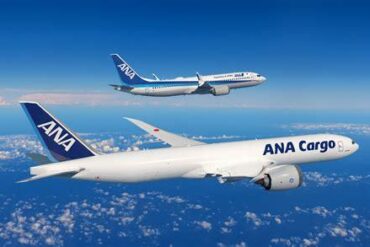
Freighter services are handled by Boeing 767-300BCF and 777F aircraft, with overnight cargo hubs centered in Naha and code-sharing agreements with UPS. Orders are in place for Boeing 777-9, 777-8F, and Embraer 190-E2, reflecting ANA’s future readiness.
Corporate Structure and Global Holdings
In April 2013, ANA Holdings was established to supervise over 70 affiliated companies, spanning aviation, hospitality, training, and logistics. Current leadership includes Chairman Shinya Katanozaka, CEO Koji Shibata, and President Shinichi Inoue, who oversee strategic decisions and alliance management.
ANA has invested internationally, including minority stakes in Vietnam Airlines (5.62%) and Philippine Airlines (9.5%), enhancing its influence across Southeast Asia. The group also includes:
- Peach Aviation, a thriving low-cost subsidiary
- ANA Wings, Air Do, Air Japan, and Air Nippon for domestic and regional service
- Pan Am Flight Academy and IFTA for pilot training
- IHG ANA Hotels Group Japan, bridging travel and hospitality under one brand

Branded Experiences and Cabin Innovation
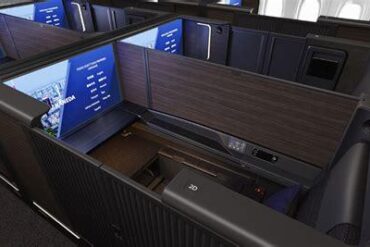
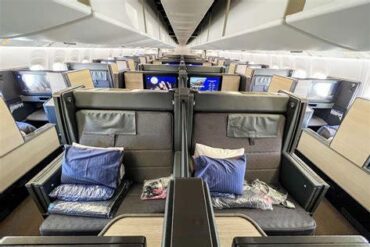
ANA has continually pushed the boundaries of inflight experience. The “Inspiration of Japan” product line, launched in 2009, features lie-flat business class beds, enclosed first-class suites, and on-demand entertainment with iPod connectivity. Notably, ANA pioneered bidet-equipped lavatories on the 787 Dreamliner, emphasizing Japanese hygiene standards.
Cabin innovations are complemented by premium lounges, women-only lavatories, and seamless tech integration. These amenities have earned ANA repeat honors from Skytrax, including:
- 5-Star Airline Rating (2013–2024)
- 2024 Best Airport Services in Asia
- 2024 Best Airline Staff Service in Asia
Liveries, Culture, and Pop Appeal
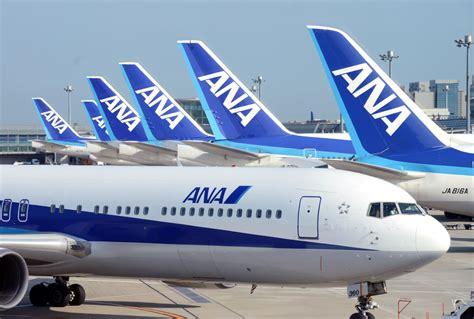
Beyond functionality, ANA has embraced cultural identity and pop art to differentiate its fleet. The standard “Triton Blue” livery is sleek and modern, but ANA also boasts a collection of themed aircraft that appeal to diverse passenger segments. Notable examples include:
- Flying Honu A380s with turtle designs symbolizing Hawaiian travel
- Pokémon jets, such as Pikachu Jet JA894A
- Star Wars aircraft like R2-D2 Dreamliner and C-3PO 777
- Demon Slayer and ANA Future Promise aircraft, promoting sustainability and youth culture
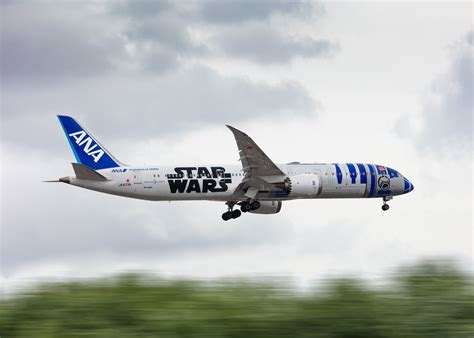
These liveries underscore ANA’s broader cultural strategy, reflected in media partnerships. The airline features prominently in Japanese TV dramas, films, and manga — such as the comedy “Happy Flight,” the sci-fi blockbuster “War of the Worlds,” and manga series “All Nippon Air Line.” Its inflight magazine Wingspan and digital content (e.g., iPad Virtual Airport app) serve both entertainment and branding functions.
Freight Operations and Strategic Cargo Moves
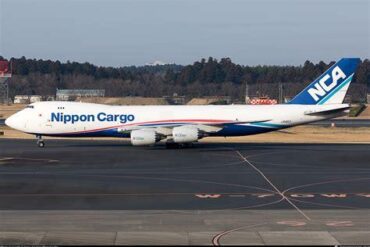
ANA’s cargo division has evolved into a strategic pillar of the airline’s business model. The carrier operates six dedicated freighters and covers 18 international and 6 domestic cargo routes. Key partnerships, such as the code-share with UPS and the 2023 acquisition agreement to take over Nippon Cargo Airlines, highlight ANA’s ambition to dominate Japan’s air freight market.
Its overnight hub in Naha, Okinawa, offers a time-zone advantage for pan-Asian logistics and next-day delivery to global capitals. The integration of Allex Cargo into Air Japan further consolidates ANA’s cargo capabilities under a unified operations framework.
Safety, Legacy, and Regulatory Influence
While ANA enjoys an excellent safety record, its history includes notable incidents that shaped modern aviation policy. The tragic mid-air collision of Flight 58 in 1971 led to the death of 162 passengers and prompted substantial changes in Japanese air traffic control. Likewise, the Flight 60 crash in 1966 catalyzed the mandate for cockpit voice recorders and flight data recorders in all commercial aircraft.
These lessons have resulted in rigorous safety protocols and compliance standards. ANA’s consistent performance in cleanliness, reliability, and operational safety reinforces passenger trust and institutional accountability.
Conclusion: ANA’s Enduring Ascent
All Nippon Airways represents Japan’s aviation excellence, blending tradition with global ambition. As a pioneer in sustainability, cabin innovation, and international cooperation, ANA sets benchmarks for full-service carriers worldwide. Its diversified business model — encompassing passenger travel, cargo, training, and hospitality — ensures resilience in an ever-volatile industry.
With strategic investments, new aircraft orders, and a continually evolving network, ANA is poised not only to retain its leadership in Asia but to shape the future of global air travel.