Founded on September 27, 1978, and officially launching operations on May 8, 1985, Nippon Cargo Airlines Co., Ltd. (NCA) has established itself as a cornerstone of Japan’s international freight infrastructure. As the nation’s first dedicated cargo airline, NCA pioneered all-cargo services in a market previously dominated by passenger carriers with cargo capacity. Operating under the leadership of President and CEO Tetsufumi Otsuki, the airline’s strategic vision centers on global connectivity, operational excellence, and environmental responsibility.
With its headquarters at Narita International Airport in Chiba Prefecture, NCA serves as a vital logistics artery, linking Asia, Europe, and North America through a highly coordinated network of routes. The airline maintains operational hubs in Narita, Naha, and Osaka–Kansai, which support its global network and streamline east-west freight flow.
Corporate Evolution and Strategic Ownership
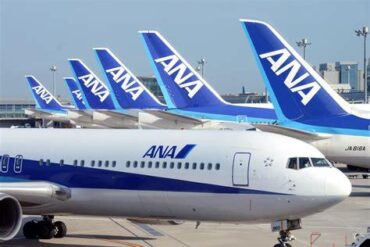
Nippon Cargo Airlines originated as a joint venture involving a consortium of shipping and airline interests, including Nippon Yusen and All Nippon Airways (ANA). Its modest beginnings were marked by a single-room office located within ANA’s Kasumigaseki Building in Tokyo.
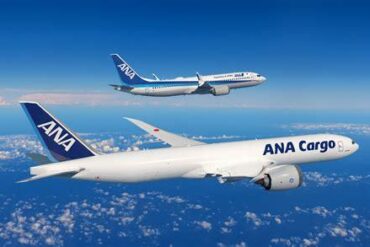
The joint venture continued until August 2005, when ANA sold its stake, leaving Nippon Yusen as the sole owner. However, this changed again in March 2023, when ANA Holdings Inc. announced its intention to acquire NCA as part of a broader strategy to strengthen its cargo division amid shifting global supply chain demands. Regulatory delays postponed the transaction, but on August 1, 2025, ANA Holdings completed the full acquisition of NCA through a simplified share exchange, bringing Japan’s leading all-cargo airline into its expanding logistics portfolio.
Headquarters and Environmentally Advanced Infrastructure
NCA’s corporate and operational center is located in the NCA Line Maintenance Hangar at Narita International Airport. Completed in April 2009 and operational by June 2009, the facility exemplifies cutting-edge sustainable design. Engineered in collaboration with Nippon Steel Engineering, the hangar includes a light wall, top lighting, wind-powered ventilation, and a garden roof. These elements not only reduce energy consumption but align with NCA’s strategic environmental goals.
Additional features like a solar water heating system and rainwater recycling for aircraft washing reinforce the company’s commitment to eco-friendly aviation. Designed for daytime maintenance operations, the hangar supports NCA’s fleet servicing requirements while maintaining industry-leading energy efficiency.
Corporate Movements and Domestic Expansion
Since its inception, NCA has relocated its corporate headquarters multiple times to accommodate growing operational demands. From the original Kasumigaseki Building, the company transitioned in 1997 to the New Kasumigaseki Building, then again in 2003 to the Shiodome City Center in Minato, Tokyo. Each move reflected expansion, technological advancement, and a growing workforce.
Beyond Tokyo, the airline maintains significant domestic operations, including a regional Tokyo office at Onarimon Yusen Building and a Narita administrative office, which was relocated to the airport’s south cargo area in 2011. NCA also established a computer center in Koto, Tokyo, in 2007, transferring its tech operations from ANA’s systems. That same year saw the launch of a Global Operations Center at Narita’s Terminal 2, consolidating flight operations and crew management under one roof.
Meanwhile, a dedicated crew training center in Shibayama, Sanbu District, was initiated in late 2007, operational by September 2008, further reinforcing NCA’s commitment to in-house excellence and aviation safety.
International Presence and Regional Subsidiaries
In 2007, NCA expanded its global footprint by establishing two regional subsidiaries:
- NCA Americas Inc., headquartered at Chicago O’Hare International Airport, United States
- Nippon Cargo Airlines Europe B.V., located at Amsterdam Airport Schiphol, Netherlands
These facilities ensure seamless regional operations across major freight corridors in North America and Europe, enabling local responsiveness with global oversight. The Chicago base, initially planned for New York, anchors NCA’s U.S. operations, while the Schiphol location supports central European logistics.
Global Network and Destinations
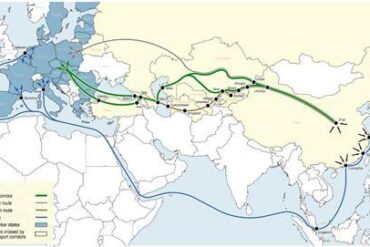
As of June 2024, NCA operates scheduled cargo flights to 20 destinations spanning Asia, Europe, and North America. Its key international routes include:
- Asia: Shanghai, Hong Kong, Taipei, Bangkok, Changi (Singapore), and multiple Japanese cities (Narita, Kansai, Naha, Nagoya, Kitakyushu)
- Europe: Amsterdam (Netherlands), Frankfurt (Germany), Milan (Italy), Baku (Azerbaijan)
- North America: Chicago, New York (JFK), San Francisco, Dallas, Los Angeles, Anchorage
This strategic layout facilitates timely delivery and optimized transit times, serving industries from electronics and automotive to healthcare and high-value goods.
Strategic Codeshare Partnerships
NCA enhances its international connectivity through codeshare agreements with:
- All Nippon Airways – maximizing intermodal capacity across domestic and international freight networks
- Cargolux – leveraging European logistics strength
- Singapore Airlines Cargo – extending Southeast Asia reach
These alliances offer greater cargo space flexibility, route diversification, and cross-network service consistency, significantly boosting NCA’s logistical capabilities.
Fleet Overview: Modern, Efficient, and Specialized
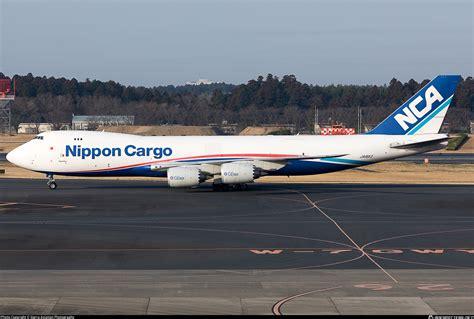
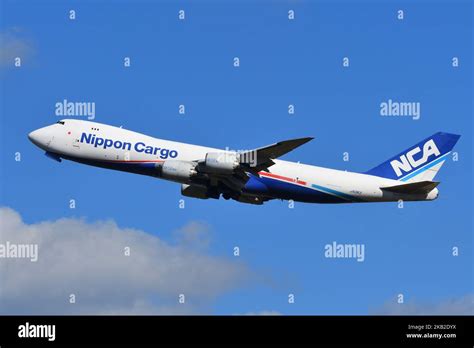
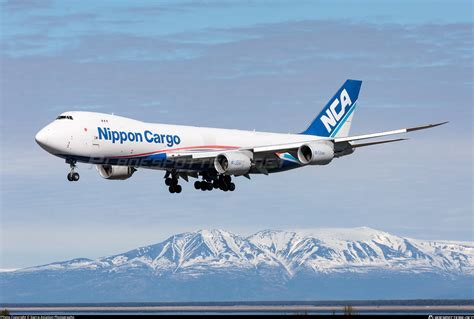
As of August 2025, Nippon Cargo Airlines operates a dedicated fleet of eight Boeing 747-8F freighters. This aircraft type, known for its enhanced payload capacity, fuel efficiency, and long-range performance, suits NCA’s mission-critical transcontinental operations.
The uniformity of its fleet simplifies maintenance logistics, optimizes crew training, and ensures consistent service standards across all routes.
Fleet Development History
NCA’s fleet evolution reflects its commitment to technological advancement and cost efficiency:
- In 2005, it took delivery of its first Boeing 747-400F, part of a fleet designed to replace aging 747-200Fs.
- In 2006, two more 747-400Fs were ordered, totaling 10 aircraft. However, the final two were diverted to Cargo B Airlines, a Belgian carrier partly owned by NCA. After Cargo B’s bankruptcy in 2009, these aircraft were stored and eventually leased or sold to AirBridgeCargo Airlines.
- In 2007, NCA placed an ambitious order for 14 Boeing 747-8Fs, receiving eight. Economic headwinds in 2015 led to the cancellation of four, while the remaining two options were dropped in 2017, resulting in no pending aircraft orders.
This disciplined fleet management strategy ensured that NCA maintained high capacity without overextending during volatile market conditions.
Retired Fleet
Over the decades, NCA phased out several aircraft types as part of its modernization initiative:
- Boeing 747-200F (1984–2011)
- Boeing 747-200SF (1997–2008)
- Boeing 747SR-81F (1993–2009)
- Boeing 747-400F (2005–2019)
This transition allowed the airline to focus on the next-generation 747-8F, known for its reliability, capacity, and sustainability performance.
Conclusion: A Future Fueled by Legacy and Innovation
Nippon Cargo Airlines stands as a benchmark in the cargo aviation industry, balancing decades of operational expertise with a clear vision for the future. With a robust global network, modern fleet, and strategic backing from ANA Holdings, NCA is poised to navigate the evolving demands of international freight logistics.
As global supply chains grow more complex, NCA’s strength lies in its precision, reliability, and ability to adapt to shifting trade dynamics, ensuring it remains a vital conduit for goods between Japan and the world.