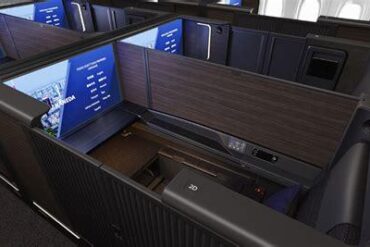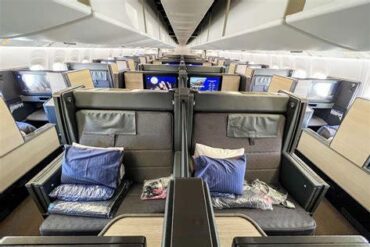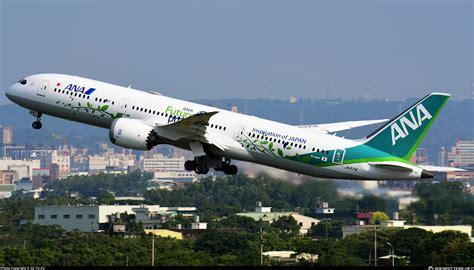
The global aviation landscape continues to evolve, and at the heart of long-haul efficiency and passenger comfort lies the Boeing 787 Dreamliner. Among all the airlines flying this state-of-the-art aircraft, All Nippon Airways (ANA) has emerged as the undisputed leader in 2025, operating the world’s largest fleet of Boeing 787s. ANA’s commitment to innovation, sustainability, and network expansion is deeply intertwined with the Dreamliner’s technological edge.
ANA’s Strategic Mastery: Operating the Largest Boeing 787 Fleet
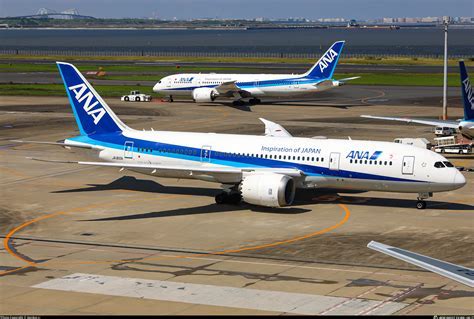
As of 2025, ANA operates an impressive fleet of 88 Boeing 787 Dreamliners, encompassing all three variants: the 787-8, 787-9, and 787-10. The airline’s pioneering adoption of this aircraft began with its historic position as the launch customer in 2004, and over the years, ANA has continued to expand its Dreamliner fleet to suit a wide array of domestic and international missions.
The fleet composition includes 34 Boeing 787-8s, 44 Boeing 787-9s, and 10 Boeing 787-10s, with additional aircraft on order across each variant. The 787-8 aircraft, with an average age of 12.4 years, remains a foundational component of ANA’s fleet, configured to offer between 240 and 335 seats, depending on the route and market. The newer 787-9s and 787-10s, averaging 8.0 and 2.6 years, respectively, are tailored for premium international and high-density domestic routes.
Expanding Horizons: How ANA Deploys the Boeing 787
ANA’s Dreamliner deployment strategy exemplifies precision and versatility. Leveraging the fuel-efficient and long-range capabilities of the 787, ANA has successfully transformed both international and domestic operations. Tokyo’s Haneda (HND) and Narita (NRT) airports serve as the airline’s strategic hubs, from where Dreamliners connect to Europe, North America, and key Asian markets.
In November 2025, ANA’s most frequent Dreamliner routes include busy domestic corridors such as Haneda to New Chitose, Naha, and Fukuoka, with the high-capacity 787-10 being the preferred workhorse. Internationally, the 787-9 and 787-8 serve premium routes like Haneda to Frankfurt, Taipei Songshan, and Osaka to Naha, blending passenger comfort with fuel efficiency. The airline has also announced new intercontinental connections to Milan Malpensa and Stockholm Arlanda, underscoring its ambition to enhance global reach via the Dreamliner.
Engineering a Flagship: What Makes the Boeing 787 Dreamliner Unique
The Boeing 787 Dreamliner redefined widebody aircraft engineering. Launched as the 7E7 program in 2003 and later rebranded, the 787 features 80% composite materials, reducing overall aircraft weight and improving fuel economy. With advanced aerodynamics, quieter engines, and enhanced cabin pressure systems, the Dreamliner offers a significantly improved passenger experience.
Powered by either GE’s GEnx or Rolls-Royce’s Trent 1000 engines, the 787 provides up to 76,000 pounds of thrust, cruising comfortably at 488 knots (561 mph). The three variants span a range of missions:
- The 787-8, with a 7,305 nautical mile range, is ideal for long-haul yet less dense routes.
- The 787-9 extends this to 7,565 nautical miles, offering a perfect balance of capacity and efficiency.
- The larger 787-10, optimized for high-density medium-haul routes, delivers up to 574,000 pounds MTOW with a range of 6,330 nautical miles.
Competitive Context: ANA’s Place Among Global Boeing 787 Operators
While ANA leads globally, other carriers have made substantial investments in the Dreamliner program. United Airlines follows with 80 active 787s, and American Airlines operates 67. In Asia and the Middle East, Qatar Airways (56), Etihad Airways (47), and Japan Airlines (45) maintain robust fleets. However, ANA’s legacy as the launch customer and continued dominance in both volume and operational efficiency keeps it at the forefront of the Dreamliner era.
Airlines such as Emirates, Air Canada, Singapore Airlines, and Turkish Airlines are ramping up their 787 fleets. Notably, United Airlines has a massive order of 141 Boeing 787-9s, and Qatar Airways is set to receive 75 additional 787-10s, ensuring that competition in this space remains fierce. Nevertheless, ANA’s balance of quantity, route diversity, and deep integration of all 787 variants sets a benchmark in operational excellence.
A Diversified Fleet: Beyond the Dreamliner
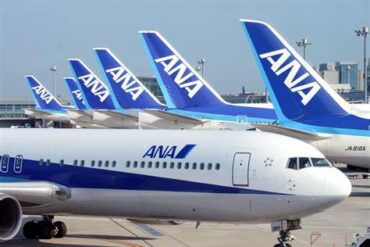
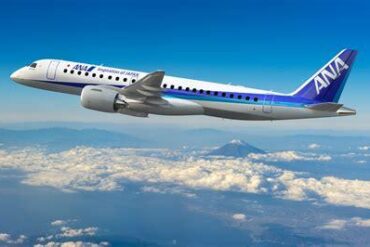
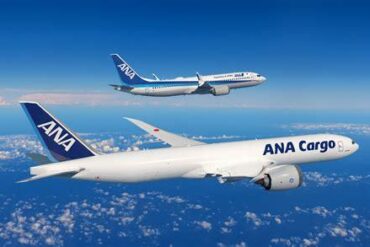
Although the 787 fleet is ANA’s crown jewel, the airline operates a highly diversified fleet to serve various market segments. Its widebody lineup includes Airbus A380s, Boeing 777s, and Boeing 767s, while narrowbody aircraft include the Boeing 737, Airbus A320 and A321 variants, and de Havilland Canada Dash 8s. The fleet totals 242 aircraft, with 103 more on order, including next-generation models like the 737 MAX 8 and Embraer E190-300s.
This balanced approach allows ANA to optimize aircraft deployment across domestic short-hauls, regional Asia-Pacific routes, and global long-haul networks, leveraging the Dreamliner where it offers the greatest returns in performance and customer satisfaction.
Conclusion: ANA’s Dreamliner Legacy Takes Flight in 2025
As we move deeper into the decade, ANA’s leadership in Boeing 787 operations reflects a clear strategic vision rooted in fleet modernization, route flexibility, and passenger-centric innovation. The combination of cutting-edge aircraft technology and thoughtful network planning ensures that ANA remains a global benchmark for long-haul travel. With the Dreamliner at the heart of its operations, ANA is not merely flying passengers—it is redefining the experience of modern aviation, one ultra-efficient route at a time.