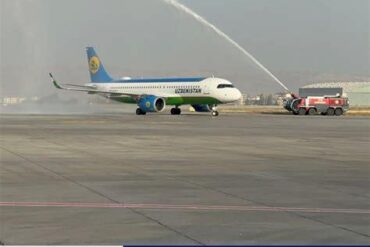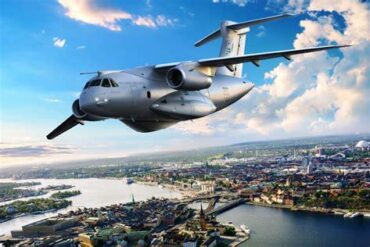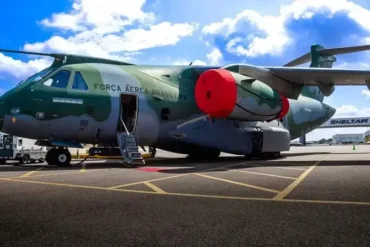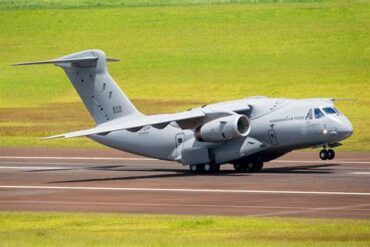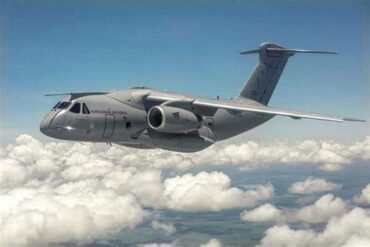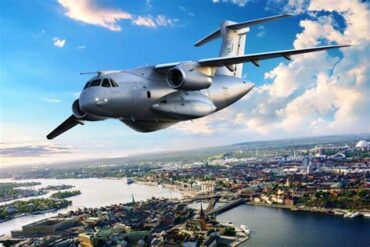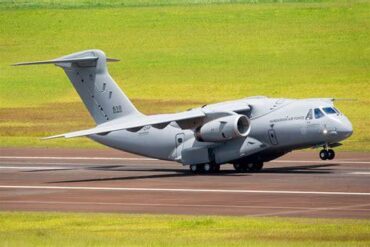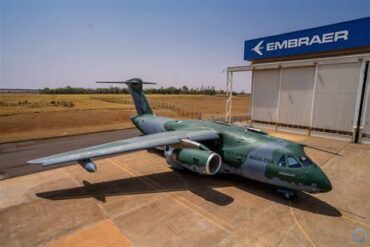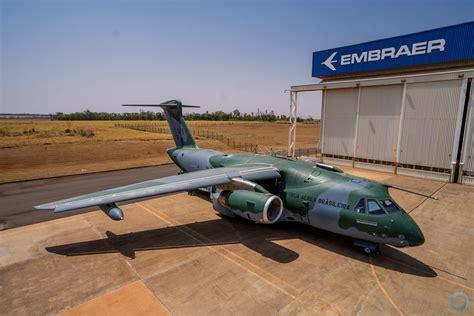
Uzbekistan has taken a decisive step in reshaping Central Asian military aviation by becoming the first country in the region to operate Brazil’s Embraer C-390 Millennium military transport aircraft. The confirmation, announced by Embraer on February 3, 2026, during the Singapore Airshow, formally identified the Republic of Uzbekistan as the customer behind a previously undisclosed order, instantly placing the Uzbek Air Force among a growing group of modern airlift operators worldwide.
The announcement carries strategic weight beyond the acquisition itself. It signals Uzbekistan’s intent to modernize its air mobility capabilities while diversifying defense partnerships beyond traditional suppliers. In a region historically dominated by Soviet-era platforms, the selection of a Western-designed, jet-powered transport aircraft reflects a pragmatic shift toward performance, interoperability, and long-term sustainability.
The C-390 Millennium is positioned by Embraer as a next-generation medium transport aircraft capable of bridging the gap between turboprop transports and heavier strategic airlifters. For Uzbekistan, the aircraft is expected to support a broad spectrum of missions ranging from routine logistics and troop transport to humanitarian assistance and disaster relief across vast and often challenging terrain.
Uzbekistan’s confirmation also expands the global footprint of the C-390 program, reinforcing Embraer’s success in marketing the aircraft beyond Latin America and Europe. With this decision, the Uzbek Air Force becomes the eleventh confirmed operator of the platform, joining an increasingly diverse international user base.
A Strategic Addition to Uzbekistan’s Airlift Fleet
The Uzbek Air Force currently operates a mixed transport fleet composed of both Soviet-designed and Western-built aircraft. This includes EADS CASA C-295 medium transports for regional missions, alongside Ilyushin Il-76 heavy airlifters that remain central to long-range and high-payload operations. Older platforms such as the Antonov An-26 and An-12 also continue to serve, despite their advancing age and increasing maintenance demands.
Rather than acting as an immediate replacement, the C-390 Millennium is expected to supplement this diverse fleet, gradually assuming roles that demand higher speed, improved reliability, and modern avionics. Its jet propulsion provides a significant advantage in response time, particularly for time-critical missions such as disaster response or urgent troop deployment.
For a country with expansive borders and varied geography, the ability to rapidly project airlift capability is a strategic asset. The C-390’s flexibility allows Uzbekistan to streamline logistics while reducing dependence on aging airframes whose operational availability can fluctuate.
Growing Global Adoption of the C-390 Millennium
Uzbekistan’s entry into the C-390 community adds momentum to a program that has steadily gained international traction. Brazil, the launch customer, originally ordered 28 aircraft in 2014, later adjusting the total to 22, with deliveries beginning in 2019. Portugal followed with an initial order of five aircraft, later expanded, while Hungary, Austria, the Czech Republic, the Netherlands, Sweden, South Korea, Slovakia, and Lithuania have all selected or are negotiating for the type.
This expanding operator list highlights the aircraft’s appeal to air forces seeking a balance between payload capacity, speed, and operating economics. The presence of both NATO and non-NATO users underscores its adaptability across different doctrinal and logistical environments, a factor likely considered by Uzbek planners.
Origins and Evolution of the C-390 Program
The C-390 program traces its roots to the mid-2000s, when Embraer identified a global requirement for a modern medium transport aircraft capable of outperforming traditional turboprop designs. Backed by the Brazilian government, early development funding paved the way for detailed design and prototype construction.
The aircraft’s maiden flight in February 2015 marked a pivotal milestone, validating a concept centered on speed, payload, and advanced systems. Serial production followed, and by 2019 the first operational aircraft entered service with the Brazilian Air Force. Later that year, Embraer officially adopted the C-390 Millennium designation for international markets, emphasizing its long-term relevance and technological maturity.
Variants and Mission Flexibility
At the core of the family is the baseline C-390 transport configuration, optimized for cargo, troop movement, medical evacuation, firefighting, and humanitarian operations. The KC-390 variant adds aerial refueling capability, enabling the aircraft to function as both a tanker and receiver, significantly extending mission reach and enhancing interoperability.
In December 2024, Embraer unveiled plans for a future C-390 IVR variant focused on intelligence, surveillance, reconnaissance, and maritime patrol roles. While still in the conceptual stage, this proposal illustrates the platform’s growth potential and modular design philosophy.
Performance and Technical Characteristics
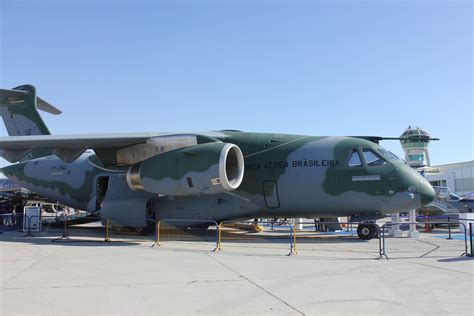
The C-390 Millennium is a high-wing, twin-engine aircraft powered by IAE V2500-E5 turbofan engines, each delivering substantial thrust to support heavy payloads and short turnaround times. A fully fly-by-wire flight control system enhances handling precision, while a digital cockpit with head-up displays supports tactical operations in demanding environments.
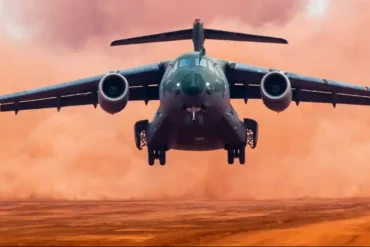
Its cargo hold dimensions allow for a maximum payload of 26,000 kilograms, accommodating vehicles, pallets, or up to 80 troops. The aircraft’s cruise speed of approximately Mach 0.8 places it among the fastest in its class, significantly reducing transit times. Robust landing gear with low-pressure tires enables operations from semi-prepared runways, a crucial feature for regional and humanitarian missions.
Implications for Central Asian Air Power
By selecting the C-390 Millennium, Uzbekistan sets a regional precedent in adopting a modern, jet-powered military transport aircraft tailored for multi-role operations. The decision strengthens national air mobility, enhances disaster response capacity, and aligns the Uzbek Air Force with a globally supported platform designed for decades of service. In doing so, Uzbekistan positions itself at the forefront of Central Asian military aviation modernization, signaling a future defined by speed, flexibility, and strategic reach.