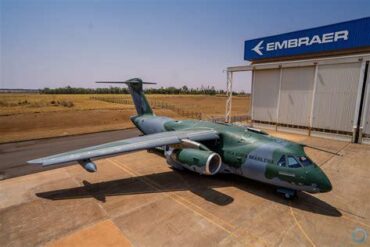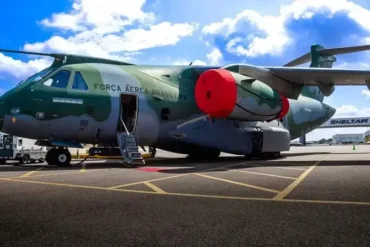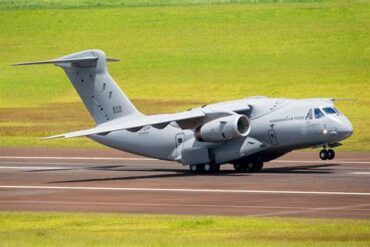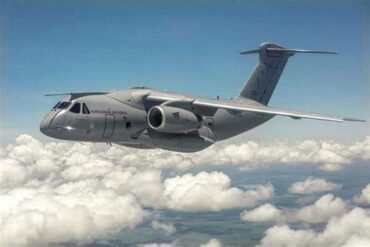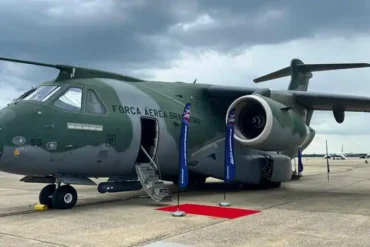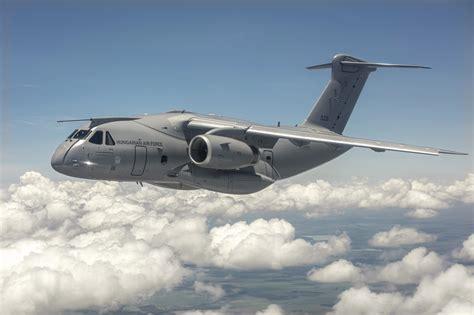
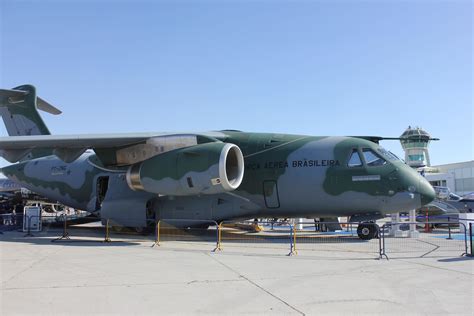
At the 2025 Paris Air Show, a defining moment unfolded for European tactical airlift capabilities as the Royal Netherlands Air Force (RNLAF) signed a groundbreaking agreement with Embraer Defense & Security. The deal marks the Netherlands as the launch customer for Embraer’s newly developed aeromedical evacuation system for the C-390 Millennium aircraft—ushering in a new era of in-flight medical response capabilities for NATO-aligned nations.
The contract, finalized on the show’s main stage, cements an extensive collaboration between Embraer and the Dutch Ministry of Defence. The result is a modular, roll-on/roll-off medical solution that fully integrates into the C-390’s existing cargo systems, enabling rapid conversion between standard transport and airborne intensive care operations.
Aeromedical Innovation with Strategic Purpose
The aeromedical evacuation (AE) system announced by Embraer is designed to cover a wide spectrum of medical operations—from transporting injured soldiers in need of life support to evacuating civilians in crisis zones. The modular architecture allows mission-specific setups, enabling Dutch forces to deploy either standard medevac units or advanced intensive care modules.
A standout feature of the system is the negatively pressurized isolation module, a high-tech containment unit tailored for infectious disease scenarios. This module reduces the risk of pathogen transmission, protecting flight crews and medical personnel when evacuating patients suffering from highly contagious illnesses. As modern threats such as pandemics, biological warfare, and disaster outbreaks persist, this capability significantly enhances mission readiness.
“This effectively turns the C-390 into a flying hospital,” said Bosco da Costa Junior, President and CEO of Embraer Defense & Security. “Our collaboration with the Netherlands shows how innovation and partnership can deliver real operational value.”
Tactical Flexibility with Multinational Scope
This signing is more than a procurement—it’s a declaration of the Netherlands’ vision for shared security infrastructure. The Dutch Ministry of Defence is not only acquiring the medical system for domestic use but also securing seven additional aeromedical kits, designated for rapid deployment to allied nations. These additional kits could serve coalition partners under NATO or the European Union, making the Netherlands a key logistics hub for in-flight medical response operations.
The move closely mirrors Portugal’s strategic posture, as Lisbon recently ordered its sixth C-390 and announced delivery options for ten units to NATO allies. This trend marks a new era of regional interoperability where C-390 operators can standardize equipment and jointly manage logistics chains.
Netherlands’ C-390 Program: Strategic Vision in Action
In 2022, the Royal Netherlands Air Force committed to a fleet of five C-390 Millennium aircraft, with delivery commencing in 2026. These aircraft will replace the aging Lockheed C-130 Hercules, a platform that has long served NATO but is increasingly outpaced by modern operational requirements.
With a payload capacity of 26 tons, a cruise speed of 470 knots, and unrefueled range exceeding 2,000 nautical miles, the C-390 is already proving its value in tactical mobility. By equipping it with advanced aeromedical capabilities, the Dutch are effectively transforming the Millennium into a dual-role platform—part heavy hauler, part airborne ER.
Modular Design: From Humanitarian to Combat Missions
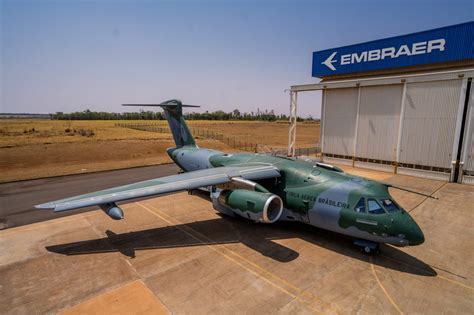
The roll-on/roll-off design of the aeromedical module is central to its utility. Compatible with the C-390’s cargo handling system, the module can be loaded or offloaded quickly at any airfield equipped for Millennium operations. This flexibility ensures the aircraft can be redeployed in short timeframes—a decisive advantage in volatile theaters of operation.
The medical system offers configurations for:
- Basic patient transport for non-critical conditions
- Advanced life support and intensive care, including ventilators, cardiac monitors, and surgical-grade lighting
- Contagious disease containment through isolated pressurized units
- Multi-patient evacuation, with capability to carry several stretchered individuals with onboard medical teams
The Netherlands’ leadership in deploying this platform highlights its growing emphasis on dual-use defense infrastructure that supports both military and humanitarian missions. In scenarios like pandemic response or disaster relief, the C-390 with its aeromedical system becomes a strategic asset for the European Union Civil Protection Mechanism as well.
NATO Implications: Strengthening Allied Response
The Netherlands’ decision to offer aeromedical kits to partners positions the country as a force multiplier within NATO. It paves the way for smaller or non-C-390 operating nations to access advanced AE capabilities via Dutch logistical channels. This aligns with broader alliance goals of burden-sharing and multinational modular operations.
Should a NATO ally require AE capability on short notice, the Netherlands could dispatch a pre-configured kit and even provide mission-ready personnel, enabling plug-and-play access to world-class airborne medical support. This model reduces duplication, enhances standardization, and increases operational tempo across alliance contingents.
Embraer’s Strategic Leap in Global Defense
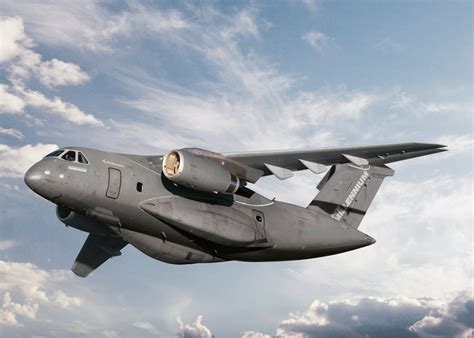
The debut of this aeromedical capability enhances the C-390 Millennium’s export potential. Embraer has long pitched the aircraft as a next-generation successor to platforms like the C-130J. By introducing a proven and scalable AE configuration, Embraer is now tapping into a critical operational niche—especially for nations balancing budget constraints with complex mission requirements.
Embraer has confirmed that the system is being made available to all current and future C-390 operators, including Brazil, Hungary, Portugal, and future customers in the Middle East, Africa, and Asia-Pacific. With defense budgets shifting towards multi-role solutions, the aeromedical-equipped C-390 offers a compelling case.
A Model for Future Procurement
This contract also sets a precedent in how modular systems can be designed from the ground up with user cooperation. The Dutch Ministry of Defence’s close involvement from the design phase ensured the final product aligns not only with national doctrine but also with NATO standards.
This user-centric development process—from concept definition to deployment—could become a model for future military-industrial collaborations, especially in Europe. As geopolitical risks heighten and rapid deployment scenarios become more frequent, having interoperable, field-adaptable platforms like the C-390 is no longer a luxury—it’s a necessity.
Looking Ahead
As the first delivery of the Dutch C-390s approaches in 2026, testing and certification of the aeromedical modules will continue at facilities in both the Netherlands and Brazil. The Royal Netherlands Air Force is expected to conduct joint exercises with allies to demonstrate and refine deployment protocols for the new capability.
By blending advanced engineering, operational foresight, and multinational coordination, the Netherlands is setting a powerful example of how modern airlift assets can serve both military missions and broader humanitarian objectives. The Embraer C-390, now transformed into a flying medical center, stands poised to play a central role in the 21st-century battlespace and beyond.