The Brazilian aerospace giant Embraer is intensifying efforts to cement its role in the US defense market, identifying Northrop Grumman as a potential key partner in the American development of its C/KC-390 Millennium multi-mission transport and tanker aircraft. With strategic conversations underway and a deliberate campaign to court the Pentagon and key stakeholders, Embraer is stepping up its game in an increasingly competitive global defense arena.
Embraer’s US Defense Ambitions Take Flight
According to Bosco da Costa Junior, Chief Executive of Embraer Defense & Security, the partnership discussions with Northrop Grumman are currently “in an early stage.” Still, they represent a critical piece of Embraer’s long-term strategy to penetrate the US military market. Describing Northrop as a company with which Embraer has a “very good relationship,” da Costa emphasized the American defense contractor’s deep experience in system development, integration, and air-to-air refueling technologies.
The timing of this potential alliance is particularly significant. Embraer’s previous US-oriented initiative, a collaboration with L3Harris under the ‘Agile Tanker’ concept, ended in late 2024 due to diverging priorities. That effort had focused on the development of a lightweight refueling boom, which would have expanded the KC-390’s utility beyond its existing hose-and-drogue configuration.
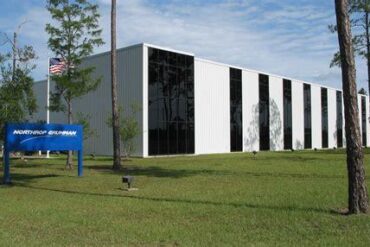
With that chapter closed, Embraer now turns to Northrop Grumman—an American defense titan known for major contributions to airborne systems like the B-2 Spirit and the E-2D Hawkeye—as it seeks not just a partner but a pathway to embed itself in the defense industrial base of the United States.
A Tactical Airlifter with Strategic Promise
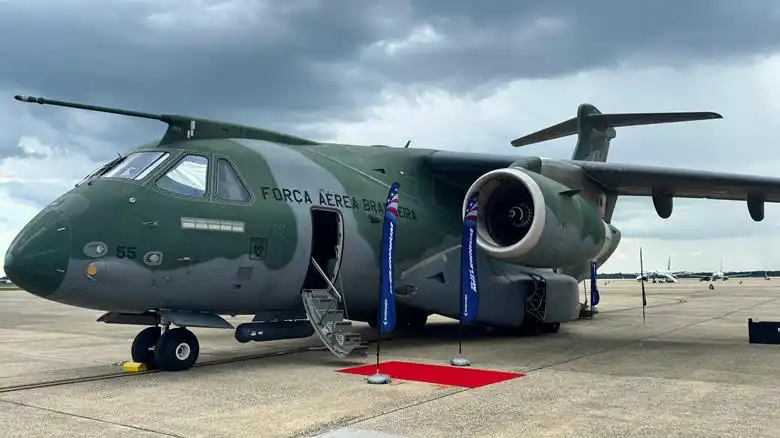
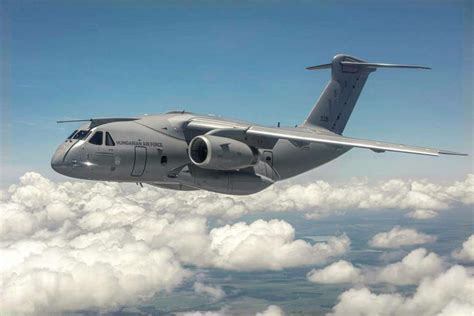
The C/KC-390 Millennium is more than a typical tactical transport aircraft. Featuring jet propulsion, fly-by-wire controls, and a multi-mission design, it provides both strategic and tactical airlift capabilities. With a payload capacity of up to 26 tons, and a cruising speed of 470 knots, it competes directly with the aging Lockheed C-130 Hercules, offering modern design advantages and significant cost-per-hour operational benefits.
The aircraft’s current refueling system, based on underwing Cobham hose-and-drogue pods, aligns well with most NATO platforms. However, to fully meet US Air Force requirements—particularly in scenarios requiring boom-based aerial refueling—a systems integration partner like Northrop Grumman becomes indispensable.
Northrop Grumman’s Role: System Integration and Strategic Leverage
Northrop Grumman brings decades of expertise in defense avionics, command and control systems, and airborne platforms integration. For Embraer, aligning with such a company not only enhances technical capabilities but also boosts political capital within the US defense procurement landscape. A US-based partner may help assuage concerns over domestic production, maintenance networks, and supply chain security.
“We want to become even more of an American solution,” said da Costa. To that end, Embraer has signaled intent to invest in an assembly line within the United States, adding that the company already meets Buy American Act thresholds through the integration of significant US-made components in the KC-390.
The partnership discussions with Northrop also follow a broader campaign that included showcasing the Brazilian Air Force’s KC-390 at Joint Base Andrews, as well as stops in Nevada and Florida. These demonstrations aimed to underline the platform’s versatility, from cargo transport and MEDEVAC operations to aerial refueling and airdrop missions.
A Foot in the Door: The US Military Market
Securing a foothold in the United States—the largest defense market in the world—would be a transformative leap for Embraer. Currently, the KC-390 has garnered 42 orders, with 10 units delivered across Brazil, Portugal, and Hungary. However, a US military contract could exponentially increase demand, validate the platform on a global scale, and establish a production and logistics ecosystem stateside.
“We are doing our homework,” said da Costa. That homework includes engagements with US government stakeholders, including a reported discussion with Defense Secretary Pete Hegseth during the Shangri-La Dialogue in Singapore. These diplomatic overtures underline the seriousness with which Embraer is approaching the US market—not merely as an export opportunity but as a strategic shift in its industrial base.
Capabilities of the KC-390: Built for Versatility
Embraer’s KC-390 offers compelling specifications that make it a versatile asset for any modern air force:
- Payload Capacity: Up to 26,000 kg (57,300 lbs)
- Cruising Speed: 470 knots (870 km/h)
- Range: 1,380 nautical miles at max payload
- Engine: IAE V2500-E5 turbofan engines
- Multimission: Cargo, troop transport, air-to-air refueling, medevac, firefighting
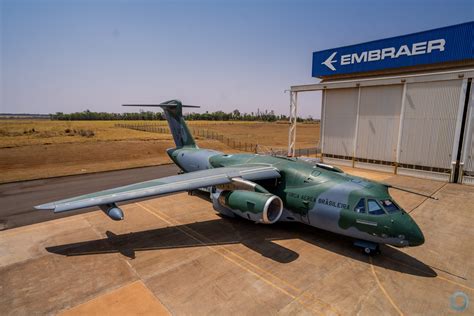
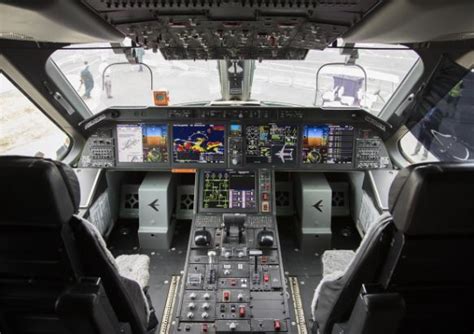
The aircraft’s fly-by-wire system and autonomous cargo handling capabilities reduce crew workload and turnaround time, making it ideal for both conventional and expeditionary operations. With short-field landing and takeoff capability, it can access remote or improvised airstrips—an essential feature for disaster relief, humanitarian missions, and tactical deployments.
Future Outlook: A Transcontinental Alliance in the Making
If the partnership with Northrop Grumman proceeds as expected, Embraer stands to gain not just a systems integration partner but a strategic co-anchor in the US defense ecosystem. The move could pave the way for the KC-390 to be offered under a future US Air Force program or even influence NATO-standard interoperability frameworks.
With geopolitical shifts demanding logistical flexibility and multilateral operability, aircraft like the KC-390 are positioned at the confluence of innovation, versatility, and cost-effectiveness. Embraer’s ambition is not simply to sell aircraft but to embed itself as a long-term contributor to US national security needs and allied operations.
Da Costa’s assertion that Embraer is “knocking on all the doors” signals a company that is not merely hoping for export sales but actively reshaping its business development model. The planned US-based assembly line would serve as a major investment, creating high-tech jobs and reinforcing the KC-390’s standing as a truly binational solution.
Conclusion: Embraer Bets Big on American Partnership
With the Northrop Grumman partnership on the table, Embraer is aligning ambition with opportunity. By strengthening its foothold in the US through industrial cooperation, political outreach, and technological collaboration, the Brazilian manufacturer is signaling its readiness to compete on the world stage. The KC-390, once seen as a promising regional platform, now stands poised to become a transcontinental defense solution.
The next steps will depend heavily on how the proposed alliance unfolds and whether Embraer can navigate the complex channels of Pentagon acquisition, industrial policy, and joint capability development. But if the trajectory holds, the KC-390’s future may be just as American as it is Brazilian—built for two hemispheres, ready for the world.