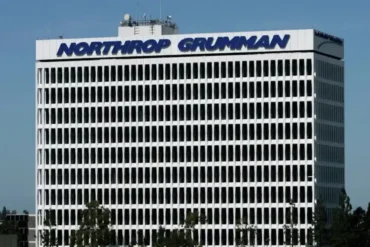
Northrop Grumman, a cornerstone of U.S. military aerospace innovation, saw its stock dip nearly 1% to $498.92 following a report suggesting the U.S. Navy’s sixth-generation fighter jet program, known as F/A-XX, might be shelved indefinitely. The downturn is notable, considering the broader market’s relative optimism, with the S&P 500 climbing 0.5% and the Dow Jones Industrial Average staying flat.
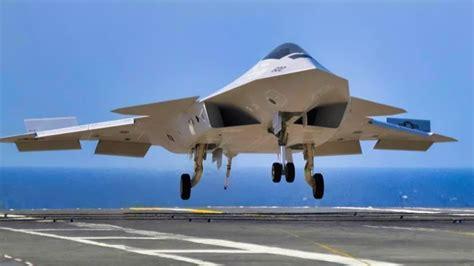
The report, first circulated by Axios, cast a shadow over what had been seen as one of the most coveted defense contracts in years—one that could reshape the future of aerial combat and determine the strategic landscape for decades. The F/A-XX program, designed as the Navy’s next-generation carrier-based stealth aircraft, was believed to be a two-horse race between Northrop Grumman and Boeing, both vying to deliver unmatched air dominance capabilities in a world where adversaries like China and Russia are already advancing their fifth- and sixth-generation air platforms.
Market Reacts to Program Uncertainty
The market response to the shelving rumors was swift. Northrop’s loss of nearly 1% market value might appear modest, but the implications run deeper. At stake is not only an estimated $200 million in potential annual earnings, as suggested by Jefferies analyst Sheila Kahyaoglu, but also strategic prestige. Based on Northrop’s valuation multiple, that revenue translates to roughly $1.40 per share, or about $28 per share in total value. This equates to a 6% impact on the company’s stock valuation, far above the actual dip, indicating that investors may still be cautiously optimistic about the project’s eventual revival.
While Northrop and the Pentagon have not commented, the silence has amplified speculation. The absence of a follow-up decision after the Air Force’s March 2025 selection of Boeing to produce its sixth-generation F-47 fighter jet only adds fuel to uncertainty. That surprise decision favored Boeing over Lockheed Martin, upsetting expectations and hinting at shifting priorities within the Department of Defense’s acquisition strategy.
Strategic Background: The Rise of Sixth-Generation Combat Jets
The development of sixth-generation fighter jets marks a pivotal leap in military aerospace capability. These platforms are envisioned to go beyond stealth and supercruise, integrating AI-assisted avionics, swarming drone capabilities, advanced electronic warfare, and multi-domain operations. The F-35 and F-22 currently represent the fifth generation, with the former designed for multirole versatility and the latter for unmatched air superiority.
However, peer adversaries are closing the gap. China’s J-20, which has evolved rapidly in both capability and production volume, and Russia’s Su-57, albeit lagging in numbers, are clear indicators of the global arms race. Rumors of a Chinese sixth-generation prototype already undergoing trials have intensified urgency in U.S. defense planning.
In this geopolitical context, the Navy’s F/A-XX program represents not just a procurement decision, but a strategic imperative. It was conceived to replace the aging F/A-18 Super Hornets, bridging the gap between the versatile F-35 and legacy aircraft, while ensuring naval air wings remain relevant in contested battlespaces like the South China Sea and Indo-Pacific theater.
Boeing’s F-47 Win Upsets Expectations
In March 2025, Boeing scored a major upset when it won the contract to develop the Air Force’s sixth-generation fighter, now publicly identified as the F-47. This decision jolted market expectations, especially considering Boeing’s prior setbacks in both its military and commercial aerospace divisions. For years, Lockheed Martin and Northrop Grumman were seen as more likely frontrunners, owing to their extensive stealth fighter experience—Lockheed with the F-35, and Northrop with the B-2 Spirit stealth bomber and crucial systems on the F-22.
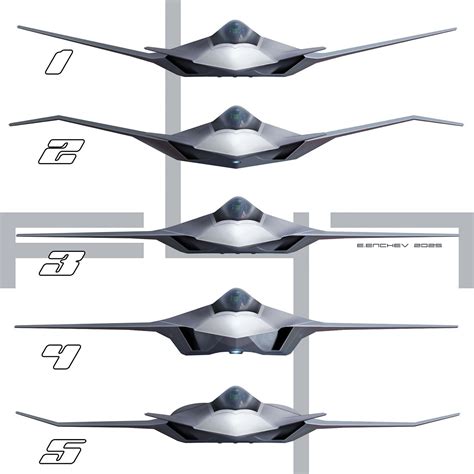
What made the F-47 win particularly relevant was the assumed interdependence between the Air Force and Navy sixth-generation programs. Analysts speculated that with Boeing winning the Air Force bid, the Pentagon might favor Northrop for the Navy contract, as a way to diversify defense suppliers and mitigate concentration risks. However, the emerging possibility that the Navy may simply adopt the F-47—with some modifications for carrier operations—calls that theory into question.
This consolidation approach would save billions in R&D and platform integration costs, but it could potentially compromise mission optimization. The Air Force and Navy have vastly different operational environments and needs. Carrier-based jets face intense physical demands—catapult launches, arrested landings, saltwater corrosion, and space constraints—that require specialized airframe and avionics configurations.
Why the Navy’s Program May Be Shelved
There are several plausible explanations for why the F/A-XX might be delayed—or canceled outright:
- Budgetary Realignment: With growing national debt and competing demands across defense and civilian spending, the Pentagon may seek to consolidate major programs.
- Procurement Efficiency: Leveraging the F-47 as a joint platform for both Air Force and Navy could reduce duplication and streamline logistics.
- Geopolitical Strategy Shift: The U.S. may be reprioritizing space and cyber warfare, redirecting funds from traditional platforms.
- Industrial Base Concerns: Ensuring Boeing remains competitive in the defense space might have tilted recent decisions.
- Technological Synergies: Shared development between services could accelerate innovation, particularly in autonomy and AI integration.
Still, each of these explanations carries trade-offs. Naval aviation experts caution that a repurposed Air Force jet may never meet the survivability and agility required for carrier group operations in hostile environments.
Northrop’s Mixed Outlook Amid Broader Defense Trends
Since Boeing’s F-47 announcement, Northrop Grumman shares had risen about 3%, suggesting investor confidence in its broader portfolio, which includes the B-21 Raider stealth bomber, nuclear modernization programs, and satellite defense systems. However, the recent dip illustrates how much weight the F/A-XX program carried in future earnings projections.
Meanwhile, Boeing stock jumped more than 20%, fueled not only by the F-47 win but also by renewed optimism in 737 MAX production—a critical component of its commercial aviation recovery. Lockheed Martin, left out of both sixth-gen fighter contracts so far, has seen relatively flat performance.
What Happens Next for Naval Air Dominance?
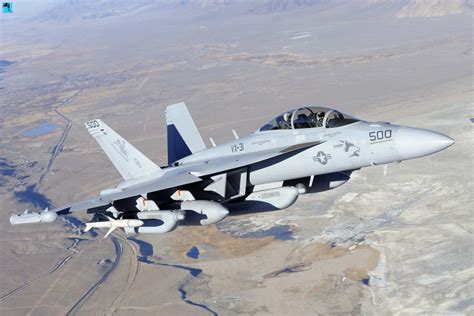
The Navy’s failure to clarify its intentions on the F/A-XX program leaves open a host of strategic questions. The F/A-18 Super Hornets, while still effective, are aging fast and facing obsolescence against near-peer adversaries deploying newer generation platforms with integrated electronic warfare and long-range missiles.
If the Navy opts to adopt the F-47, a multibillion-dollar redesign and testing campaign will be required to make it carrier-capable. That timeline may stretch into the mid-2030s, potentially leaving a critical capability gap. Worse still, adversaries may interpret this as a signal of indecision or internal disarray within U.S. defense planning, emboldening provocative actions in sensitive maritime zones.
Conversely, a surprise reversal of the shelving decision could restore momentum for Northrop Grumman, rejuvenating investor sentiment and keeping the contractor in contention for future programs.
Conclusion: A Moment of High Stakes for U.S. Defense Industry
Northrop Grumman’s stock dip reflects more than just temporary investor jitters. It signals the fragility and unpredictability of the U.S. defense procurement ecosystem, where multibillion-dollar decisions can shift with political winds, budget constraints, and strategic reorientation.
For now, the F/A-XX fighter jet remains in limbo, suspended between visionary ambition and bureaucratic indecision. Its fate will not only impact Northrop’s financial future but may also shape the next decade of American naval air power.
The coming months will be critical. Will the Navy carve its own future, or settle for a shared one? For Northrop—and for the future of American dominance in the skies—the answer can’t come soon enough.