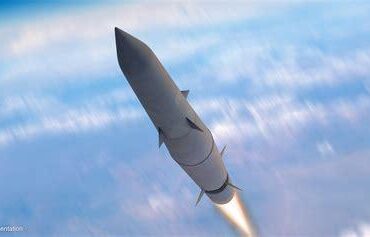
The U.S. Navy has taken a decisive step to strengthen its near-term defenses against advanced air, surface, and hypersonic threats by funding a major propulsion upgrade rather than waiting for an entirely new interceptor. A $94.3 million contract awarded to Northrop Grumman focuses on developing and qualifying a 21-inch diameter second-stage solid rocket motor, a move designed to significantly extend the reach and terminal performance of the Standard Missile-6 (SM-6) family. The decision reflects a pragmatic assessment of today’s threat environment, where speed of fielding matters almost as much as technological ambition.
Announced in early January 2026, the award signals that the Navy sees propulsion as the most immediate lever for increasing interceptor effectiveness. Hypersonic weapons compress engagement timelines and challenge existing kinematic envelopes, forcing defenders to extract more energy from missiles already deployed at sea. By concentrating on a larger, more capable second stage, the Navy is betting that greater impulse and sustained velocity can be delivered faster and at lower risk than launching a clean-sheet missile program.
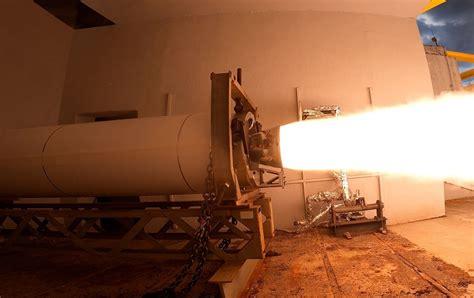
Northrop Grumman confirmed that the contract covers not only continued design work but also low-rate initial production of 60 rocket motors, all to be manufactured and tested at the company’s Propulsion Innovation Center in Elkton, Maryland. This quantity is far beyond what would be required for a mere technology demonstrator. It supports a full qualification pathway, including repeated static firings, environmental and vibration testing, and lot acceptance trials, positioning the motor for operational integration rather than experimental use.
Propulsion Geometry as a Performance Multiplier
The technical significance of the 21-inch motor lies in geometry as much as chemistry. Compared with the roughly 13.5-inch class sustainers used in current SM-6 configurations, a 21-inch diameter offers approximately 2.4 times the cross-sectional area. That increase translates directly into greater internal volume for propellant, insulation, and optimized grain design. Even without increasing overall length, the motor can deliver a substantially higher total impulse, allowing the missile to retain energy deeper into its flight profile and into the terminal phase where maneuvering targets demand sustained speed.
This focus on terminal energy is central to countering hypersonic threats. Hypersonic glide vehicles are not just fast; they maneuver unpredictably and can bleed interceptors of energy during pursuit. A more powerful second stage improves the interceptor’s ability to close distance late in flight, expanding the defended battlespace and increasing the probability of a successful endgame. While propulsion alone does not solve the entire hypersonic interception problem, it addresses a fundamental constraint that no sensor or guidance upgrade can bypass.
SM-6 and the Logic of Incremental Evolution
The Standard Missile-6 occupies a unique niche within the Navy’s arsenal. Designed as a true multi-mission interceptor, it supports long-range air defense, anti-surface warfare, and terminal ballistic missile defense from the same basic airframe. Existing SM-6 variants combine a full-diameter 21-inch booster with a smaller second stage, a compromise driven by performance, weight, and compatibility with the Mk 41 Vertical Launch System. For years, Navy planners have explored replacing that smaller sustainer with a full-diameter second stage to unlock additional range without altering external interfaces.
Within that framework, the new motor aligns closely with the Navy’s planned SM-6 Block IB variant. Previous disclosures to Congress have outlined plans for a 21-inch dual-thrust rocket motor intended to extend the missile’s kinematic envelope, and the language used in this contract closely mirrors those descriptions. A more uniform 21-inch body would push SM-6 performance closer to that of larger interceptors while preserving compatibility with existing launch infrastructure, a critical consideration for fleet-wide adoption.
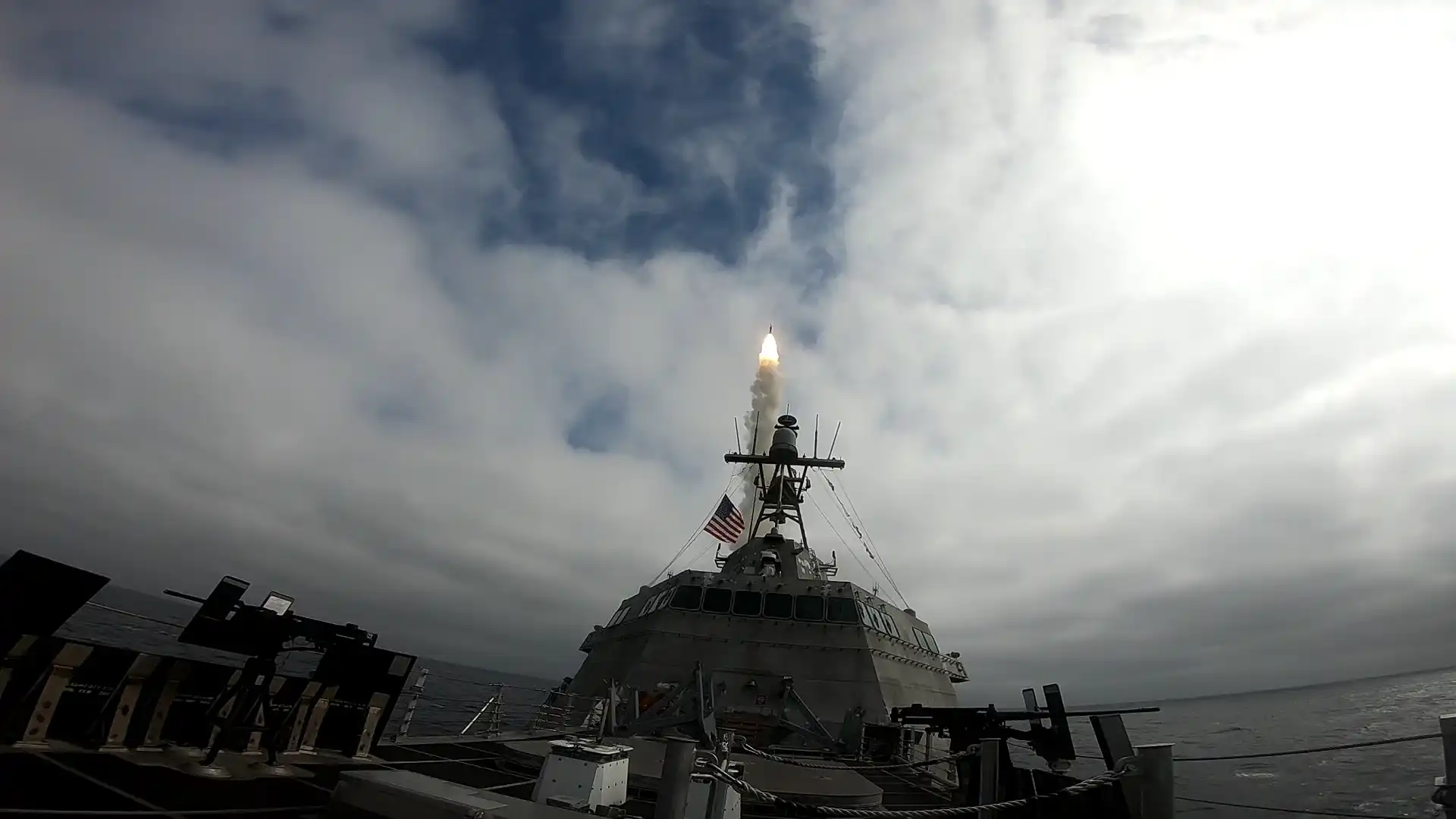
Hypersonic Defense and Near-Term Reality
The Navy’s emphasis on hypersonic threats in its public statements is deliberate. Both the service and the Missile Defense Agency have repeatedly warned that adversary hypersonic systems are advancing faster than traditional defensive architectures. Rather than waiting for future-generation interceptors still years from deployment, the Navy is pursuing layered defenses that adapt current weapons to meet emerging challenges. Enhancing propulsion is one of the few upgrades that delivers immediate, measurable gains in engagement range and flexibility.
Programmatically, the contract also reveals how the Navy is managing risk and speed. Raytheon remains the prime contractor for SM-6 production, responsible for integration, guidance, and overall missile performance. By directly funding propulsion development through Northrop Grumman, the Navy effectively decouples a critical subsystem from the missile prime, accelerating development and preserving flexibility. This approach allows the service to insert a government-directed propulsion solution into existing and future missiles without waiting for a prime-led redesign cycle.
Industrial Capacity as Strategic Infrastructure
The industrial-base implications are equally important. Northrop Grumman has disclosed that it has invested roughly $1 billion since 2018 to expand its solid rocket motor capacity, with facilities in West Virginia, Utah, and Maryland undergoing steady growth. These investments are aimed at increasing throughput, modernizing production lines, and reducing bottlenecks that have constrained missile output across the U.S. defense sector.
At the same time, Raytheon has acknowledged propulsion supply constraints by moving to diversify its supplier base and support additional domestic production capacity. The convergence of these efforts underscores how propulsion has shifted from a background manufacturing concern to a strategic dependency shaping readiness and deterrence. Missiles cannot be produced or fielded at scale without reliable access to high-performance rocket motors, and the Navy’s direct investment reflects that reality.
Beyond immediate operational benefits, the propulsion upgrade carries deterrent value. Adversaries planning hypersonic strike profiles must now account for a defending fleet with expanded reach and higher closing speeds, complicating targeting calculations. Incremental improvements, when fielded broadly, can shift strategic math without the visibility of a brand-new weapon. In this sense, the Navy’s choice favors quiet advantage over spectacle, reinforcing credibility through readiness rather than rhetoric alone. It also sends a clear signal to industry that mature technologies, when intelligently scaled, remain central to maritime air defense in an era often dominated by experimental concepts and ambitious timelines.
Buying Time, Reach, and Flexibility
In strategic terms, the contract represents a deliberate effort to buy time and flexibility. Future hypersonic interceptors and advanced missile concepts remain under development, but their timelines are measured in years. By contrast, upgrading propulsion within an existing, combat-proven missile family offers a faster path to improved capability. The Navy’s decision to fund Northrop Grumman’s 21-inch rocket motor signals a clear priority: extract more performance from what is already deployed, close the gap against emerging threats, and ensure that today’s ships are not left waiting for tomorrow’s solutions, sooner, with confidence and measurable operational payoff. Across global theaters.