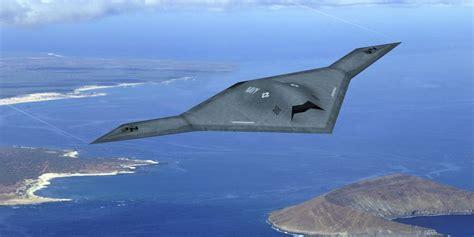
The Northrop Grumman RQ-180 represents the cutting edge of unmanned aerial reconnaissance, built to pierce the most heavily defended airspaces on the planet. Born from a classified effort to replace the Cold War-era SR-71 Blackbird, the RQ-180 has evolved into a pivotal asset in America’s arsenal for intelligence, surveillance, and reconnaissance (ISR) operations. This stealth UAV, rarely seen and barely acknowledged, embodies the future of strategic reconnaissance in an era of anti-access/area-denial (A2/AD) threats.
The Birth of a Ghost: Origins of the RQ-180 Program
Following the final retirement of the SR-71 in 1999, the U.S. Air Force found itself without a truly stealthy, penetrating reconnaissance capability. The temporary gap was filled with stopgap platforms like the RQ-4 Global Hawk and RQ-170 Sentinel, but none offered the survivability or depth of reach required for ISR missions in contested zones like China, Russia, or Iran.
The RQ-180 project emerged as a dark response to this vulnerability. Its genesis can be traced to the 2005 division of the Joint Unmanned Combat Air Systems (J-UCAS) program, originally a joint DARPA-Navy-Air Force initiative. When the program split, the Air Force’s classified ISR requirement took on a life of its own. Northrop Grumman, already the pioneer of the B-2 Spirit bomber, secured the development contract in 2008, beating Boeing and Lockheed Martin.
From Black Budget to Black Ops: Flight Testing and Introduction
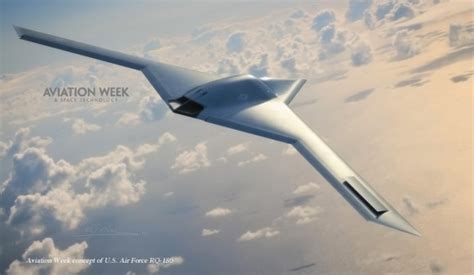
The RQ-180 first took to the skies on August 3, 2010, though its existence wasn’t publicly acknowledged until Aviation Week broke the story in December 2013. Funded through classified black budget channels, the aircraft was quietly introduced into service by 2015.
Northrop Grumman reportedly built eight Engineering, Manufacturing and Development (EMD) prototypes, progressively refining the platform’s airframe, radar signature, and sensor suite. The first full-production unit entered operational service by January 2017, solidifying the RQ-180’s position as the Air Force’s most secretive intelligence collector.
Supporting this transition to active service, new squadrons with classified mandates emerged. The 417th Test and Evaluation Squadron at Edwards AFB was activated on April 24, 2018, followed by the 74th Reconnaissance Squadron at Beale AFB on December 19, 2019—both widely believed to operate the RQ-180.
Caught on Camera: Rare Sightings of the RQ-180
Despite the aircraft’s ultra-stealthy profile, two known photographs have surfaced. The first came in November 2020, when a white, bat-shaped aircraft was captured in flight over Edwards Air Force Base, silhouetted against the sky. The second emerged in September 2021, this time spotted over Luzon, Philippines, suggesting global operational capability and an expanding area of deployment.
Anatomy of a Shadow: Airframe, Sensors, and Stealth Capabilities
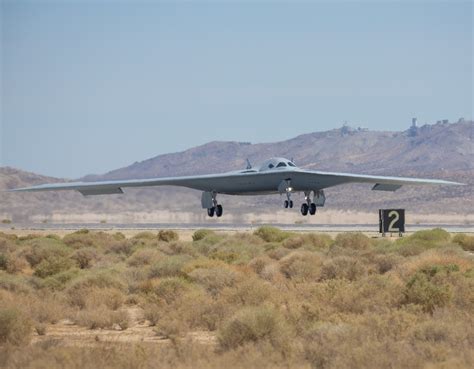
The RQ-180 is a feat of aerodynamic and stealth engineering, borrowing DNA from its predecessors while evolving into something wholly advanced. Featuring a cranked-kite layout with a wingspan of approximately 130 feet, it combines aerodynamic stability with broadband radar cross-section (RCS) reduction. This design not only improves survivability in radar-rich environments but also allows for extended endurance—reportedly up to 24 hours—at altitudes exceeding 60,000 feet.
Its construction is modular, with a scalable wing design pioneered by Northrop Grumman. This configuration supports both long-range ISR missions and potential upgrades for electronic attack or advanced communication relay roles. With a range of 14,000 miles (22,000 km), the RQ-180 can undertake global missions without the need for forward basing.
Internally, the aircraft is outfitted with cutting-edge systems:
- AESA (Active Electronically Scanned Array) radar, enabling high-resolution mapping and threat detection
- Passive electronic sensors, reducing signal emissions and enhancing survivability
- Multi-domain communication nodes, designed to link platforms such as the B-2 Spirit, B-21 Raider, F-22 Raptor, and F-35 Lightning II through secure data relays
The craft’s sheer stealth and shape have earned it nicknames such as the “Great White Bat” and “Shikaka”—a mythical creature known for avoiding detection.
Strategic Role in the Modern Battlefield
The RQ-180 is not just a reconnaissance aircraft; it is a cornerstone of next-generation air dominance strategies. It fits seamlessly into the Air Force’s Advanced Battle Management System (ABMS) and complements platforms like the B-21, forming part of a “family of systems” tailored for operations in GPS-denied, contested airspace. It serves multiple high-value roles:
- Deep-penetration ISR: Mapping high-risk zones ahead of manned bombers and strike aircraft
- Electronic Warfare (EW): Conducting jamming, spoofing, and signal disruption missions
- Communications relay: Acting as a data fusion hub in joint force engagements
By integrating with multi-domain command and control, the RQ-180 helps fuse sensor data across land, sea, air, space, and cyber—an essential edge in 21st-century warfare.
How It Compares: RQ-180 vs RQ-170 and Global Hawk
While RQ-170 Sentinel and RQ-4 Global Hawk paved the way, the RQ-180 eclipses both in capability and mission scope. The RQ-170, used in Operation Neptune Spear, is a tactical ISR platform with limited stealth and range. The RQ-4 offers high-altitude surveillance over friendly airspace but lacks survivability in contested zones.
The RQ-180 fills both gaps. It offers the stealth of the RQ-170 with the range and endurance of the Global Hawk, delivering unmatched performance:
- RQ-170 Sentinel: Tactical stealth, short-range, lower endurance
- RQ-4 Global Hawk: Long endurance, zero stealth, only suitable for uncontested skies
- RQ-180: Long endurance, deep-penetration stealth, survivability in denied environments
Its operational altitude of 60,000 ft, 24-hour endurance, and 14,000-mile range are unrivaled in current UAV fleets.
Organizational Integration: Where It Operates
Although details remain tightly guarded, the U.S. Air Force has made structural changes indicating full RQ-180 integration:
- 417th Test and Evaluation Squadron, Edwards AFB: Performs evaluation and refinement missions
- 74th Reconnaissance Squadron, Beale AFB: Conducts operational deployments and intelligence collection
Both squadrons are under the Air Combat Command (ACC) umbrella, and the aircraft is believed to fall under the purview of the Air Force Global Strike Command (AFGSC) due to its strategic ISR value.
RQ-180’s Place in Future Warfare
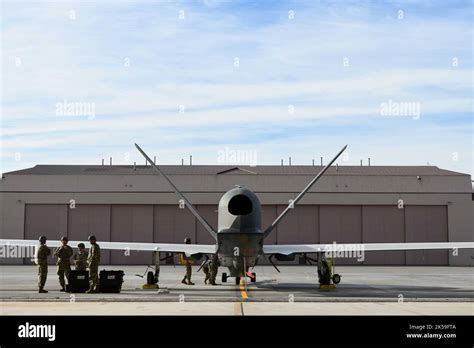
As China accelerates A2/AD systems and Russia fields sophisticated radar networks, the RQ-180 becomes more essential. Its ability to penetrate integrated air defense systems (IADS) without detection allows U.S. forces to maintain ISR superiority in the Indo-Pacific, Eastern Europe, and Middle East.
Its future may include more than reconnaissance. With modular bays, it could be adapted for electronic warfare, signal intelligence, or even hypersonic missile targeting—acting as a force multiplier in the digital battlespace. It will also play a crucial role in supporting manned-unmanned teaming doctrines, especially in coordination with B-21 bombers and NGAD (Next Generation Air Dominance) systems.
Conclusion: The Stealth Sentinel of the Skies
The Northrop Grumman RQ-180 is the ultimate realization of America’s quest for invisible intelligence dominance. Its stealth, range, sensor fusion, and survivability make it not just a UAV, but a strategic game-changer. As global threats grow more complex, the RQ-180 offers a silent watchful eye—operating high above, deep within enemy territory, unseen, unheard, and unmatched.
Its legacy is already being written—not in official press releases or flashy airshows—but in the black operations and quiet missions that shape the geopolitical landscape of the 21st century.