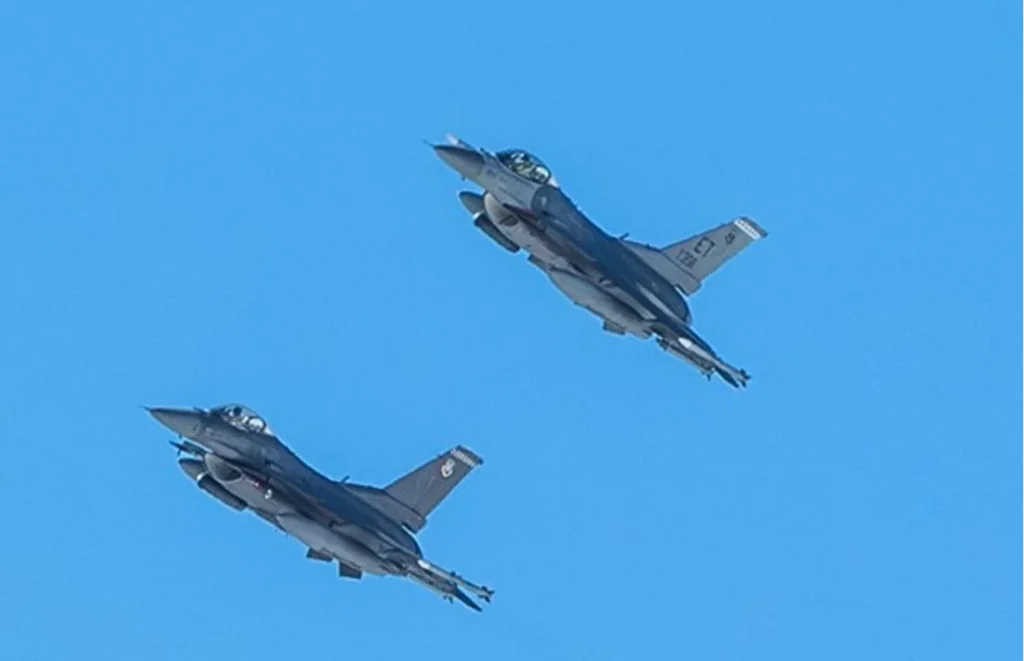
The U.S. Air Force’s F-16 upgrade path has taken a decisive leap forward with Northrop Grumman’s full integration of the AN/ALQ-257 Integrated Viper Electronic Warfare Suite (IVEWS) and the AN/APG-83 SABR AESA radar, creating a tightly synchronized sensor–jammer pairing that transforms how the Viper survives and fights in near-peer threat environments.
Northrop Grumman confirmed the milestone on October 27, 2025, marking the first time an electronically scanned radar and a modern digital EW suite on the F-16 can hunt, jam, and track within the same spectrum slice simultaneously. This capability removes the long-standing limitation where fighters had to temporarily silence their radar while jamming, a vulnerability that created blind spots at the worst possible moments.
The new architecture delivers a fighter that can visually map a battlespace, track multiple airborne targets, and shut down hostile emitters — all without degrading its own situational awareness. The fourth-generation Viper gains a leap in survivability once exclusive to specialized aircraft.
How IVEWS and SABR Work in Tandem
The breakthrough lies in pulse-to-pulse coordination. IVEWS and SABR digitally negotiate spectrum usage in microseconds, ensuring that each waveform occupies its own bandwidth without interference. This eliminates legacy radar-blanking requirements and keeps the cockpit picture clear while the suite actively jams enemy radars.
IVEWS brings a digital, ultra-wideband approach built around a high-speed EW processor, new radar warning receiver, and powerful transmitters sized specifically for the F-16’s constrained nose and wing-root geometry. Its architecture mirrors other Northrop EW programs of record, meaning updates, threat libraries, and software improvements propagate faster than on older, standalone podded solutions.
SABR AESA: The F-16’s New Multi-Role Backbone
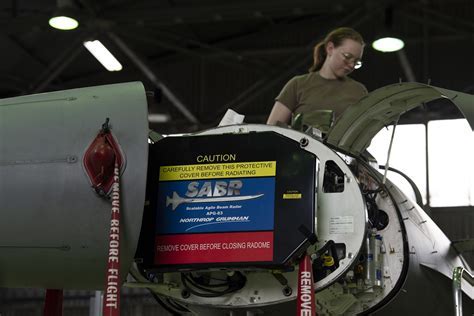
The AN/APG-83 SABR AESA radar borrows core technology from the APG-77 (F-22) and APG-81 (F-35), delivering long-range detection, high-resolution SAR mapping, GMTI modes, and advanced maritime functionality. As the program-of-record radar for U.S. Air Force F-16 upgrades and for new-build F-16 Block 70/V aircraft, SABR already has hundreds of units delivered globally, forming the foundation for unified modernization.
Years of Testing Converge Into Operational Readiness
IVEWS began its journey in 2019, progressing through lab integration at the J-PRIMES facility and later live testing at exercises like Northern Lightning 2021, where paired F-16s were subjected to dense, overlapping threat emitters. The system later completed an Operational Assessment with more than 70 sorties and over 250–300 flight hours.
Following congressional funding boosts and accelerated procurement driven by Middle East operational demands, dozens of IVEWS shipsets are already prepared for fielding. The pairing with SABR marks the culmination of a multiyear modernization plan now moving into production-scale deployment.
Transforming the F-16 Into Its Own Escort and Penetration Asset
The fully integrated IVEWS–SABR configuration allows F-16s to conduct self-escort missions, sort agile mobile threats, and geolocate radars in cluttered airspace while maintaining a pristine radar picture. The fighter can now feed highly accurate targeting data into Link 16 networks, aiding suppression of enemy air defenses (SEAD) across a coordinated four-ship formation.
This precision matters when hostile SAM systems shift frequencies, maneuver rapidly, or rely on millimeter-wave guidance — the type of dynamic threat IVEWS was designed to counter.
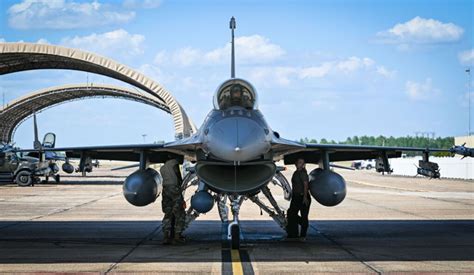
Global Impact and Export Momentum
SABR is already the standard for F-16V/Block 70 customers in the Indo-Pacific, Middle East, and Europe. IVEWS has secured its first major foreign sale in Turkey, with over 150 suites planned for both new and legacy airframes. Multiple allied air forces are in active discussions to align with the U.S. program of record, especially as radio-frequency threats evolve globally.
The architecture’s modularity extends beyond fighters: portions of the system are already being introduced to the U.S. Army’s HADES ISR aircraft and show potential for application on unmanned platforms and airlifters. For global operators seeking reliability, interoperability, and a shared software ecosystem, the combined IVEWS–SABR package represents a future-proof upgrade path tied directly to U.S. modernization momentum.
The Strategic Choice for F-16 Operators
Any air force investing in deep F-16 upgrades now faces a clear strategic pivot. Several competing EW systems exist, but the IVEWS–SABR pairing stands out as a single-supplier, tightly integrated U.S. solution that effectively turns each Viper into a mini-EA platform — a significant force multiplier for nations expecting to operate in high-threat environments.
For NATO and close partners facing sophisticated air defense networks, the integration offers a way to keep massed fourth-generation fighters credible alongside limited numbers of fifth-generation jets, preserving combat power where it is most scarce.
The combination signals a new era where the F-16, despite its age, is not only maintained but meaningfully reinvented, ensuring it remains a frontline asset across the world’s most contested regions.