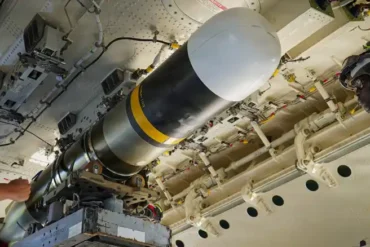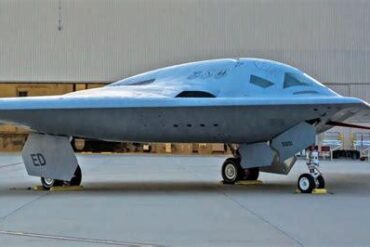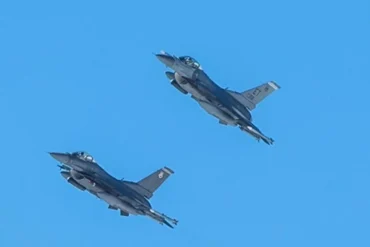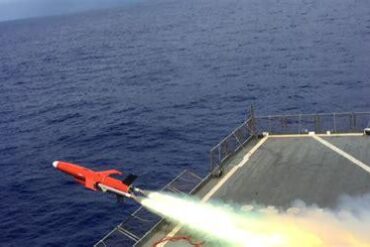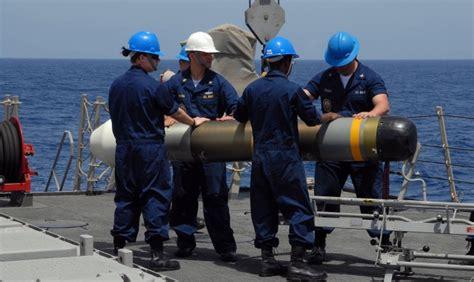
The United States Navy has moved a decisive step forward in undersea warfare with the start of full-rate production of the MK54 MOD 2 lightweight torpedo, a program led by Northrop Grumman that reflects growing urgency across the maritime domain. As submarine fleets become quieter, more autonomous, and increasingly active in contested waters, the introduction of this upgraded weapon signals a deliberate effort to preserve undersea dominance through smarter, faster, and more lethal capabilities.
Confirmed by Northrop Grumman in January 2026, the MK54 MOD 2 represents the most substantial evolution of the Navy’s primary lightweight torpedo since the original MK54 entered service. Unlike earlier incremental updates, this variant introduces a newly designed warhead and significantly enhanced signal processing architecture, both aimed at countering modern diesel-electric submarines, advanced nuclear platforms, and emerging unmanned underwater vehicles operating in complex acoustic environments.
The program reflects a shift in how the Navy views the undersea battlespace. Submarines are no longer assessed solely by speed or depth, but by their ability to exploit cluttered littoral zones, leverage acoustic deception, and operate as part of distributed networks. The MK54 MOD 2 is designed to respond directly to this reality, integrating adaptive processing and updated guidance logic that allows the weapon to interpret its surroundings dynamically rather than relying on static engagement profiles.
Northrop Grumman’s entry into full production underscores confidence in the system’s maturity and relevance. Manufacturing is now underway at multiple U.S. facilities, with program timelines aligned to near-term operational requirements rather than distant modernization cycles. This approach reflects concerns within the Pentagon that adversary undersea capabilities are advancing faster than previously projected, compressing the window for effective response.
Redefining the Role of the Lightweight Torpedo
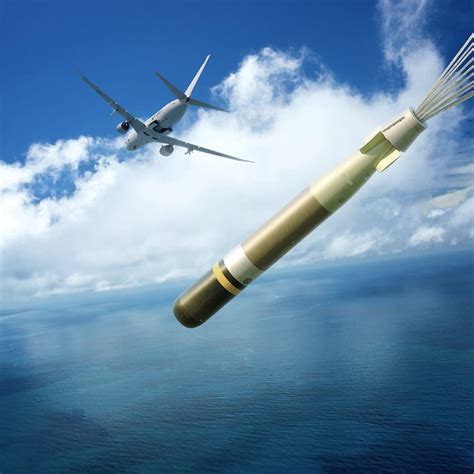
At the core of the MK54 MOD 2 upgrade is a Northrop Grumman–designed warhead optimized to improve lethality against both traditional submarines and smaller, harder-to-detect underwater platforms. While the precise specifications remain classified, defense officials have emphasized improved effectiveness against pressure hulls and enhanced resilience against countermeasures, reflecting lessons drawn from decades of torpedo development and recent operational analysis.
Equally transformative is the torpedo’s updated signal processing suite. Modern undersea warfare is increasingly defined by acoustic complexity, particularly in shallow and coastal waters where temperature gradients, salinity shifts, and seabed features can degrade sensor performance. The MOD 2’s processing architecture is designed to adapt in real time, improving target classification and maintaining track continuity even in environments saturated with noise, decoys, and false contacts.
This capability has significant operational implications. Diesel-electric submarines equipped with air-independent propulsion have long been considered among the most challenging threats in littoral zones. By enhancing detection and decision speed in these conditions, the MK54 MOD 2 expands the Navy’s effective engagement envelope, reducing the reliance on prolonged, multi-asset prosecution cycles that can strain operational tempo during high-intensity operations.
Integration Across the U.S. Navy’s Undersea Kill Web
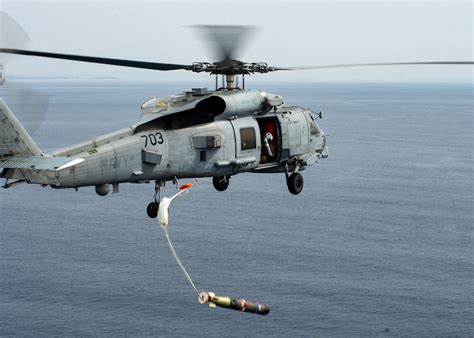
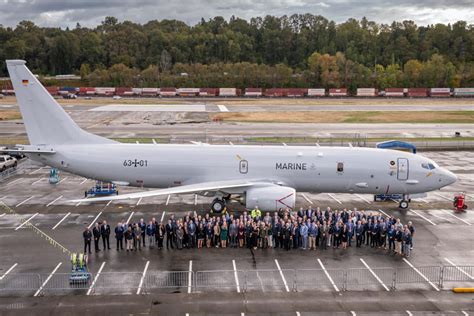
The MK54 MOD 2 is designed for seamless integration across the Navy’s existing anti-submarine warfare platforms, including Arleigh Burke-class destroyers, MH-60R Seahawk helicopters, and P-8A Poseidon maritime patrol aircraft. This cross-platform compatibility ensures that the torpedo can be rapidly deployed in response to evolving threats, whether from surface combatants, airborne assets, or combined task groups operating across multiple theaters.
In a representative scenario, a destroyer operating in a contested maritime corridor could detect a suspected submarine contact using hull-mounted sonar, cue an MH-60R for localization, and deploy an MK54 MOD 2 with refined targeting data. Once in the water, the torpedo’s adaptive guidance is intended to adjust its search pattern autonomously, maintaining contact through thermoclines and countermeasure deployment while minimizing the need for continuous external updates.
This consolidation of capability within a single weapon aligns with broader Navy efforts to streamline undersea engagements. Rather than relying on layered responses involving multiple weapons and repeated localization passes, planners envision faster decision cycles in which the MK54 MOD 2 plays a central role as both sensor and shooter within the wider maritime kill web.
Strategic Context and Competitive Pressure
The timing of the MK54 MOD 2’s production start is closely tied to shifts in the global submarine balance. China’s People’s Liberation Army Navy now fields more than sixty submarines, including nuclear-powered attack boats and advanced conventional platforms with improved acoustic dampening. Russia continues to prioritize high-end designs such as the Yasen-class nuclear attack submarine, assessed by Western navies as among the quietest currently in service.
Both nations are also investing in unmanned underwater vehicles and distributed sensor networks intended to complicate traditional Western anti-submarine warfare concepts. These developments challenge legacy assumptions about detection, attribution, and engagement, placing greater emphasis on weapons that can operate with higher degrees of autonomy and environmental awareness.
Within this environment, the MK54 MOD 2 contributes to deterrence by increasing the operational risk faced by adversary submarines. Its deployment across multiple platforms and theaters raises uncertainty for opposing commanders, particularly in choke points and littoral regions where undersea maneuvering space is constrained and acoustic conditions are unpredictable.
Industrial Capacity and Allied Interoperability
The program’s industrial dimension is as significant as its operational impact. The $233 million contract supporting the MK54 MOD 2 covers manufacturing qualification, testing, and production, with work distributed across Northrop Grumman facilities in Minnesota and West Virginia. This distributed manufacturing approach supports resilience within the defense industrial base while enabling production scaling if demand increases.
U.S. lawmakers have increasingly focused on munitions readiness, citing torpedoes alongside missiles and precision-guided weapons as potential bottlenecks in a prolonged maritime conflict. Northrop Grumman’s vertically integrated supply chain and long experience in undersea systems position the company to respond more rapidly than many competitors, an advantage that has not gone unnoticed in congressional oversight discussions.
For allied navies already operating earlier MK54 variants, the MOD 2 offers a clear upgrade path. Countries such as Australia, Canada, Japan, and the Netherlands stand to benefit from shared logistics, common software baselines, and aligned tactics, reducing friction during coalition operations. Cooperative production or licensing arrangements remain under consideration as allied demand for advanced undersea munitions continues to grow.
A Signal of the Future Undersea Fight
Beyond its immediate technical enhancements, the MK54 MOD 2 reflects a broader shift in U.S. maritime strategy. The Navy is increasingly prioritizing systems capable of adapting to contested environments shaped by autonomy, deception, and dense sensor coverage. In this context, the torpedo is not merely a munition but a node within an interconnected ecosystem linking platforms, sensors, and command-and-control networks.
The introduction of the MOD 2 is likely to drive further investment by potential adversaries in countermeasures, including more sophisticated decoys, autonomous screening systems, and advanced acoustic treatments. This dynamic reinforces the cyclical nature of undersea competition, where advances in detection and lethality are met with parallel efforts to evade and deceive.
As maritime competition intensifies beneath the surface, Northrop Grumman’s MK54 MOD 2 stands as a tangible indicator of how the United States and its partners intend to respond. By combining improved lethality, adaptive intelligence, and industrial readiness, the program underscores a clear strategic message: control of the undersea domain remains central to naval power, and maintaining it requires continuous, deliberate innovation.