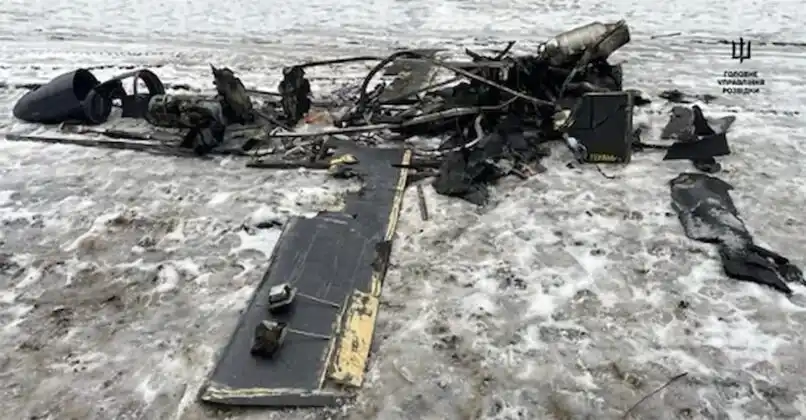
Russia has escalated the technological tempo of its air campaign in Ukraine with the first confirmed combat deployment of the Geran-5, a jet-powered long-range strike drone unveiled in January 2026. Ukrainian military intelligence describes the system as a decisive evolution in Moscow’s unmanned arsenal, combining higher speed, heavier payload, and extended reach to challenge existing air-defense concepts. Unlike earlier propeller-driven loitering munitions, the Geran-5 reflects a deliberate move toward jet propulsion and conventional airframe design, signaling a maturation of Russia’s strike-drone doctrine under wartime pressure.
The appearance of the Geran-5 during coordinated air attacks highlights how Russia continues to iterate on unmanned systems despite sanctions and battlefield attrition. Ukrainian analysts emphasize that the drone is not merely a cosmetic upgrade but a platform designed to compress defensive reaction time, complicate interception, and integrate more seamlessly into combined strike packages alongside missiles and decoys. Its introduction suggests that unmanned systems are no longer auxiliary tools but central elements of Russia’s deep-strike strategy.
Early assessments by Ukraine’s Main Intelligence Directorate indicate that Geran-5 was used operationally in mid-January, marking its transition from development to frontline employment. The timing is significant: Russia appears intent on exploiting winter conditions, reduced visibility, and stretched air-defense resources to test a system optimized for speed and survivability. This debut underscores Moscow’s willingness to field new platforms rapidly, even as analysts continue to dissect their origins and capabilities.
A Larger, Faster, Heavier Strike Drone
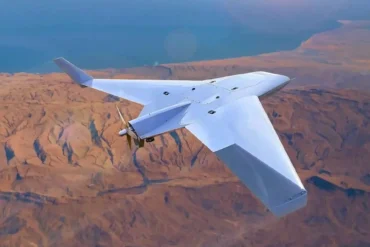
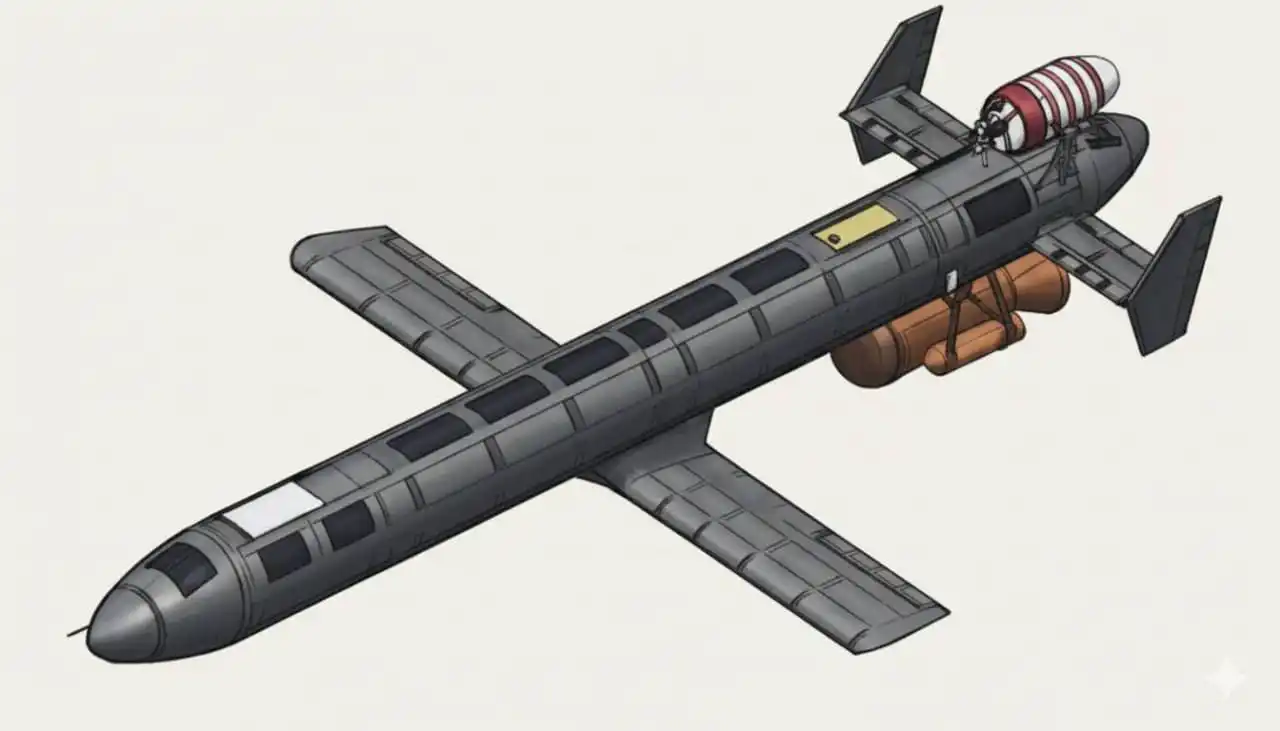
Physically, the Geran-5 stands apart from earlier Geran variants. Ukrainian intelligence describes a fixed-wing airframe approximately six meters long, with a wingspan approaching 5.5 meters. This conventional layout contrasts sharply with the flying-wing Shahed-style designs associated with Geran-2, favoring aerodynamic stability at higher speeds and altitudes. The drone reportedly carries a warhead of around 90 kilograms, placing it firmly in the category of heavy long-range strike UAVs rather than disposable harassment systems.
Range estimates of up to 1,000 kilometers suggest that Geran-5 is intended for deep strikes against infrastructure, logistics hubs, and military facilities far from the front line. The combination of range and payload allows Russia to threaten a broader target set while relying less on scarce cruise missiles. For defenders, this means a larger volume of high-energy targets that demand rapid classification and engagement.
Jet Propulsion and the Compression of Defense Timelines
At the core of the Geran-5’s operational impact is its turbojet propulsion. Ukrainian analysts identify a Telefly engine similar to those used on other Russian jet UAVs, but with increased thrust to support the heavier airframe. Jet propulsion dramatically increases transit speed, reducing the window available for detection and interception. Mobile gun teams, which have proven effective against slower drones, face significantly reduced reaction times when confronting a fast-moving target approaching from altitude.
This speed advantage also alters engagement economics. Surface-to-air missile systems may be forced to engage drones that previously could be countered with cheaper means, increasing defensive costs. In this sense, Geran-5 functions not only as a strike asset but as a resource-exhaustion tool, pressuring Ukraine’s layered air defenses through tempo rather than sheer numbers.
Navigation, Electronics, and Resistance to Jamming
Despite its new airframe, Geran-5 reportedly retains electronic commonality with earlier Geran models. Ukrainian intelligence points to a 12-channel Kometa satellite navigation unit, assessed as more resistant to jamming than civilian-grade receivers. This feature is critical in an environment where electronic warfare has become one of Ukraine’s most effective counters to long-range drones.
The onboard architecture is described as pragmatic rather than exotic: a tracker based on a Raspberry Pi-type microcomputer, paired with 3G and 4G communication modules. This approach reflects a design philosophy focused on availability and scalability, leveraging commercially accessible components to sustain production under sanctions. The result is a system that is technologically modest but operationally resilient.
Tactical Concepts and Airborne Launch Options
Ukrainian intelligence reports that Russia is exploring air-launch options for Geran-5, potentially from Su-25 attack aircraft. Such a concept would allow drones to be released closer to Ukrainian airspace, extending effective range while reducing fuel requirements. Air launch also complicates early warning, as drones may appear suddenly at altitude rather than approaching slowly from predictable ground-launch corridors.
If operationalized, this method would further integrate Geran-5 into combined arms air operations, blurring the line between manned and unmanned strike roles. It would also signal a doctrinal shift in which drones are treated as deployable munitions rather than independent platforms.
The Controversial Prospect of Air-to-Air Armament
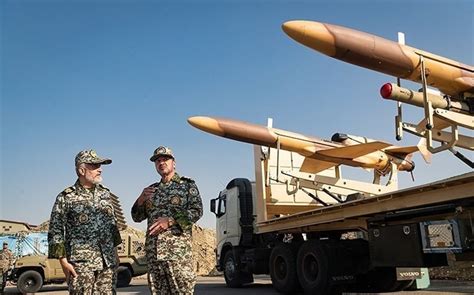
One of the most striking claims in Ukrainian assessments is the possibility that Geran-5 could be fitted with R-73 short-range air-to-air missiles. While still speculative, the idea reflects known Iranian concepts, where jet-powered UAVs such as the Karrar have been demonstrated with missile armament. Technically, such a role presents challenges in seeker cueing and target acquisition, especially on an expendable platform.
Nevertheless, even limited experimentation would force Ukrainian planners to consider drones as potential counter-air threats, particularly to helicopters and low-flying aircraft. The psychological and planning impact of this possibility may be as significant as its actual feasibility.
Iranian Design Influence and Strategic Implications
Ukrainian investigators argue that Geran-5 is not a purely indigenous design, citing strong similarities to Iran’s Karrar UAV. Tehran has long promoted the Karrar as a high-speed strike and interceptor platform, and its influence underscores the deepening Russia–Iran defense relationship. This connection highlights how Russia is adapting foreign design philosophies to meet its own operational requirements, emphasizing speed, payload, and mass production.
Strategically, Geran-5 represents a shift toward jet-powered unmanned strike systems as routine battlefield tools rather than niche assets. Its deployment suggests that Russia is preparing for a prolonged conflict in which unmanned platforms absorb risk, probe defenses, and deliver strikes at scale.
Ukraine’s Adaptive Defense and the Road Ahead
Ukraine continues to counter evolving drone threats through a layered defense network combining fighters, surface-to-air missiles, electronic warfare, interceptor drones, and mobile fire groups. Jet-powered systems like Geran-5 strain this network, but coordinated engagement remains effective when sensors, jammers, and shooters operate in concert. Ukraine is also accelerating the development of cost-effective interceptors to restore economic balance against high-speed drones.
Recovered Geran-5 wreckage is now under detailed forensic analysis, with Ukrainian authorities promising a comprehensive breakdown of components and supply chains. The emergence of Geran-5 is less about a single platform than about a broader trend: the normalization of fast, long-range, jet-powered drones as central instruments of modern warfare. In Ukraine’s skies, this evolution is already reshaping the contest between offense and defense.