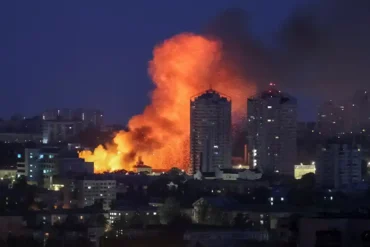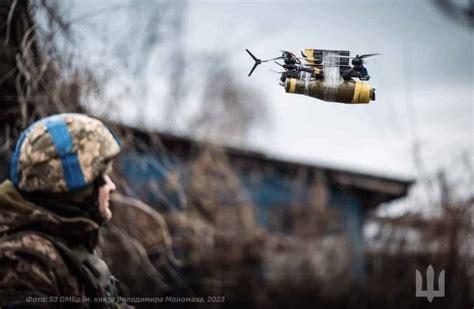
Ukraine’s strategic use of low-cost, mass-produced drones has irreversibly changed the landscape of modern warfare. In a conflict where traditional advantages in manpower and artillery once decided outcomes, Ukraine’s drone-first doctrine has reshaped the tactical and strategic calculus on both sides of the Russia-Ukraine war. These drones—some costing as little as $400—are inflicting catastrophic losses on far more expensive and sophisticated Russian military hardware, demonstrating how asymmetric technology can overpower brute force.
By early 2025, 60–70% of Russian equipment damage was attributed to Ukrainian drones, according to the Royal United Services Institute. Tens of thousands of these compact machines are deployed to surveil, strike, and disrupt enemy forces with minimal risk to human operators. Russia, though adapting with its own drone programs and electronic warfare upgrades, remains increasingly vulnerable. In June 2025, Ukrainian drones launched from hidden trucks struck Siberian airfields, damaging nuclear-capable bombers—a deeply symbolic breach into Russia’s supposed sanctuaries.
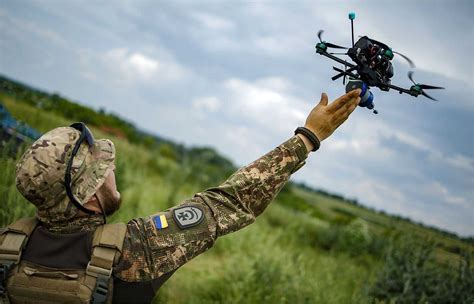
Close-Quarters Kill Drones: The $400 Tank-Killers
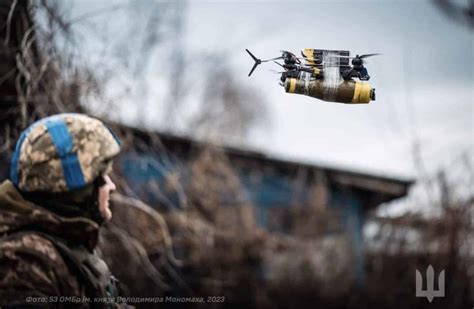
Among Ukraine’s most feared tools are first-person-view (FPV) drones—small, maneuverable quadcopters piloted by operators wearing video goggles. These drones close in on tanks, troops, missile sites, and command vehicles before detonating on impact. The KH-S7 FPV, for instance, costs a few hundred dollars yet consistently takes out hardware worth millions.
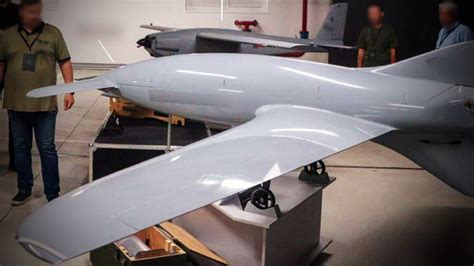
FPVs have proven so disruptive that Russian armor now commonly appears draped in jerry-rigged netting to snag drone rotors. Many drones are designed to drop grenade-sized explosives and return for reuse. Newer fixed-wing models like the B-1 dive bomber hover silently for hours before diving into a target with devastating precision. Their stealth and endurance strain Russian detection systems, forcing adaptation.
Long-Range Deep Strike: From Frontlines to Russian Cities
Ukraine has rapidly scaled its long-range strike drone capacity, hitting targets as far as 1,500 km inside Russia. These drones are targeting oil depots, industrial facilities, and military bases. In May 2025 alone, Russia claimed to down 485 drones in a single two-day barrage that struck fiber-optic factories, arms depots, and disrupted over 100 flights around Moscow. These were not mere provocations—they were daylight attacks with precise targeting of Russia’s industrial underpinnings.
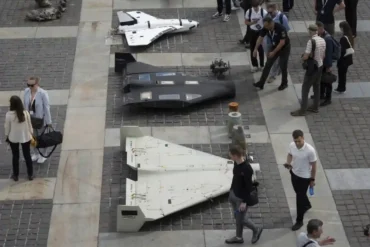
Russia’s own use of Iranian-made Shahed drones—over 20,000 since 2022—has devastated Ukrainian infrastructure, but Ukraine’s evolution into a drone exporter of destruction has turned the tables. Their ability to hit deep into Russian territory without civilian casualties marks a turning point.
Naval Drone Warfare: Redefining Sea Power in the Black Sea
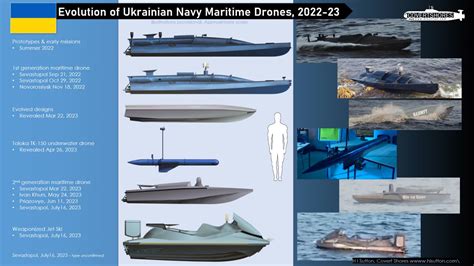
Perhaps most surprising has been Ukraine’s use of naval drones—unmanned speedboats packed with explosives, operating under Starlink-controlled systems. These $20,000 crafts have forced Russian warships into retreat, drastically reducing Moscow’s dominance over the Black Sea.
In May 2025, Ukrainian naval drones reportedly downed two Russian fighter jets near Novorossiysk, a feat that underscores their evolving offensive capacity. More recently, Ukraine has begun arming naval drones with missile systems, shifting them from sabotage tools to frontline assets capable of striking warships and coastal defenses.
Surveillance and Reconnaissance: The Eyes of the Battlefield
Every square meter of the front is watched. From rotor-wing drones hovering over trenches to fixed-wing models flying deep behind enemy lines, Ukraine’s drones guide artillery strikes with pinpoint accuracy. The Furia and Leleka models have replaced the earlier Turkish-supplied Bayraktar drones, providing real-time data crucial for coordinating fire missions.
These drones have reshaped infantry behavior: troops avoid group gatherings, cook under cover, and rarely surface above trench level. Even on the ground, robotic scout dogs now search enemy bunkers, reducing human exposure.
The Supply Lifeline: Drones Beyond Combat
Beyond offense, drones serve logistical and humanitarian functions. Rotor drones deliver ammunition, rations, water, and medicine to isolated units. They also guide stranded soldiers back to friendly lines, sometimes facilitating enemy surrenders. Reports have emerged of Russian troops waving to reconnaissance drones—signaling surrender in hopes of guidance rather than being bombed.
A New Style of War: Drones and the Transformation of the Front
Ukraine’s drone strategy has revolutionized ground tactics. Assembling FPVs from off-the-shelf parts has become routine in workshops and garages, with many costing less than a used smartphone. These drones can neutralize multi-million-dollar equipment, imposing heavy costs on Russia.
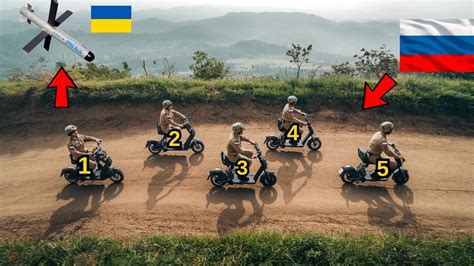
In response, Russian forces have adopted lighter, faster units—motorbikes, electric scooters, and foot patrols—to probe lines. But this shift increases casualties, as light units are more vulnerable to drone strikes. The so-called “gray zone”—uncontrolled territory between the two sides—has expanded from 10 km to 25 km, as both armies avoid occupying land saturated with drone surveillance.
Production at Scale: Ukraine vs Russia
Ukraine produced 1 million drones in 2024 and aims for 2.5 million in 2025, powered by a decentralized ecosystem of 500+ suppliers—from factories to small garages. By contrast, Russia, despite sanctions, plans to produce 1.4 million drones in 2025, centered in Alabuga and Izhevsk, with a long-term plan for 48 production sites by 2030.
Ukraine’s government supports innovation through open competitions, some inviting high school students, and has allocated $2.5 billion to drone development, contracting 76 domestic companies. However, this reliance on state funds makes the industry vulnerable. Officials now push to legalize military exports, aiming to create a sustainable, globally competitive sector.
Tactics and Countermeasures: Jamming, Fiber Optics, and AI
Russia’s primary countermeasure is electronic warfare—jamming signals and spoofing GPS systems. In response, Ukraine’s drone engineers integrate frequency-hopping chips, ensuring secure communication links.
One notable Russian innovation has been fiber-optic drones, which unspool cables during flight to maintain jam-proof communication. However, these are limited in range, slower, and leave behind telltale wires. Ukraine has adopted similar models and even prompted Russia to install anti-drone corridors lined with mesh fencing.
On the cutting edge, both sides are exploring AI integration. Fixed-wing drones now use SLAM (Simultaneous Localization and Mapping) for autonomous navigation, matching sensor input with satellite maps. Some FPVs feature AI-driven terminal guidance, autonomously homing in on targets in the final 100 meters. While fully autonomous drones remain experimental, their battlefield arrival is imminent and will mark the next major leap.
Skyfall: The Symbol of Ukrainian Innovation
Founded by three engineers, Skyfall has emerged as a national champion in drone manufacturing. Its flagship Vampire hexacopter, dubbed “Baba Yaga” by Russian troops, delivers 15-kg payloads and has thousands deployed. Skyfall also produces the Shrike FPV, operates a drone engineering academy, and supports front-line troops with round-the-clock technical service lines.
While the industry is thriving under wartime conditions, Oleksandr Kubrakov, a senior government adviser, warns that Ukraine’s drone sector risks collapse if public funding dries up. Opening the market to international exports could preserve innovation while creating a post-war drone economy.
Global Ripples: A Military Revolution in Real Time
Ukraine’s pioneering drone strategy has forced a global military rethink. Taiwan is stockpiling FPVs for a potential confrontation with China. The U.S. Pentagon, once committed to billion-dollar drones, now favors mass-produced, startup-designed platforms. Israel has recalibrated Iron Dome to defend against maneuverable threats. Europe is investing in anti-drone systems as part of its biggest rearmament since the Cold War.
Despite dwindling U.S. support under President Trump, Ukraine’s evolving drone program remains its strategic equalizer. In a war defined by attrition, drones have leveled the field—disproving the assumption that military dominance flows purely from size and spending.