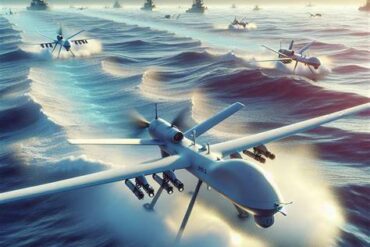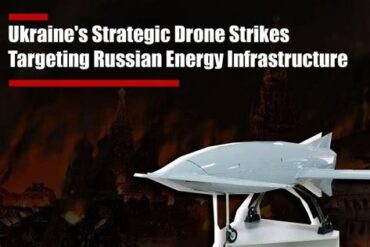
On June 1, 2025, Operation Spiderweb marked a turning point in modern warfare. Launched by Ukraine, this meticulously planned offensive used swarms of low-cost, first-person-view (FPV) drones to penetrate deep into Russian territory. The attack targeted five separate regions, inflicting catastrophic damage on at least 41 military aircraft, including high-value assets like the Tu-95MS, Tu-22M3, and A-50 early warning planes—aircraft central to Russia’s strategic deterrence capabilities.
With each drone reportedly costing less than $1,000, Ukraine achieved a strategic victory at a microscopic fraction of the enemy’s investment. Analysts estimate the destruction totals over $7 billion in Russian airpower, a severe material and psychological blow to the Kremlin.
The Anatomy of Operation Spiderweb: Inside Ukraine’s Audacious Plan
The scale and sophistication of Operation Spiderweb rival anything seen in the modern drone warfare era. Ukrainian operatives spent 18 months developing the operation, which was coordinated from a command centre near Russia’s own FSB headquarters. Drones were smuggled inside camouflaged wooden houses mounted on trucks, with their flight mechanisms concealed under rooftops that opened remotely for launch.
When the attack commenced, over 100 FPV drones simultaneously lifted off from within Russian borders. Their targets spanned over 7,000 kilometres across five time zones—hitting Murmansk, Irkutsk, Ivanovo, Ryazan, and Amur. This deep operational reach caught Russia’s air defences flat-footed.
Crippling Russia’s Strategic Aviation Backbone
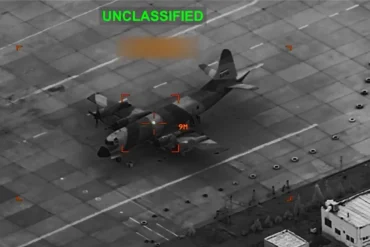
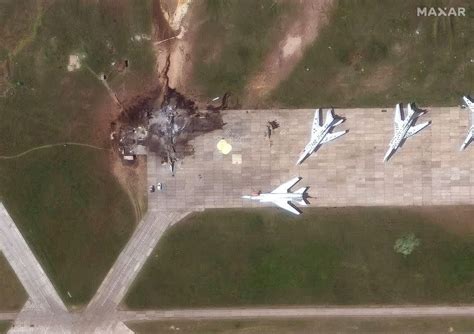
At the Olenya Air Base in Murmansk, home to the 40th Composite Aviation Regiment, satellite imagery revealed multiple Tu-95MS bombers ablaze. Credible, though unverified, reports suggest two Tu-95MS aircraft were destroyed and two more damaged, in addition to a destroyed An-12 transport aircraft.
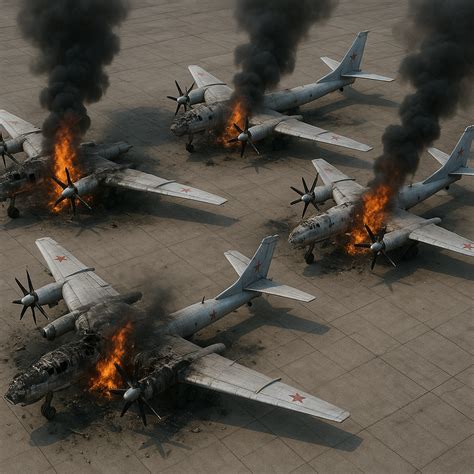
In Irkutsk, the Belaya Air Base suffered perhaps the most devastating blow. Images show at least three Tu-95MS bombers and four Tu-22M3 Backfire bombers destroyed. This alone may represent a billion-dollar loss in strategic aviation assets.
Additional strikes on Dyagilevo Air Base in Ryazan and Ivanovo Airfield further degraded Russia’s long-range aviation capabilities. Dyagilevo serves as a training hub for Long-Range Aviation (LRA) pilots, while Ivanovo houses A-50 AEW&C aircraft—key components in early-warning and control missions.
Drone Swarms vs. Fighter Jets: Cost-Efficiency Redefined
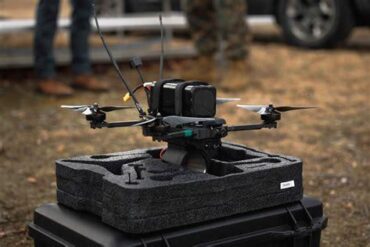
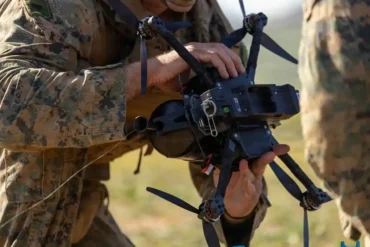
One of the operation’s most astonishing revelations lies in its economics. A single F-35 fighter jet costs over $80 million, while Ukraine’s FPV drones used in Spiderweb reportedly cost between $500 and $1,000 each. Despite their simplicity, these drones succeeded in crippling some of Russia’s most expensive aerial assets.
Even Elon Musk commented on the implications, stating, “Manned fighter jets are obsolete in the age of drones anyway.” This sentiment echoes growing defence consensus that UAVs are not just supplemental but may soon replace manned aircraft in certain military roles.
Unprecedented Drone Industrialisation in Ukraine
Since the war escalated, Ukraine has industrialised its drone production at breakneck speed. As of late 2024, Ukraine aimed to produce 1 million FPV drones. By early 2025, President Zelenskyy claimed the country could manufacture up to 4 million drones annually.
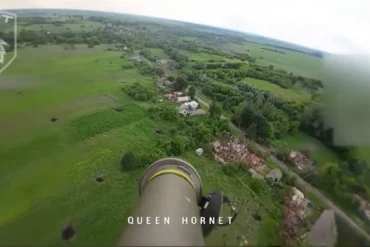
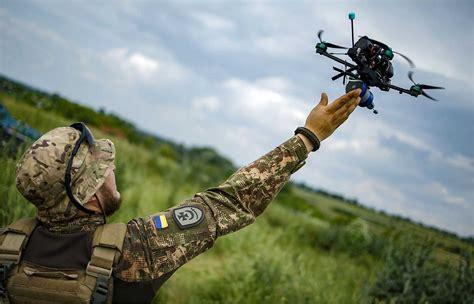
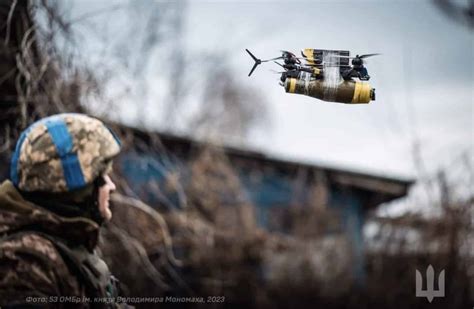
Each Ukrainian brigade now maintains dedicated drone units for both reconnaissance and attack roles. These small drones, flown manually, can precisely strike moving targets with minimal infrastructure—launched from the back of a truck rather than airfields or carriers.
Russian Air Defence: A False Sense of Security
Russia’s sprawling geography and layered air defence system were expected to provide significant protection. However, Operation Spiderweb exposed gaping holes in those defences. Because the drones were launched from inside Russia, they bypassed radar and border defences entirely.
Bases like Engels, Olenya, and Belaya lacked effective low-tech counter-UAV systems, particularly against slow, loitering, ground-level drones. Even pro-Kremlin bloggers admitted the oversight, questioning why Russia failed to relocate aircraft after Ukraine suffered its own drone barrage on May 31.
Tu-95MS and Tu-22M3: Irreplaceable Casualties
The loss of bombers like the Tu-95MS Bear-H and Tu-22M3 Backfire is strategically debilitating. The Bear-H, a Cold War-era turboprop capable of carrying cruise missiles, had fewer than 50 operational units prior to the strike. If five are confirmed lost, that represents a 10% fleet reduction.
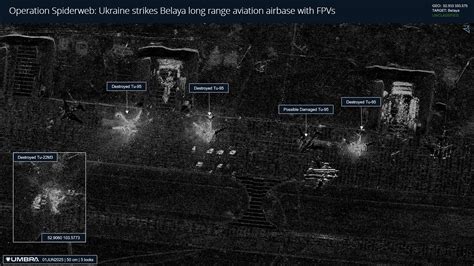
The Tu-22M3, with around 60 in service, has faced constant attrition since 2022. Its modernization programme has been slow, and replacements are not being produced at a rate that can offset losses.
Meanwhile, Russia’s most modern bomber, the Tu-160 Blackjack, has reportedly remained untouched. Still, production of new Tu-160M units is minimal. Only a few prototypes exist, and none are yet in full frontline deployment. With each new unit costing an estimated $270 million, and production limited by sanctions and industrial capacity, Moscow’s ability to recover these losses is sharply constrained.
A Global Shift: Drones in the Doctrinal Spotlight
Operation Spiderweb doesn’t just signify a Ukrainian victory; it exemplifies a global doctrinal shift. Modern warfare is increasingly asymmetric—where innovation, speed, and affordability outweigh size and brute force.
In India, similar shifts are underway. During Operation Sindoor, the Indian military deployed indigenously built kamikaze drones like the SkyStriker and Nagastra-1, capable of precision strikes, paired with surveillance UAVs like Hawk. These technologies, developed by firms like Alpha Design Technologies and Zuppa Geo Navigation, mirror Ukraine’s strategy: smart, cheap, and scalable.
Ulrike Franke of the European Council on Foreign Relations summarised it best: “Mass production and affordability can compensate for the lack of high-end features—if employed cleverly.“
Strategic and Nuclear Implications
Perhaps most unnerving is the strategic context of these strikes. Many of the targeted bombers are nuclear-capable, serving as a key pillar of Russia’s nuclear triad. Though no nuclear facilities or warheads were targeted, the mere destruction of delivery platforms like the Tu-95MS introduces new instability.
Russia has repeatedly warned that attacks on its strategic military infrastructure could constitute a red line. Though the Kremlin has so far responded with restraint, each successive blow to these assets inches closer to potential escalation.
The Future of Air Warfare Belongs to Drones
Operation Spiderweb has irrevocably altered the strategic landscape. With sub-$1,000 drones neutralising multi-million-dollar aircraft, the cost-to-kill ratio has shifted dramatically. This operation proves that tactical ingenuity, when married to mass-production capability, can defeat legacy platforms.
For nations still investing in traditional fighter fleets, the lesson is stark: The future of air dominance may not be sleek jets, but silent propellers, flying low, launched from trucks, and guided by laptop operators hundreds of miles away.
As Ukraine continues to refine its drone doctrine and Russia reassesses its vulnerability, the world must confront a new reality. In this era, air superiority is no longer measured in speed or altitude, but in bytes, payloads, and production lines.