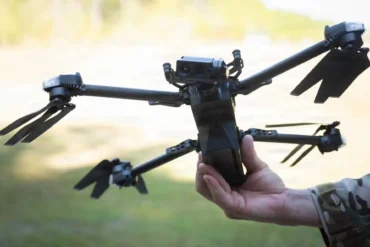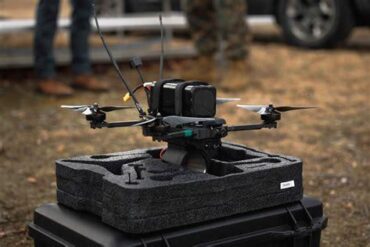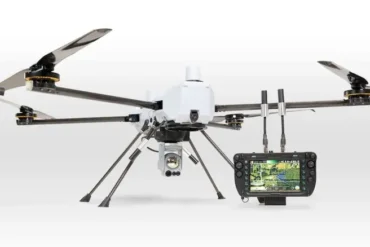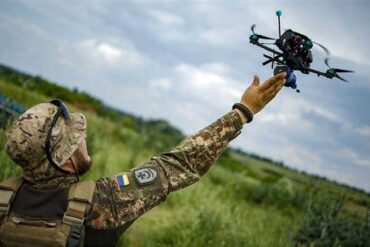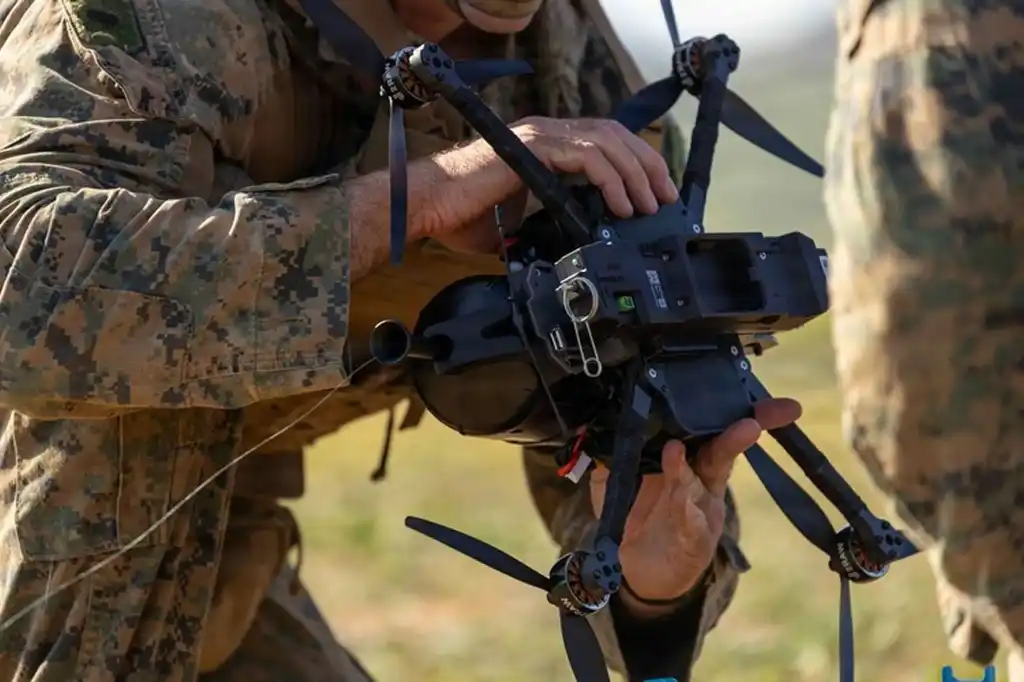
The U.S. Air Force is quietly redefining the tactical edge of its Special Operations Forces with a focused push toward compact, lethal, and electronically resilient first-person-view (FPV) strike drones. A newly issued Request for Information signals a clear intent: equip Special Tactics Teams with backpack-portable, one-way attack drones capable of delivering precision effects in highly contested environments where traditional airpower may be impractical or too visible.
This initiative reflects more than a technological upgrade—it represents a doctrinal shift. The Air Force is seeking a system that merges portability, survivability, and lethality into a single, operator-controlled capability. The result is a battlefield tool that compresses the sensor-to-shooter chain down to the individual operator, enabling rapid decision-making and immediate strike execution in environments defined by disruption, ambiguity, and electronic warfare.
At its core, the requirement is straightforward but ambitious. The desired drone must be vertically launched from the ground, achieve a minimum range of 10 kilometers with an objective reach of 20 kilometers, and sustain 15 to 30 minutes of armed endurance. These specifications position the system squarely between improvised FPV drones and traditional loitering munitions, creating a hybrid category tailored for modern special operations.
A New Class of Tactical Strike Capability
The Air Force’s vision is not about scaling down existing systems—it is about building a new class of tactical strike capability from the ground up. Special Tactics Teams, which operate in denied and politically sensitive environments, require tools that function under extreme constraints. Communications may be degraded, GPS signals disrupted, and enemy forces equipped with advanced electronic warfare systems.
To meet these challenges, the proposed FPV drone must incorporate advanced resilience features. These include frequency-hopping communication across multiple bands, compatibility with GPS and cellular networks such as 4G, LTE, and 5G, and the ability to operate even when traditional navigation systems are compromised. This layered approach to connectivity ensures that operators retain control even in the most hostile electromagnetic environments.
Equally important is the system’s low signature. Unlike larger unmanned platforms, these drones are designed to be discreet, minimizing detection while maximizing precision. This makes them particularly effective for targeting light vehicles, troop concentrations, and time-sensitive threats that require immediate action without exposing the operator or revealing their position.
Portability Without Compromise
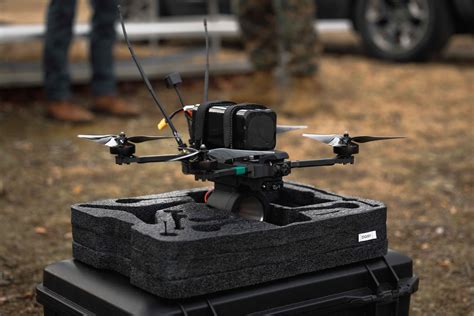
One of the most striking aspects of the requirement is its emphasis on portability. The entire system—comprising two air vehicles and a ground control station—must remain under 30 pounds, with an aspirational goal of just 10 pounds. This constraint is not arbitrary; it reflects the operational reality of Special Tactics Teams, which often deploy on foot, carrying all necessary equipment into austere environments.
This level of portability demands careful engineering. Every component, from propulsion systems to communication modules, must be optimized for weight and efficiency without sacrificing performance. The result is a drone system that can be carried alongside existing gear, deployed within minutes, and maintained in the field with minimal logistical support.
The ability to launch vertically further enhances operational flexibility. Unlike systems that require runways or catapults, a VTOL drone can be deployed from rooftops, forest clearings, riverbanks, or confined urban spaces. This capability is critical for missions involving clandestine access, where speed and discretion are paramount.
Precision Lethality Tailored for Modern Battlefields
The payload requirements reveal a carefully calibrated approach to lethality. The drone must carry a kinetic payload of at least 1.5 kilograms, with a goal of reaching 3 kilograms. Fragmentation warheads are the baseline, providing effective coverage against exposed personnel and soft targets, while a penetrator option is envisioned for more hardened objectives.
This payload range is not intended for heavy armor engagement. Instead, it is optimized for the types of targets that Special Tactics Teams are most likely to encounter: defensive positions, communication nodes, radar systems, and lightly armored vehicles. The emphasis is on precision rather than brute force, enabling operators to neutralize threats with minimal collateral damage.
Safety and training considerations are also embedded in the design. The inclusion of an electronic safe-and-arm device ensures controlled deployment, while recoverability during training missions allows operators to refine their skills without expending valuable hardware.
Networked Warfare at the Operator Level
What truly sets this initiative apart is its integration into a broader networked warfare ecosystem. The drone is not a standalone weapon—it is a node within a digital battlefield architecture. It must transmit real-time data, including full-motion video, sensor information, navigation status, and system health, directly into operational platforms such as ATAK.
This level of integration transforms the drone into a force multiplier. Operators gain situational awareness that extends beyond line-of-sight, enabling coordinated actions with other units and assets. The ability to share Cursor-on-Target data and potentially capture pre-impact battle damage imagery further enhances mission effectiveness.
Encryption is a critical component of this networked approach. The requirement for AES-256 encryption, ideally within a FIPS-compliant module, underscores the importance of secure communications. In contested environments, where adversaries actively attempt to intercept or disrupt signals, maintaining data integrity is essential.
Filling a Critical Capability Gap
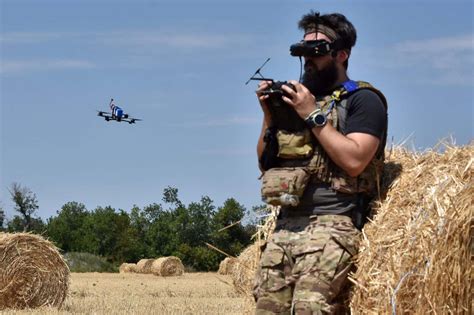
Despite the Air Force’s extensive arsenal, including platforms such as the AC-130J gunship, MC-130J transport, and MQ-9 Reaper, there remains a gap at the tactical level. These larger systems offer unmatched range and firepower but are not always suitable for small teams operating in close proximity to the enemy.
The absence of a purpose-built FPV strike capability within Special Tactics units has become increasingly apparent. This initiative addresses that gap by providing a tool that aligns with the realities of modern special operations. It enables teams to conduct precision strikes without relying on external support, reducing response times and increasing operational autonomy.
The impact on mission profiles is significant. During global access operations, these drones can suppress threats around landing zones, ensuring safer insertion of forces. In precision strike scenarios, they allow engagement of targets beyond the reach of small arms. For personnel recovery missions, they provide reconnaissance and threat neutralization before recovery teams are exposed.
Speed, Simplicity, and Field Adaptability
Another defining characteristic of the proposed system is its emphasis on rapid deployment and ease of use. The Air Force envisions a drone that can be launched in under three minutes and mastered with just a few hours of training. This accessibility is crucial for Special Tactics Teams, where operators must manage multiple roles under high-pressure conditions.
Field repairability is equally important. The ability to fix or reconfigure drones in austere environments ensures sustained operational capability without reliance on extensive supply chains. This aligns with a broader shift toward resilient, decentralized logistics in military operations.
Battery systems are also designed with flexibility in mind. Rechargeable units that can be powered from standard outlets, vehicles, or portable military batteries provide the energy independence required for extended missions.
A Broader Shift Toward Distributed Lethality
The Air Force’s pursuit of backpack FPV strike drones is part of a larger trend across the U.S. military. There is a growing emphasis on low-cost, scalable systems that can be deployed in large numbers and adapted to a variety of missions. This approach prioritizes resilience and flexibility over reliance on a few high-value assets.
By pushing precision strike capabilities down to the individual operator level, the military is effectively democratizing firepower. Small teams gain the ability to shape the battlefield in ways that were previously reserved for larger formations or specialized units. This shift has profound implications for how conflicts are fought and how forces are structured.
The Future of Special Operations Warfare
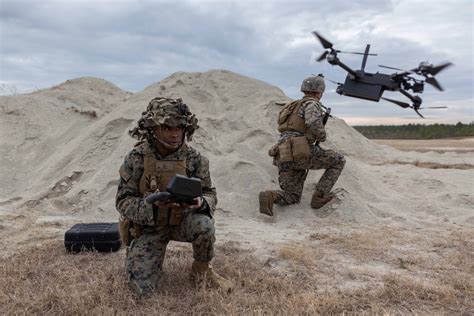
If this initiative progresses from market research to full procurement, it will mark a pivotal moment in the evolution of special operations warfare. The introduction of a standardized, SOF-specific FPV strike ecosystem would provide a consistent framework for training, deployment, and integration.
Such a system would not only enhance current capabilities but also pave the way for new tactics, techniques, and procedures. Operators would be able to carry precision strike options alongside their existing equipment, seamlessly integrating them into mission planning and execution.
The implications extend beyond the Air Force. As other branches and allied forces observe the effectiveness of these systems, similar capabilities are likely to proliferate. This could lead to a new era of highly decentralized, technology-driven warfare, where agility and adaptability are the defining characteristics of success.
In this emerging landscape, the backpack FPV strike drone is more than a tool—it is a symbol of transformation. It embodies the convergence of technology, strategy, and operational necessity, delivering a capability that is as compact as it is consequential.