Modern special operations units represent the most technologically advanced edge of military capability. These elite formations are tasked with missions where precision, stealth, and speed determine success or failure. From hostage rescue operations deep inside hostile cities to covert reconnaissance far behind enemy lines, special forces rely on highly specialized tools designed to give them decisive advantages in environments where conventional troops might struggle.
While popular culture often exaggerates military equipment into science-fiction territory, the real tools used by special operations troops are impressive in their own right. Nations such as the United States, the United Kingdom, Israel, and Russia invest heavily in technologies that amplify the effectiveness of their elite units. Organizations like the U.S. Navy SEALs, Delta Force, Britain’s Special Air Service (SAS), Russia’s Spetsnaz, and Israel’s Sayeret Matkal frequently deploy equipment that merges advanced electronics, sophisticated engineering, and battlefield practicality.
These technologies are rarely flashy for the sake of appearance. Instead, they are carefully engineered solutions to real combat challenges—detecting hidden threats, maintaining silent communication, neutralizing targets with precision, or gathering intelligence without exposing operators. What follows is a closer look at five remarkable gadgets that illustrate how cutting-edge engineering shapes modern special operations warfare.
Joint Threat Warning Systems: Tactical Electronic Intelligence on a Backpack
Urban combat is widely considered one of the most complex and dangerous operational environments for military forces. Dense architecture, narrow streets, and tall buildings provide countless hiding spots for hostile fighters, making situational awareness incredibly difficult. To counter these challenges, special operations units rely on compact electronic intelligence tools such as the Joint Threat Warning System (JTWS).
Developed for units like the U.S. Marine Forces Special Operations Command (MARSOC), the JTWS is essentially a portable signals intelligence and electronic warfare platform. The entire system is compact enough to be carried by a single operator, transforming one soldier into a mobile intelligence hub capable of detecting enemy communications in real time.
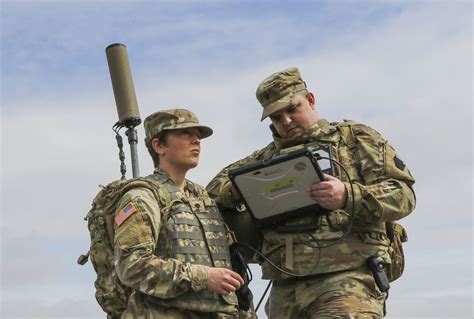
The system scans across both Very High Frequency (VHF) and Ultra High Frequency (UHF) radio bands. When hostile transmissions occur within range, the JTWS not only intercepts the signal but also calculates its origin. Operators view this information through a tablet-style interface that maps the battlefield, revealing where enemy radios are transmitting from. In practical terms, this allows special operations teams to locate hidden command posts, ambush positions, or coordination nodes without visually spotting the enemy.
What makes the system particularly valuable is its low electronic signature. Using Low Probability of Detection and Interception (LPD/LPI) waveforms, the device can monitor the electromagnetic spectrum without easily revealing its own presence. In environments where electronic surveillance can determine life or death, this stealth capability is critical. By turning invisible radio chatter into actionable intelligence, the JTWS effectively gives small special operations teams the awareness once reserved for large intelligence units.
2B25 “Silent Mortar”: Stealth Firepower for Close-Range Engagements
Mortars have been a staple of battlefield artillery for more than a century, valued for their ability to deliver explosive payloads indirectly over obstacles. Traditionally, however, mortars are anything but discreet. The launch produces a loud report, visible muzzle flash, and smoke trail—signals that quickly reveal the firing position.
Engineers at Russia’s Burevestnik Research Institute tackled this problem by creating one of the most unusual weapons in modern warfare: the 2B25 “Gull” silent mortar.
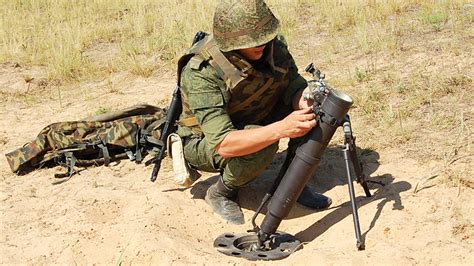
Weighing roughly 30 pounds, the 2B25 is designed primarily for Russian Spetsnaz special operations troops who often operate in small teams behind enemy lines. The weapon’s defining feature is not the mortar tube itself but the specially engineered 3VO35 82mm round it fires. Unlike conventional mortar shells that rely on external propellant charges, this round uses a self-contained cartridge with an internal piston mechanism.
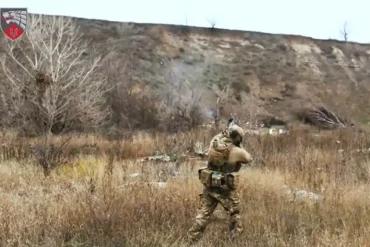
When the round is fired, the piston pushes the projectile forward but traps the propellant gases inside the cartridge. Because the gases never escape the round, there is no loud blast, no muzzle flash, and virtually no smoke. The resulting sound signature is comparable to that of a suppressed assault rifle, making the weapon extraordinarily difficult to detect.
There is, however, an inevitable trade-off. Because the round contains its own limited propellant, the mortar’s effective range is significantly shorter than traditional systems. While standard military mortars can reach distances exceeding two miles, the 2B25 typically engages targets within about 0.7 miles. For covert operations where stealth matters more than distance, that compromise is often acceptable. A silent indirect-fire weapon allows special forces to strike enemy positions without instantly revealing their location.
SMASH 2000 Smart Sight: Artificial Intelligence for Perfect Timing
In combat, accuracy is not simply a matter of good marksmanship. Stress, movement, and unpredictable targets can all reduce the chance of a successful shot. Recognizing this challenge, Israeli defense technology firm SMARTSHOOTER Ltd. developed a revolutionary targeting system known as the SMASH 2000 smart sight.
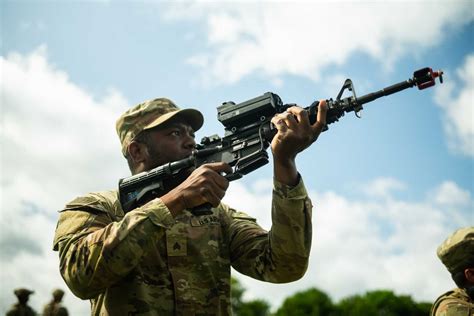
The SMASH 2000 attaches to rifles such as the M4A1 carbine, transforming them into intelligent fire-control platforms. The system integrates three primary components: a sophisticated optical sight, an upgraded pistol grip, and a pressure-sensitive firing button. Together, these components allow the device to track targets autonomously and determine the precise moment when a shot will hit.
Inside the sight housing is a compact computer connected to cameras, sensors, and a laser rangefinder. Once the operator designates a target, the onboard processor continuously calculates the correct firing solution. Even if the shooter’s aim drifts slightly due to breathing or movement, the system predicts when the rifle will align perfectly with the target.
Instead of firing immediately when the trigger is pressed, the SMASH 2000 releases the shot at the exact instant the weapon’s alignment guarantees a hit. This technology dramatically increases first-shot accuracy, particularly against small or moving targets.
The system has also proven valuable in countering one of the most disruptive threats on modern battlefields: small unmanned aerial vehicles. Quadcopters and reconnaissance drones can be difficult to hit with traditional rifles, but the SMASH 2000’s tracking algorithms allow soldiers to engage airborne targets with far greater success. Although still primarily used by specialized units such as U.S. Special Operations Joint Task Force elements in Syria, interest in smart sight technology is expanding rapidly across multiple armed forces.
Bone Conduction Communication Systems: Silent Coordination in Hostile Territory
Communication is essential for coordinated operations, yet conventional headsets can create problems for soldiers operating in stealth environments. Traditional earphones block surrounding sound and may reveal a soldier’s presence through audible chatter. To solve this issue, special operations teams have adopted bone conduction communication systems.
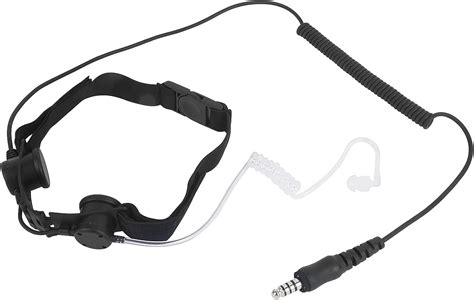
Bone conduction technology works by bypassing the outer ear entirely. Instead of sending sound waves through the ear canal and eardrum, the system transmits vibrations directly through the skull to the cochlea, the inner-ear structure responsible for processing sound. Because the ear canal remains unobstructed, users can still hear ambient noises while receiving communications.
For units like the U.S. Navy SEALs, the technology is paired with throat microphones that detect vocal vibrations from the larynx. These microphones capture speech even when the operator whispers or speaks quietly, converting the vibrations into radio transmissions. The combination of bone-conducting earpieces and throat microphones creates a communication setup that is both discreet and highly functional.
These systems typically connect to encrypted radios such as the AN/PRC-148 MBITR, a widely used multiband tactical radio. The result is a compact communication network that allows special forces teams to coordinate movements without sacrificing situational awareness. Operators can hear approaching footsteps, distant vehicles, or environmental cues while maintaining constant contact with their teammates.
In covert operations, that ability to communicate silently while remaining fully aware of surroundings can mean the difference between a flawless mission and a compromised one.
Black Hornet Nano Drone: Pocket-Sized Aerial Reconnaissance
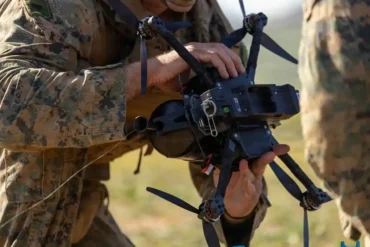
Perhaps the most remarkable gadget used by modern special operations forces is also one of the smallest. The Black Hornet nano unmanned aerial vehicle, developed by FLIR Systems, represents a dramatic shift in how soldiers gather intelligence on the battlefield.
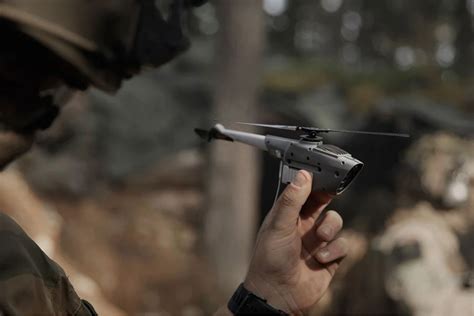
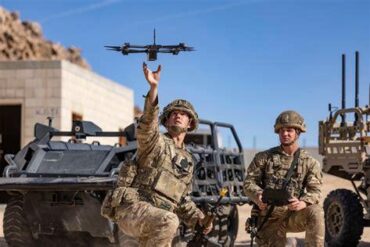
At just seven inches long and weighing approximately 70 grams, the Black Hornet is small enough to fit in a soldier’s pocket. Despite its size, it functions as a highly capable reconnaissance platform. Designed as part of a Personal Reconnaissance System, the drone includes two miniature helicopters, a controller, a docking station, and a handheld display unit.
Once launched, the tiny aircraft can travel more than 1.2 miles and remain airborne for up to 30 minutes. Its quiet electric rotors make it far less noticeable than typical quadcopters, allowing operators to fly it through windows, over rooftops, or along alleyways without drawing attention.
Equipped with electro-optical cameras and thermal imaging sensors, the Black Hornet provides real-time video feeds to its operator. Special forces can scout enemy positions, examine building interiors, or observe suspicious activity before committing personnel to potentially dangerous areas. In situations where GPS signals are jammed, advanced variants can rely on visual navigation algorithms to return safely to their operator.
The system has already proven its effectiveness in operational deployments. British and American special forces used Black Hornet drones extensively in Afghanistan, while Ukrainian Special Operations Forces have utilized them in modern conflicts where rapid intelligence gathering is essential. Although a complete unit costs close to $200,000, the intelligence advantage it provides often outweighs the expense.
In many ways, the Black Hornet symbolizes the future of special operations technology: compact, intelligent, and designed to give small teams extraordinary awareness of their surroundings. As military technology continues to evolve, tools like these will ensure that elite operators remain equipped to navigate the increasingly complex battlefields of the modern world.