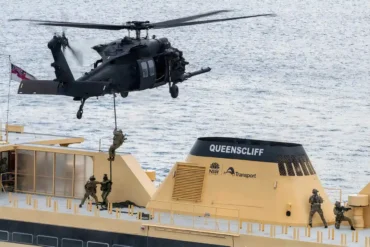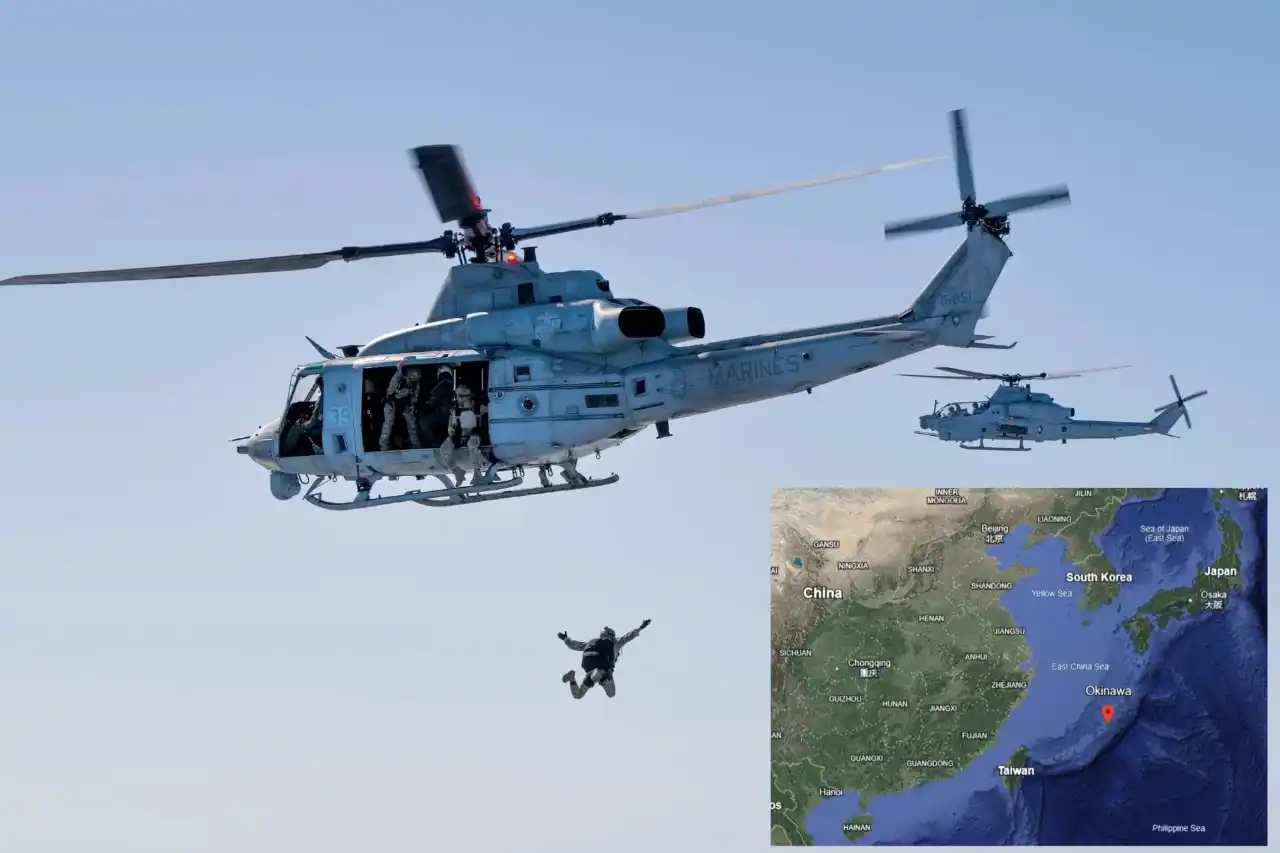
The United States is quietly but deliberately refining how it would enter a fight in the Indo-Pacific when the skies are crowded, watched, and hostile. In early January 2026, U.S. Indo-Pacific Command released operational imagery showing U.S. Naval Special Warfare forces conducting precision military free-fall insertion training over Okinawa, a location that is anything but accidental. The exercise signals a growing emphasis on stealthy access, survivability, and speed in regions where traditional airfields and predictable flight paths may not survive the opening hours of a high-end conflict.
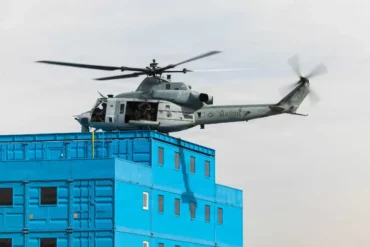
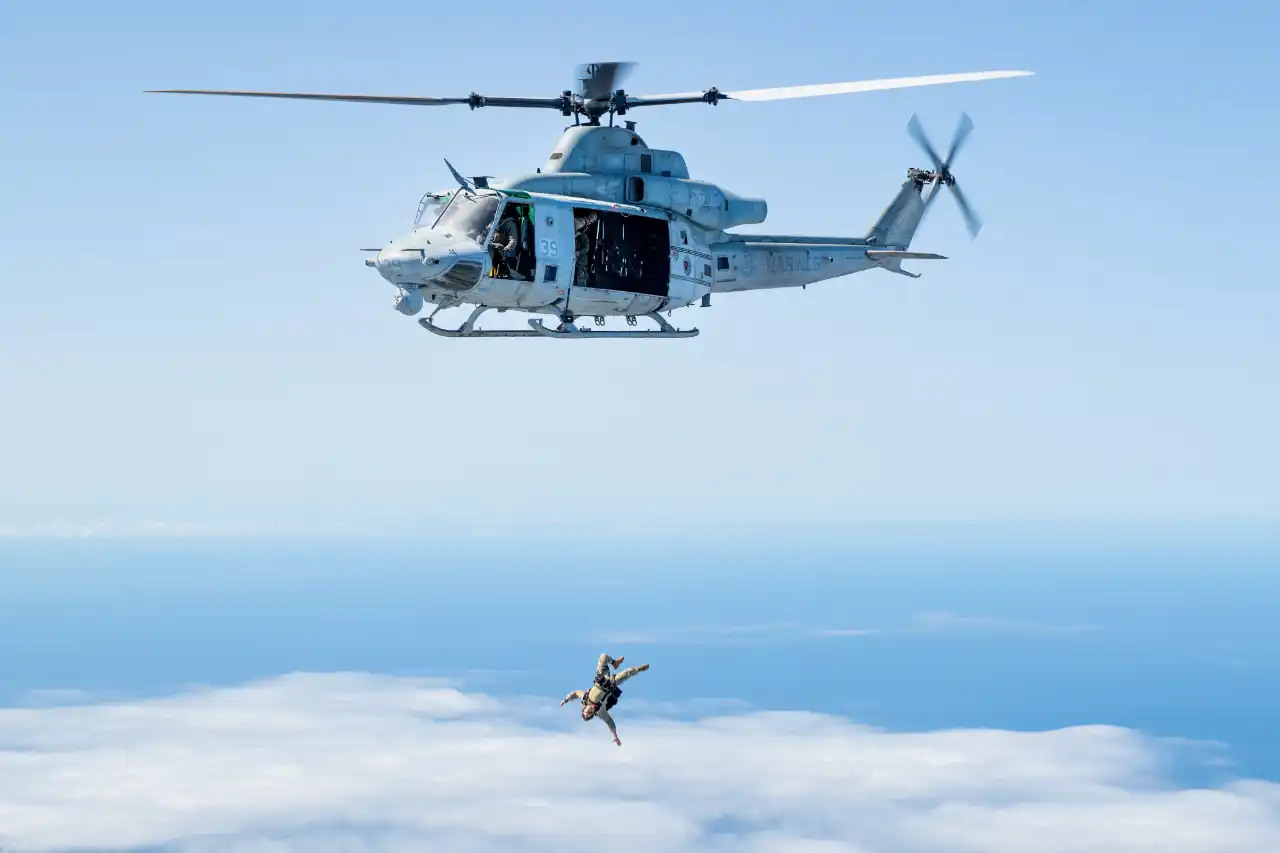
The image captures a coordinated airborne operation supported by U.S. Marine Corps aviation, pairing a UH-1Y Venom utility helicopter with an AH-1Z Viper attack helicopter. Together, they frame a modern insertion profile designed for airspace that mirrors the complexity of the first island chain, a geographic arc stretching from Japan through Taiwan and down toward the Philippines. This chain has become a focal point of strategic planning as regional tensions remain elevated and military activity intensifies.
Precision Free-Fall as a Tool for Contested Access
Military free-fall insertion is not a new capability, but its role is expanding. In an environment shaped by anti-access and area-denial (A2/AD) systems, the ability to insert small teams from altitude allows commanders to bypass damaged infrastructure, avoid predictable landing zones, and operate beyond the immediate reach of long-range fires. The Okinawa training underscores how precision insertion is now treated as a core enabler rather than a niche skill.
Naval Special Warfare operators rehearsed low-signature free-fall profiles intended to minimize detection while maximizing flexibility. These jumps are designed to place teams exactly where needed, even when traditional runways, ports, or forward operating bases are unavailable or too risky. The focus is not only on the jump itself but on how insertion fits into a broader operational sequence that includes command and control, fires integration, and eventual extraction.
Why Okinawa Matters in the First Island Chain
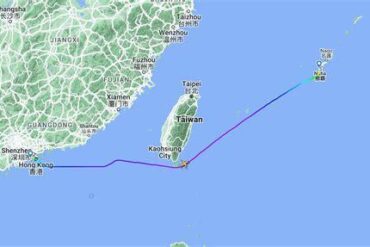
Okinawa’s strategic weight cannot be overstated. Positioned close to Taiwan and astride key maritime and air corridors, the island chain sits at the intersection of multiple potential flashpoints. Training here allows U.S. forces to rehearse under conditions that closely resemble those they would face in a real contingency, including dense civilian air traffic, complex terrain, and constant surveillance.
By conducting insertion drills in this environment, U.S. Indo-Pacific Command is effectively stress-testing timelines and assumptions. How quickly can a force assemble? How discreetly can it enter contested airspace? How resilient is the plan if sensors detect movement or if communications are degraded? Okinawa provides a realistic backdrop for answering these questions without the artificial comfort of uncontested training ranges.
Marine Aviation’s Role in Survivable Insertion
The presence of Marine helicopters in the imagery is a critical detail. The UH-1Y Venom offers flexible lift from dispersed or expeditionary sites, reducing reliance on fixed infrastructure that could be targeted early in a conflict. Its ability to operate from austere locations supports a concept of distributed operations, where forces remain mobile and difficult to pin down.
The AH-1Z Viper, flying alongside, adds immediate armed escort and overwatch. In contested airspace, the most vulnerable moments often occur during insertion and extraction. Having an attack helicopter integrated into the profile enhances survivability, deters interference, and provides rapid response if threats emerge. This pairing reflects a layered approach to access, blending speed, protection, and adaptability.
Operating Under the Shadow of A2/AD Systems
The broader strategic context frames every aspect of this training. China’s expanding network of sensors, missiles, and long-range fires is designed to complicate reinforcement and restrict freedom of maneuver across the first island chain. Persistent air and naval operations near Taiwan serve as both signaling and rehearsal, reinforcing the reality that future operations may begin under intense pressure.
In such a scenario, airborne insertion from altitude offers a way to regain initiative. Small, highly trained teams can be placed inside contested space to conduct reconnaissance, enable follow-on forces, or execute time-sensitive missions. The Okinawa drills demonstrate how precision free-fall fits into an operational concept that assumes degraded access and compressed decision cycles from the outset.
Beyond Individual Skill: Integrated Force Projection
What stands out in this training is its integration. These are not isolated parachute jumps aimed solely at individual proficiency. They represent a coordinated effort linking special operations forces, Marine aviation, and joint command structures into a single, coherent insertion package. This integration is essential when operating against an adversary capable of disrupting communications, tracking movement, and striking quickly.
The emphasis on coordination reflects an understanding that future conflicts will reward forces that can adapt in real time. Routes may change, landing zones may be denied, and extraction plans may need to evolve on the fly. Training in realistic airspace over Okinawa allows joint forces to practice these adjustments before they become matters of survival.
Strategic Signaling Without Escalation
Publicly releasing imagery from this exercise also carries a signaling function. It reassures regional partners that U.S. commitments in the Indo-Pacific remain credible, backed by practical preparation rather than abstract statements. At the same time, it communicates to potential adversaries that denial strategies will be met with adaptable, integrated approaches rather than predictable responses.
The message is subtle but clear. Access will be contested, but it will not be surrendered. Precision insertion, survivability, and joint integration form a quiet backbone of deterrence, demonstrating readiness without the need for overt escalation.
Preparing for the First Hours That Matter Most
Future conflict in the Western Pacific will likely be decided in its opening phases, when access is uncertain and information incomplete. The ability to insert small teams with precision, protect them during their most exposed moments, and sustain them inside contested battlespace could shape outcomes far beyond their size.
The Okinawa free-fall training illustrates how U.S. Special Forces are preparing for that reality. By refining the mechanics of insertion over terrain that mirrors the first island chain, the United States is investing in options that remain viable when traditional pathways close. It is a reminder that in modern warfare, control of access often matters as much as control of firepower, and the quiet mastery of entry may determine what follows.