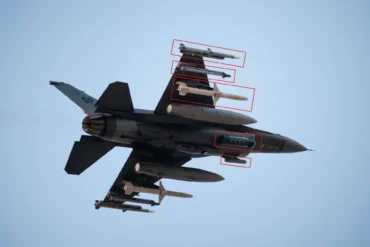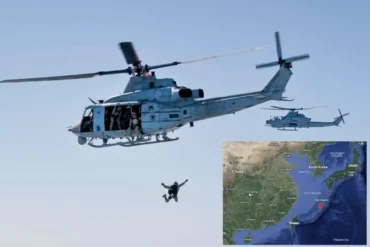
On the night of January 3, 2026, the skies over Caracas became the backdrop for a meticulously coordinated display of modern electronic warfare as U.S. Navy EA-18G Growlers disabled Venezuelan air defenses during Operation Absolute Resolve. The mission underscored a decisive shift in how the United States projects power in contested airspace, using stealth and electromagnetic dominance to create narrow corridors of vulnerability for adversaries—brief windows of time where even the most complex air defense networks become blind.
Operation Absolute Resolve: Coordinated Strike Through the Spectrum
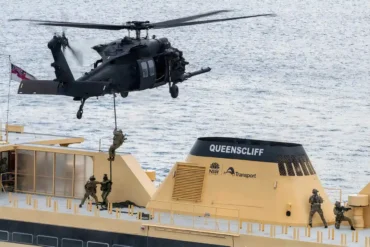
Unlike conventional air campaigns that unfold over days or weeks, Operation Absolute Resolve was a time-sensitive raid focused on ensuring the safe ingress and egress of low-flying helicopters into a high-threat environment. According to Gen. Dan Caine’s public statement, the mission involved a joint air component tasked with “dismantling and disabling” Venezuelan air defenses to clear a path for special forces.
Here, “disabling” did not require destroying missile launchers or radar installations with kinetic force. Instead, success was measured in seconds—long enough to delay enemy reactions, force hesitation, or jam communications. The true target was the defensive kill chain: disrupting the radar-to-missile pipeline before it could track and target American helicopters.
EA-18G Growler: The Electromagnetic Spearhead
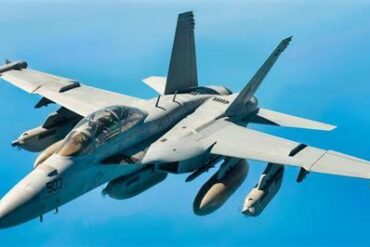
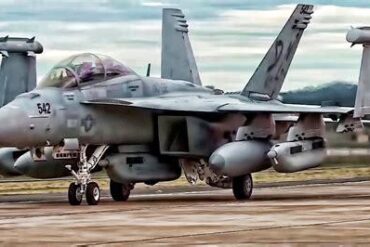
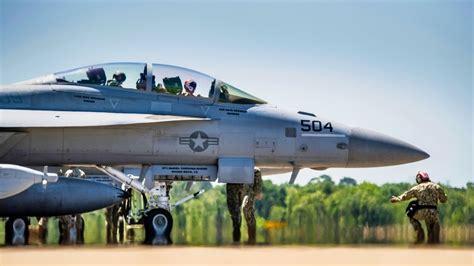
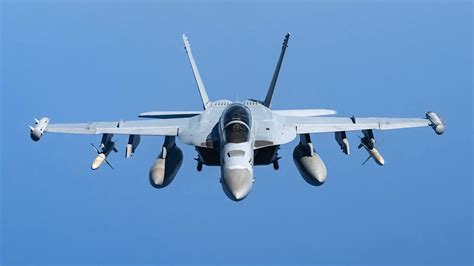
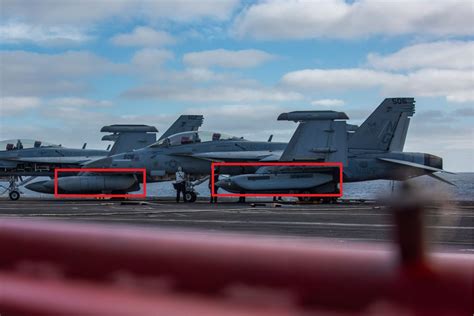
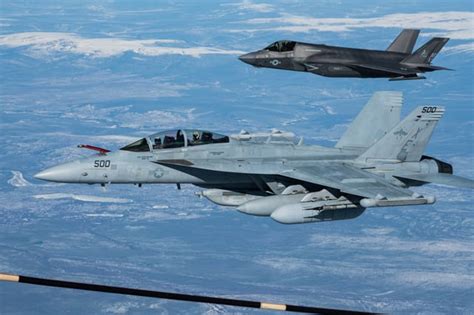
At the heart of this effort was the EA-18G Growler, a carrier-capable electronic attack aircraft derived from the F/A-18F Super Hornet. With its dual-crew setup—comprising a pilot and an electronic warfare officer—the Growler specializes in spectrum warfare, jamming hostile radar systems and degrading command and control networks.
Equipped with the AN/ALQ-218 receiver system, the Growler can detect, analyze, and geolocate threats across a wide range of radio frequencies. This capability allowed the aircraft to dynamically adapt to Venezuela’s radar landscape, feeding real-time data into mission systems that cued jammers and shaped attack patterns.
Tactical Jamming: Breaking the Chain Before It Forms
The Growlers carried the AN/ALQ-99 Tactical Jamming System, still reliable despite its age, to suppress early warning, acquisition, and fire-control radars. Escort jamming was likely employed near the helicopters’ flight path, while standoff jamming attacked air defense nodes from distance.
Additionally, communications attack capabilities onboard allowed Growlers to jam or spoof the data links between sensors, command centers, and missile batteries. This degradation of networked coordination sowed confusion at precisely the moment when speed and cohesion were critical for the defenders.
This jamming operation did not occur in a vacuum. Venezuelan air defense operators, confronted by distorted or ambiguous radar returns, were forced into an impossible dilemma: emit and risk being targeted, or shut down and risk blindness. That hesitation is where the Growlers thrived—shattering the confidence and tempo required for a successful intercept.
AN/ALQ-249 Next Generation Jammer: A Glimpse into the Future
While the Growlers in Operation Absolute Resolve likely relied heavily on the ALQ-99, the transition to the AN/ALQ-249 Next Generation Jammer is already underway. This system, built on active electronically scanned array (AESA) technology, promises greater power, agility, and precision across multiple frequency bands. Though only the mid-band variant is currently fielded, it represents a broader evolution in how the U.S. treats electronic attack—not as support, but as a strategic enabler.
Army Recognition had previously highlighted the significance of Growler deployments in the Caribbean prior to the mission, noting the combination of land-based proximity and carrier-based endurance. These forward positions not only improved sortie rates but also complicated enemy defensive geometry by introducing multi-axis threats.
F-22 Raptors: Silent Guardians in the Sky
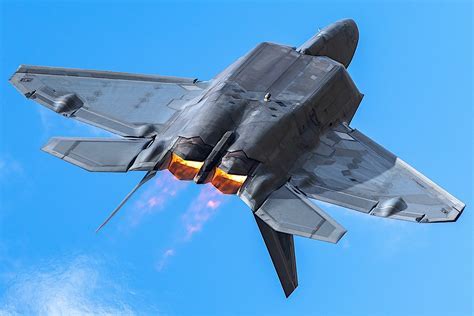
Complementing the Growlers were F-22 Raptors, the U.S. Air Force’s stealth air superiority fighters. Their role was to ensure air dominance, preventing any Venezuelan aircraft—particularly Su-30-class fighters—from interfering with the operation.
Armed with the AN/APG-77 AESA radar and an advanced sensor fusion suite, the F-22s acted as a stealth shield, ready to intercept airborne threats before they could disrupt the critical timing of the assault. The Raptors provided more than just firepower—they extended situational awareness across the battlespace, enhancing the effectiveness of the electronic warfare effort through secure, high-fidelity data sharing.
The Electromagnetic Layer: A Modern Battlespace
The success of Operation Absolute Resolve reinforces a powerful strategic truth: the electromagnetic spectrum is now the first battleground. Before the first boots touch ground or the first rotors spin, control of spectrum means control of tempo, decision-making, and survival.
In this case, Growlers didn’t need to destroy hardware; they needed only to create enough chaos and delay to give helicopters a window of safety. That fleeting, manufactured silence over Caracas—engineered by pulses of invisible energy—was the true air corridor that U.S. forces used to strike their target.
Implications for Future Conflicts
From a strategic perspective, the operation sends a clear message to both allies and adversaries. For U.S. planners, it confirms that scarce assets like the EA-18G Growler, and their modernization path, are essential—not peripheral. Their integration into joint operations is critical to ensuring freedom of maneuver in contested environments.
For adversaries such as Venezuela or peer competitors, the raid illustrates that survival in the opening hours of a confrontation depends on more than just having modern hardware. It demands:
- Emissions discipline: Avoiding predictable patterns that can be tracked and jammed.
- Decentralized command structures: Resilient to communication interference.
- Redundant kill chains: Capable of functioning when spectrum access is degraded.
- Mobility and deception: Including decoys and mobile launchers.
In other words, defense must now begin with the assumption that the spectrum will be contested and corrupted from the first instant.
Conclusion: The New Face of Suppression
Operation Absolute Resolve marks more than a tactical victory. It is a case study in next-generation warfare, where control of the electromagnetic environment—not firepower alone—determines access and initiative. The EA-18G Growler, once seen as a niche asset, is now indispensable in shaping modern battlespaces.
As stealth aircraft, jammers, and cyber tools become increasingly entwined, missions like this will define how conflicts are fought and won. The skies over Caracas in January 2026 were not just a battlefield—they were a proving ground for the future of joint electromagnetic operations.