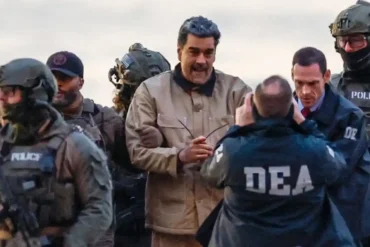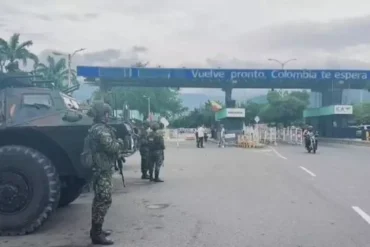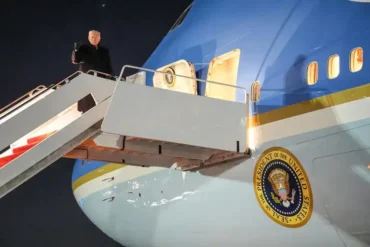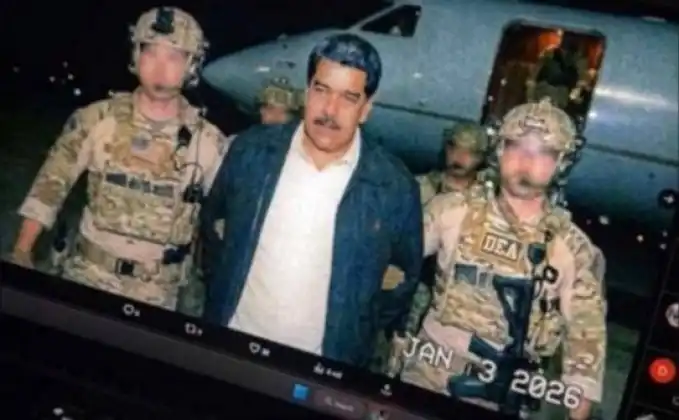
On January 3, 2026, the world awoke to the reverberations of a historic covert operation that reshaped hemispheric power dynamics. U.S. Special Forces Delta Force, in an unannounced high-risk mission, captured Venezuelan President Nicolás Maduro and his wife, Cilia Flores, executing a direct-action raid in Caracas under the cover of darkness. This bold maneuver, carried out without formal declaration of war or multilateral coalition, marks one of the most daring acts of U.S. special operations in recent history.
Precision Strike in a Hostile Capital
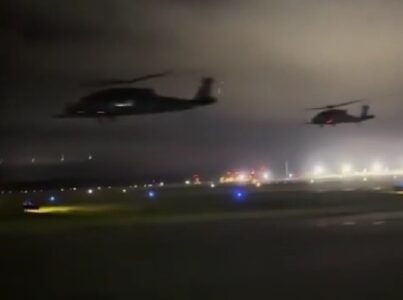
In the early hours before dawn, Caracas residents reported explosive detonations, power failures, and low-flying helicopters above the presidential district. Communications blackouts paralyzed security forces, and digital surveillance traced electromagnetic disturbances back to an elite U.S. operational footprint. Delta Force, officially known as the 1st Special Forces Operational Detachment-Delta (1st SFOD-D), was mobilized under Joint Special Operations Command (JSOC) to locate and seize Maduro at a classified secure compound.
U.S. intelligence sources utilized signals intelligence (SIGINT), human intelligence (HUMINT), and satellite imagery to confirm Maduro’s precise location. This intelligence package was developed discreetly over several weeks, and once verified, the operational greenlight was given—resulting in a surgical strike executed without public forewarning or conventional military buildup.
Delta Force: Tier 1 Precision and Operational Secrecy
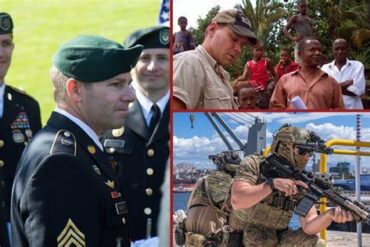
Delta Force operates in the shadows, reserved for strategic-level missions where national security imperatives intersect with limited political options. Their presence signals high-value targeting of extreme importance, and the Caracas raid aligns with previous Delta Force captures, such as the takedown of Saddam Hussein in 2003 and ISIS leader Abu Ibrahim al-Qurashi in 2022.
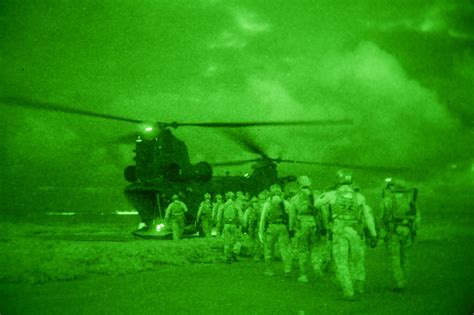
The Venezuela operation likely employed MH-60 Black Hawk and MH-47 Chinook helicopters, provided by the 160th Special Operations Aviation Regiment (SOAR). These aircraft specialize in stealth urban insertions—a method necessary for landing within contested territory while evading radar and suppressing enemy response. The tactical design included aerial surveillance from drones, ISR satellites, and electronic warfare (EW) teams to disable communications in the target zone.
Weapons and Equipment: Inside the Delta Loadout
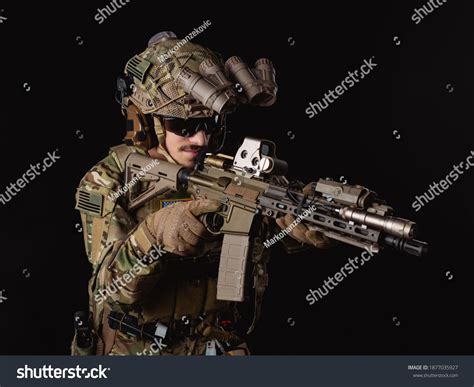
Though official equipment used in the raid remains classified, open-source analysis and past mission profiles suggest a familiar arsenal. Delta Force operators likely deployed with Heckler & Koch HK416 carbines, chambered in 5.56×45mm NATO, outfitted with suppressors, variable optics, and infrared aiming modules. Sidearms such as the Glock 19 and possibly the Sig Sauer P320 would serve as secondary weapons.
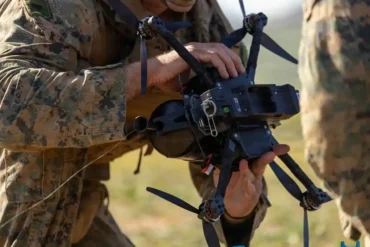
Operators wore custom modular plate carriers, integrated with encrypted communication devices, night-vision systems like the AN/PVS-31 or L-3 GPNVG-18, and likely carried flashbangs, thermal breaching tools, and miniature reconnaissance drones for real-time visuals. Each element of gear is purpose-designed to provide maximum lethality, stealth, and battlefield awareness with minimal detection.
Echoes of Noriega: A 36-Year Parallel
January 3, 2026, marked not just a single operation—but a historical echo. Exactly 36 years earlier, U.S. forces captured Panamanian dictator Manuel Noriega on January 3, 1990, following Operation Just Cause. That mission, which culminated in Noriega’s surrender after being surrounded in the Vatican Embassy, bears uncanny similarity to Maduro’s fall: both were sitting heads of state under U.S. federal indictment for drug trafficking, both were protected by loyalist forces, and both were extracted with minimal combat escalation.
The symbolic timing of Maduro’s capture—deliberately matching the anniversary of Noriega’s—adds a layer of psychological operations (PSYOP) and narrative dominance. It sends an unambiguous signal: the U.S. is willing and capable of deploying strategic kinetic force to achieve regime decapitation in the Western Hemisphere.
No War Declared, But a War Message Sent
Unlike Panama in 1989, no formal invasion was announced. The Caracas raid unfolded without regional military support, without a multinational coalition, and crucially, without extended ground conflict. This reflects a dramatic evolution in U.S. power projection: a model of surgical, high-value extractions that bypasses the need for traditional war declarations.
By operating through Tier 1 Special Mission Units, the U.S. has effectively created a new paradigm of force application—one that allows for decisive, deniable intervention in sovereign nations without drawing immediate international military response.

Aftermath in Caracas and Washington
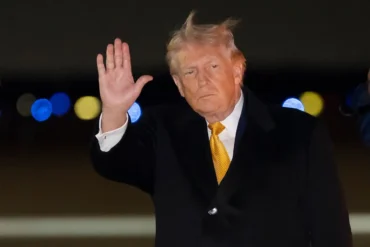
President Donald Trump confirmed the operation publicly via a video posted to the official White House X (formerly Twitter) account, stating that Nicolás Maduro and Cilia Flores were “now in U.S. custody.” The footage, though brief, was momentous—the culmination of years of strained relations, sanctions, and covert indictments.
In Caracas, the political structure began to fracture in real time. Elements of the Venezuelan armed forces loyal to Maduro mobilized but lacked coordination. Interim officials, reportedly backed by U.S. advisors, announced an emergency transition period, attempting to stabilize the fragile situation and restore civil order.
The Venezuelan foreign ministry issued statements condemning the raid as a “flagrant act of aggression,” accusing the U.S. of violating international law and sovereignty. Meanwhile, legal analysts across global institutions began dissecting the precedent: a foreign leader, seized without consent, outside any UN mandate.
A Strategic Doctrine in the Shadows
U.S. defense insiders view the Maduro operation not as an anomaly, but as a continuation of evolving strategic doctrine. From Noriega to Hussein, from al-Qurashi to Maduro, the trend is clear: when diplomacy fails and the target is deemed essential to U.S. national interests, Delta Force delivers results.
This quiet doctrine bypasses drawn-out campaigns. It rejects high-profile invasions. Instead, it favors covert, fast-paced, intelligence-driven action, executed with technological supremacy and human precision. It’s a template that reduces American exposure, minimizes civilian casualties, and asserts dominance through invisibility.
What Comes Next for Venezuela
With Maduro detained and under American custody, Venezuela faces a geopolitical vacuum. Regional allies watch closely—Cuba, Iran, and Russia have all previously pledged support for the Maduro regime. Their response, while yet undeclared, could tip the balance toward escalation or concession.
Inside Venezuela, the power structure remains unstable. Loyalist militias, Chavista political figures, and elite military units are expected to jockey for control. Yet without the central figure of Maduro, their cohesion is likely to fragment. The question looming over Caracas is no longer “Who governs now?”—but rather, “What remains to govern?”
Conclusion: Delta Force and the Future of Conflict
As the dust settles on one of the boldest military raids in modern history, the message resonates across capitals and war rooms: the United States retains the capability—and will—to remove adversaries without full-scale war. The raid on Maduro’s compound was not just a mission. It was a doctrine-in-action. It was deterrence by demonstration.
Delta Force, true to its creed, has disappeared again into the shadows. But its impact reverberates. The capture of a sitting president on foreign soil, carried out by a team whose names will never be known, is a stark reminder: when red lines are crossed and political options are exhausted, America’s most elite warriors answer with quiet, unrelenting precision.