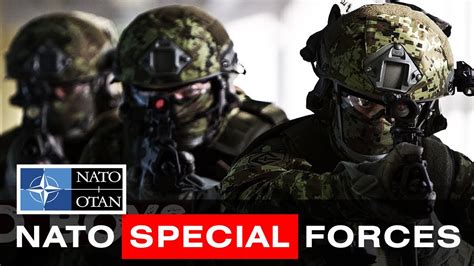
The United Kingdom has formally taken command of NATO’s Allied Reaction Force Special Operations Component, a move that places British elite units at the center of the Alliance’s most rapid-response military capability. Confirmed by the British Ministry of Defence on January 31, 2026, the transition concludes a rigorous, multi-year preparation cycle and underscores the UK’s expanding role in shaping NATO’s frontline crisis-response posture during a period of sustained geopolitical tension.
This leadership role assigns the UK responsibility for coordinating NATO’s high-readiness special operations forces, designed to deploy at short notice across the Alliance’s area of responsibility. Unlike conventional formations, this component is engineered for speed, discretion, and operational flexibility, capable of responding to emerging crises before they escalate into broader conflicts. By assuming command, the UK becomes the operational nerve center for multinational special operations integration, command, and control.
The announcement reflects more than a ceremonial handover. It signals NATO’s confidence in British special operations doctrine, command structures, and expeditionary experience. British forces have long been embedded across NATO missions, but leading the Special Operations Component Command (SOCC) elevates the UK from contributor to orchestrator, responsible for synchronizing complex multinational capabilities under intense time pressure.
The UK’s assumption of command follows two years of sustained preparation involving headquarters development, personnel integration, and continuous evaluation. This process was designed to ensure that the British-led command could operate at full NATO readiness from day one, seamlessly coordinating land, maritime, and air special operations forces within a single, unified operational framework.
A Two-Year Preparation Cycle Culminates in NATO Certification
At the heart of the UK’s new role is the Special Operations Component Command, a purpose-built headquarters responsible for commanding a joint special operations force structured around Maritime, Land, and Air Task Groups. This tri-domain configuration allows NATO to generate synchronized effects across multiple environments, from littoral infiltration and airborne insertion to inland reconnaissance and precision direct action.
The SOCC underwent formal validation in Norway following an exhaustive assessment by the NATO Special Operations Forces Command Evaluation team. This evaluation was deliberately uncompromising. British defense officials confirmed that the headquarters was required to meet more than 850 individual performance measures, covering everything from command-and-control resilience and intelligence fusion to logistics planning and interoperability with conventional NATO forces.
Certification was not limited to staff procedures. It tested whether the headquarters could function under realistic operational stress, coordinating multinational units while maintaining tempo, security, and situational awareness. The successful validation confirmed that the UK-led SOCC met NATO’s highest readiness standards, enabling it to assume command without operational caveats.
Exercise Hyperion Storm and the Role of British Elite Units
Validation of the SOCC coincided with Exercise Hyperion Storm, a demanding NATO exercise designed to test the readiness and cohesion of the assigned task groups. The exercise simulated high-intensity special operations scenarios, including rapid insertion, target seizure, and coordinated joint effects across land, sea, and air.
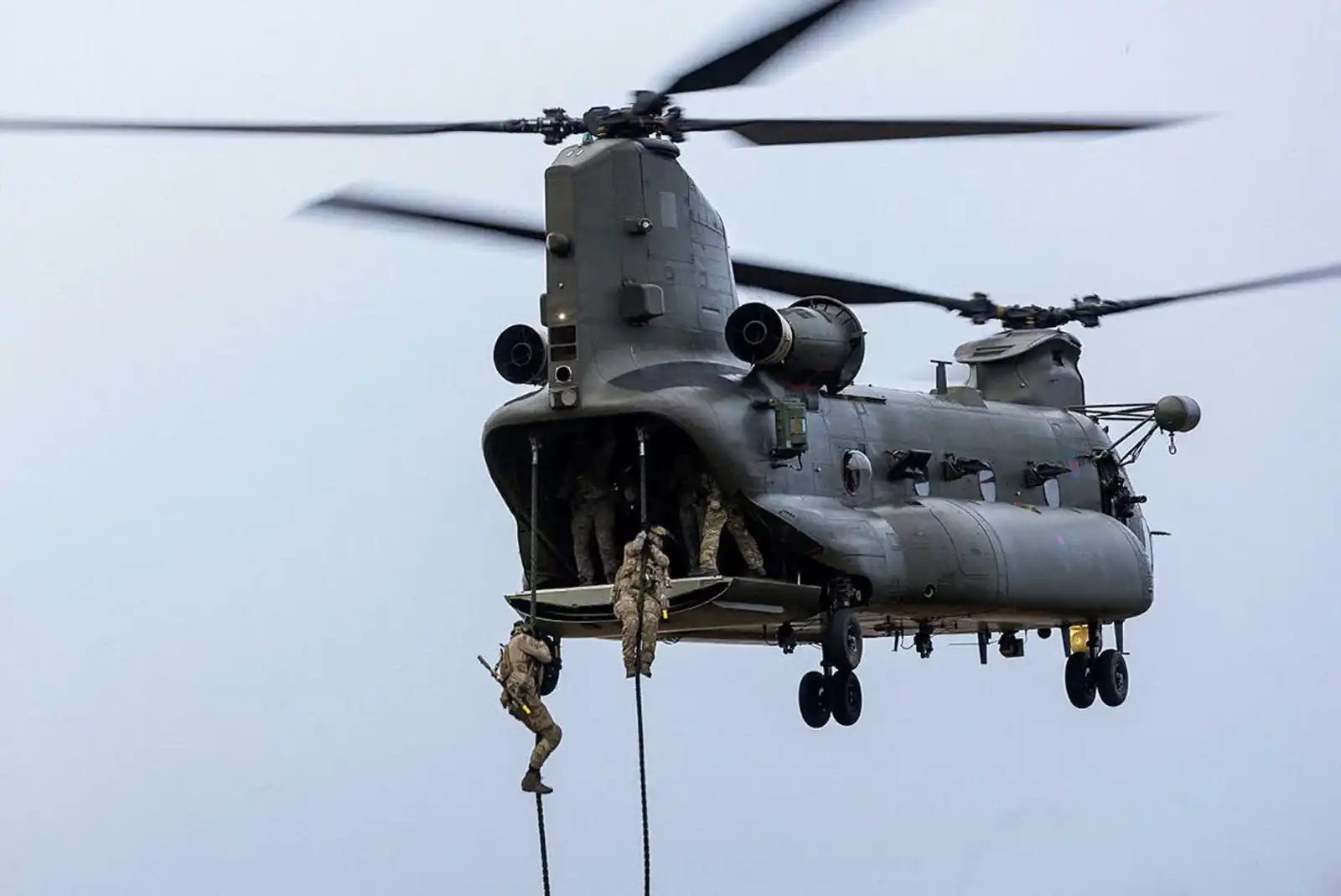
British units played a central role. 42 Commando, Royal Marines, alongside soldiers from the 4th Battalion, Ranger Regiment (4 RANGER), executed complex assault and reconnaissance missions, demonstrating the UK’s ability to integrate commando and ranger forces within a NATO special operations framework. Inserted by Royal Air Force Chinook HC6 helicopters, these units conducted fast-rope insertions and simulated attacks under time-critical conditions, testing both tactical proficiency and command responsiveness.
Exercise Hyperion Storm was designed not merely to showcase capability but to expose friction. NATO evaluators closely monitored decision-making speed, intelligence dissemination, and the headquarters’ ability to adapt plans in real time. British officers involved in the exercise emphasized that success depended as much on staff coordination as on frontline execution, reinforcing the SOCC’s role as an enabler of operational effect rather than a purely directive command.
Multinational Integration at the Core of the Mission
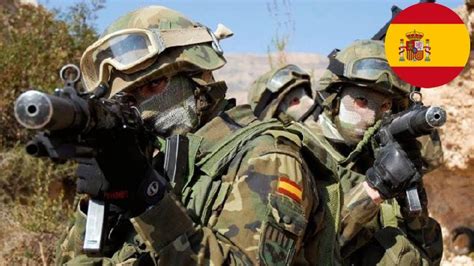
A defining feature of the Allied Reaction Force Special Operations Component is its multinational composition. In addition to UK elements, the SOCC will command a Spanish Special Operations Land Task Group, ensuring that the headquarters functions as a genuinely Alliance-level command rather than a nationally focused structure.
British planners highlighted multinational command as a critical validation criterion. Leading non-UK forces requires not only technical interoperability but also doctrinal alignment, cultural understanding, and trust. The successful integration of Spanish units during evaluation exercises demonstrated the headquarters’ ability to harmonize different national approaches to special operations under a single operational vision.
This multinational structure enhances NATO’s political cohesion as much as its military effectiveness. By distributing leadership and operational responsibility, the Allied Reaction Force reinforces collective defense principles while ensuring that no single nation bears disproportionate operational burden.
Strategic Significance for NATO and the United Kingdom
The UK’s leadership of the NATO special operations reaction force carries strategic weight beyond the tactical domain. As NATO continues to strengthen its deterrence and response posture, high-readiness forces capable of early intervention have become central to Alliance strategy. Special operations forces, with their ability to operate discreetly and decisively, are particularly valuable in shaping the early stages of a crisis.
For the United Kingdom, this role demonstrates sustained commitment to NATO at a time when Alliance unity is under constant scrutiny. British defense officials view the command as tangible evidence of burden-sharing, reinforcing the UK’s position as one of NATO’s most capable and reliable military contributors. It also highlights the operational maturity of the UK Commando Force, the Army Ranger Regiment, and RAF special operations aviation, all of which underpin the SOCC’s effectiveness.
Colonel Phil O’Callaghan, a Royal Marines Commando and Deputy Commander of the SOCC, described the evaluation process as exacting, noting that every aspect of headquarters performance was scrutinized to NATO standards. His assessment reflects a broader institutional confidence that the UK can not only contribute elite forces but also lead complex multinational operations at the highest readiness levels.
A Central Pillar of NATO’s Future Crisis Response
As NATO continues to develop the Allied Reaction Force, the UK-led Special Operations Component is expected to play a pivotal role in shaping how the Alliance responds to emerging threats. Its mandate spans special reconnaissance, direct action, and military assistance, providing NATO with a flexible toolkit for early crisis management, deterrence signaling, and, if necessary, combat operations.
The successful validation and assumption of command confirm the UK’s standing as a leader in the special operations domain. More importantly, they ensure that NATO possesses a credible, rapidly deployable capability able to operate across domains and borders with minimal warning. In an increasingly unpredictable security environment, the UK’s command of this force strengthens the Alliance’s ability to act decisively, collectively, and at speed.