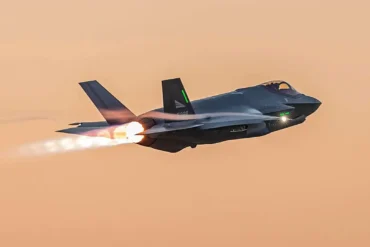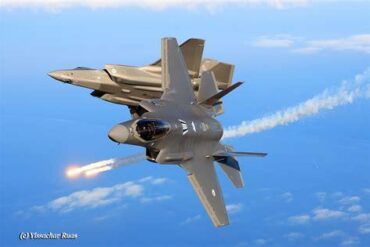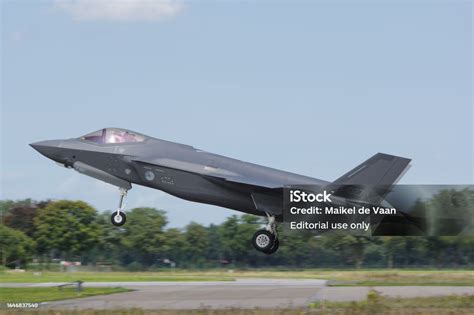
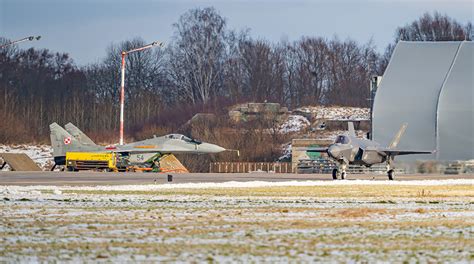
On July 7, 2025, the Netherlands announced a significant escalation in NATO’s eastern defense posture by confirming the deployment of its cutting-edge F-35 Lightning II fighter jets to Poland, scheduled from September 1 to December 1. The move comes amid growing alarm over Russia’s intensified military maneuvers near NATO borders, particularly as arms deliveries to Ukraine increase in scale and sensitivity. This deployment, executed at the request of NATO’s Supreme Headquarters Allied Powers Europe (SHAPE), aims to reinforce airspace security, ensure the safe transit of allied military supplies, and deter any potential provocations from Moscow.
Rising Russian Aggression Forces NATO to Fortify Eastern Flank
In the past several weeks, Russian aircraft and surveillance drones have sharply increased their operations near NATO airspace, particularly across the Baltic Sea region and eastern Poland. Intelligence reports from multiple NATO member states suggest that these activities are not routine but reflect probing tactics designed to test response times and expose weaknesses. In response, Norway preemptively deployed its F-35s to Poland in late June, underlining a shared recognition of the escalating threat. The Dutch decision to follow suit confirms NATO’s resolve to maintain dominance in contested airspace and respond swiftly to aggression.
This dual deployment marks the first time both Norwegian and Dutch fifth-generation fighters have operated in such close concert within Poland’s airspace, signifying a coordinated, multi-national deterrence strategy. The strategic positioning of these jets not only reassures Poland and the Baltic states but sends a firm geopolitical message to the Kremlin: NATO’s eastern shield is reinforced and fully operational.
The F-35 Lightning II: NATO’s Stealth Powerhouse
At the core of this response lies the F-35 Lightning II, a technological marvel developed by Lockheed Martin. Unlike older fourth-generation aircraft, the F-35 was designed from inception to be a stealth-enabled, multi-domain combat platform. It integrates:
- Low-observable (stealth) design for minimal radar signature
- Advanced electronic warfare suites capable of jamming enemy radar and communications
- Sensor fusion technology, providing unparalleled situational awareness
- Real-time data sharing across allied forces, enhancing battlefield coordination
These attributes make the F-35 uniquely suited for missions in highly-contested environments, such as Eastern Europe, where Russian S-400 surface-to-air missile systems and fighter interceptors are active. The Dutch Air Force’s decision to field these aircraft in Poland reflects the belief that only the F-35 can effectively operate and survive in this theater.
From F-16s to F-35s: A Tactical Revolution
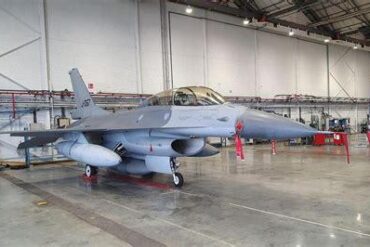
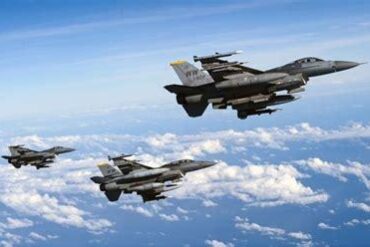
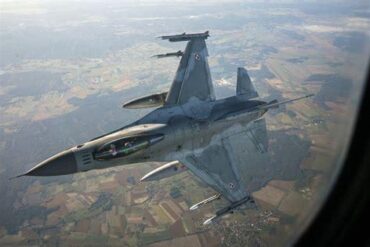
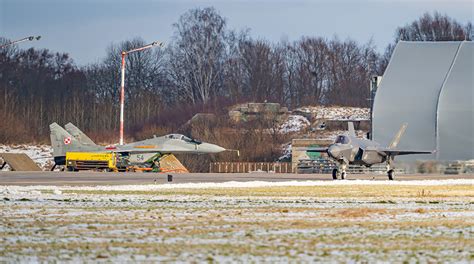
The transition from the F-16 Fighting Falcon to the F-35 represents more than a platform upgrade—it marks a strategic evolution in how NATO wages air combat. The F-16, while still effective in many roles, cannot match the sensor integration, stealth capabilities, or data-driven warfare potential of its successor. For the Dutch military, the F-35 introduces a new era of preemptive threat detection, networked combat coordination, and deep strike capability, enabling air superiority even in saturated threat environments.
Historically, such shifts have had profound impacts. The Cold War transition from the F-4 Phantom to the F-16 redefined Western air dominance. Now, the deployment of the F-35 to Eastern Europe signifies a similar leap forward, especially as battlefield complexity increases around Ukraine and NATO’s eastern borders.
Safeguarding the Ukrainian Supply Corridor
The core objective of the Dutch deployment is to protect key logistical corridors funneling arms, humanitarian supplies, and equipment into Ukraine. As Russia increasingly targets transport hubs and convoys, NATO recognizes that airspace integrity over Poland is non-negotiable. The F-35’s ability to conduct ISR (Intelligence, Surveillance, and Reconnaissance) missions in contested zones allows it to monitor, identify, and respond to threats long before they escalate.
According to sources within the Dutch Ministry of Defence, the deployment will include a rotational squadron of eight F-35s supported by refueling tankers, electronic warfare aircraft, and early warning assets. These will be stationed at a forward-operating base in southeastern Poland, close to known supply corridors leading into western Ukraine. Patrol sorties will be conducted 24/7 in conjunction with NATO’s Air Policing mission, overlapping with the ongoing presence of Norwegian jets and US drone operations in the region.
A Calculated Message to Moscow
While the deployment is defensive in nature, it carries unmistakable strategic messaging. Russia’s recent provocations—including airspace incursions near Finland, GPS jamming over Lithuania, and drone flights along the Black Sea—have triggered collective alarm within the alliance. The decision to deploy both Norwegian and Dutch fifth-gen jets—nations not directly bordering Russia—reflects a deliberate strategy to show that all NATO members are united in their deterrence posture.
Furthermore, stationing stealth fighters with the capacity to launch precision strikes, evade detection, and conduct deep reconnaissance illustrates that NATO is not merely reacting—it is preparing for any potential escalation. If Russia were to test NATO’s resolve in this region, it would be confronting air superiority platforms capable of neutralizing threats before they emerge.
Poland: NATO’s New Strategic Anchor
Poland has become a critical node in NATO’s defense infrastructure, serving as both a logistical hub for Ukraine-bound aid and as a launchpad for rapid NATO force deployment. With the U.S. already operating Aegis Ashore missile defense systems, and Germany, the UK, and France regularly conducting troop rotations and joint exercises in the region, the arrival of the Dutch F-35s adds a new layer of capability. It also confirms that NATO’s defense-in-depth strategy has matured into a forward defense doctrine, bringing high-tech deterrence closer to potential flashpoints.
Local Polish authorities have also welcomed the deployment, citing increased security guarantees and military cooperation opportunities. There are indications that joint Dutch-Polish air drills will be conducted in October, focusing on air-to-air combat training, multi-nation command integration, and simulated interception of hostile aircraft.

The Broader NATO Implication
This deployment also signals a broader operational shift within NATO. As more member states transition to F-35 platforms—Finland, Germany, Switzerland, and Belgium among them—the alliance is moving toward interoperable fifth-gen squadrons capable of operating seamlessly in joint missions. These aircraft, sharing digital architecture and real-time data links, are transforming NATO’s traditional reliance on mixed-generation fleets into a unified, stealth-enabled air combat framework.
Experts suggest this will enable faster, AI-assisted threat detection, improved target deconfliction, and automated asset tasking, particularly during high-pressure contingencies like missile defense operations or rapid interception missions.
Conclusion: A Line Drawn in the Sky
The Dutch F-35 deployment to Poland is not merely a show of force—it is a clear signal of intent. Amidst intensifying Russian aggression, NATO is not waiting to react. Instead, it is prepositioning its most advanced air assets, ensuring the security of frontline allies, and maintaining the strategic advantage in a region fraught with volatility. As winter approaches and military logistics become more vulnerable, the presence of Dutch and Norwegian F-35s offers not just deterrence, but the assurance that any threat to NATO’s eastern front will be met with precision, speed, and overwhelming capability.