The United States Federal Aviation Administration has escalated its warnings to airlines operating over Latin America, citing rising military activity, regional instability, and growing threats to navigational reliability across key international air corridors. Through a series of newly issued NOTAMs, the FAA is urging heightened vigilance for all flight operations, emphasizing that risks now extend across all altitudes and every phase of flight, including overflight, cruise, departure, and approach. The advisory underscores a rapidly evolving security environment that directly intersects with civilian aviation safety.
Expanding Risk Envelope Over the Eastern Pacific
The FAA warnings focus heavily on the Eastern Pacific airspace bordering Mexico, Central America, and northern South America, a region that has seen a marked increase in coordinated and uncoordinated military movements. Unlike localized conflict zones with clearly defined restricted areas, this region presents a fluid operational picture, where military aircraft may transit international airways without standard civil identification procedures. This ambiguity creates layered hazards for commercial crews relying on predictable traffic separation and surveillance systems.
Airlines are being advised that these threats are not hypothetical. The FAA’s language explicitly references credible operational risks, reflecting intelligence assessments and real-world encounters that have already placed civilian aircraft in precarious situations. The advisories remain active for 60 days, signaling concern that instability may persist or further escalate.
NOTAMs Highlight All-Altitude Threats to Civil Aviation
What makes the current FAA guidance particularly notable is its emphasis on unrestricted vertical exposure. Unlike prior advisories limited to lower altitudes or terminal environments, the new NOTAMs warn that military activity may affect aircraft even at high cruise levels, including long-haul international flights transiting the region. This removes the assumption that altitude alone offers protection from conflict-related aviation risks.
The FAA’s caution is rooted in operational realities where military aircraft may fly with transponders disabled, conduct refueling or surveillance missions, or operate under rules that diverge from civil aviation norms. These practices severely reduce situational awareness for both pilots and air traffic controllers, compressing reaction time in already congested airspace.
JetBlue Near-Miss Exposes Hidden Collision Dangers
The urgency behind the FAA’s warnings is reinforced by a December 2025 incident involving a JetBlue aircraft operating in the region. During climb-out, the flight was forced to abruptly halt its ascent to avoid a collision with a U.S. Air Force tanker aircraft that was operating without an active transponder. The military aircraft was effectively invisible to both civilian radar systems and air traffic control displays.
Cockpit audio from the event captured the JetBlue pilot expressing alarm after the aircraft crossed directly through the planned flight path. The encounter illustrates a critical vulnerability: when military aircraft conduct covert or non-cooperative operations, civilian pilots may only become aware of the threat through visual acquisition, leaving minimal margin for evasive action.
Satellite Interference Adds a New Layer of Complexity
Beyond physical collision risks, the FAA has also warned carriers about increasing satellite navigation interference, a threat that has surged alongside global geopolitical tensions. Modern commercial aviation is deeply dependent on satellite-based systems for navigation, surveillance, and timing. Disruption to these systems can degrade situational awareness even in otherwise benign weather and traffic conditions.
According to the 2024 IATA Safety Report, reports of GPS spoofing increased by 500% year-on-year, while general satellite interference rose by 175%. These figures highlight how electronic warfare tactics are no longer confined to active conflict zones but are spilling into adjacent international airspace with regularity.
GPS Spoofing Versus Signal Loss
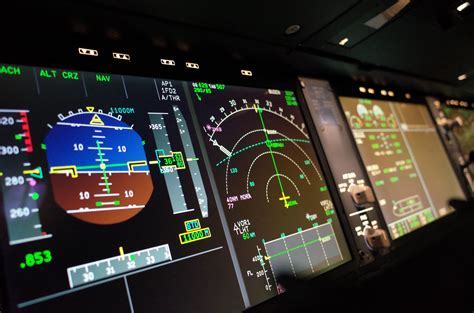
The FAA distinguishes between two primary electronic threats. Satellite signal loss deprives aircraft of positional data altogether, forcing crews to revert to inertial systems and ground-based navigation aids. While challenging, this scenario is generally manageable through established redundancy protocols.
GPS spoofing, however, is more insidious. In spoofing events, aircraft systems receive false but plausible location data, creating a convincing illusion of accurate navigation while the aircraft is actually displaced. This can lead to navigation errors, altitude deviations, and potential airspace violations, particularly in regions where ground-based backups are sparse or unavailable.
Venezuela Airspace Ban Signals Escalating Precaution
The FAA’s broader regional concern is further underscored by its recent decision to ban all U.S.-registered aircraft from Venezuelan airspace following renewed unrest. The restriction applies to all altitudes within the Maiquetia Flight Information Region, compelling U.S. airlines to reroute flights on short notice and absorb additional fuel and operational costs.
While U.S. state and military aircraft are exempt, commercial carriers have largely suspended or reduced service, reflecting industry-wide caution. The move signals that regulators are prepared to act decisively when political volatility intersects with aviation safety, even if disruptions ripple across international networks.
Airlines Adapt as Uncertainty Persists
For now, airlines are recalibrating risk assessments, adjusting flight paths, and enhancing crew briefings to account for the evolving threat landscape. The FAA has made clear that ongoing monitoring will determine whether restrictions are lifted, extended, or expanded. As military activity, electronic interference, and regional instability converge, Latin American airspace has become a focal point where geopolitics and global aviation safety increasingly collide.