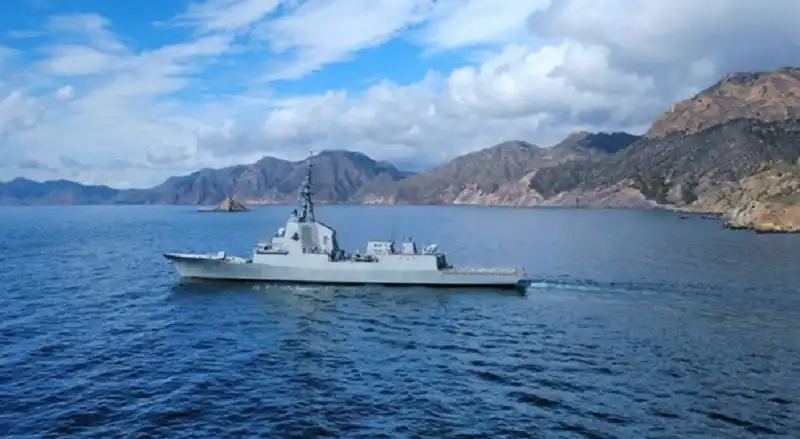
On January 10, 2026, the Spanish Navy’s frigate Almirante Juan de Borbón (F-102) departed from the Ferrol Military Arsenal, setting sail to take command of NATO’s Standing Naval Group 1 (SNMG-1). This deployment marks a milestone for the Spanish Navy, which now assumes not just a contributing but a leadership role within NATO’s high-readiness maritime forces operating in Northern European waters.
Spain’s Rising Leadership in NATO’s Maritime Strategy
This deployment highlights Spain’s strategic ascent within NATO, reflecting a broader effort to elevate its profile in alliance operations. The SNMG-1 command element, now led by Rear Admiral Joaquin Ruiz Escagedo, will operate from aboard Almirante Juan de Borbón, with the majority of the task force staff being Spanish personnel. The transition of command is set to occur formally in Den Helder, Netherlands, in the coming days.
Crucially, this is more than a ceremonial deployment. The frigate is not merely joining the task force; it is becoming the operational nerve center of SNMG-1. The Spanish Navy has underscored that this deployment follows an intensive cycle of certification and readiness validation, affirming that the vessel and its crew can manage complex, multinational operations across a demanding theater.
A Flagship Designed for Command and Combat
The Almirante Juan de Borbón, an Álvaro de Bazán-class frigate, is no stranger to high-level operations. With a full-load displacement of 5,853 tonnes, and a length of 146.7 meters, the F-102 has been specifically engineered to perform as a command-capable escort. Its Combined Diesel or Gas (CODOG) propulsion system enables rapid transitions between fuel efficiency and high maneuverability, giving the task force flexible operational speed.
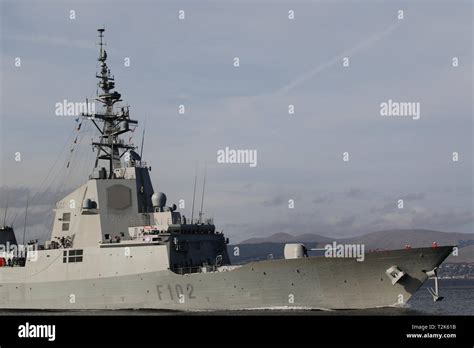
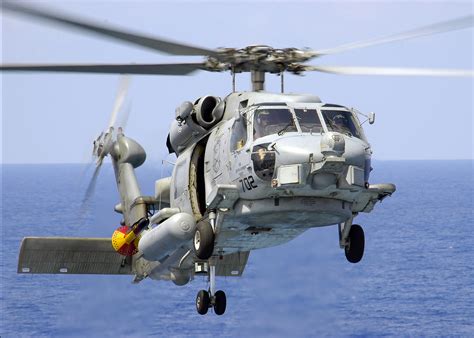
Its combat capabilities are centered on the AEGIS combat system and the SPY-1D radar, which offer robust air-defense capabilities. The ship’s Mk 41 vertical launch system houses SM-2 and ESSM missiles, delivering a layered defense network against incoming aerial threats. For offensive operations, it fields Harpoon anti-ship missiles and a 5-inch naval gun. Its anti-submarine warfare suite includes sonar systems, lightweight torpedoes, and an embarked SH-60B Seahawk helicopter.
This well-rounded arsenal ensures the ship not only defends itself effectively but also safeguards the entire task group under its command. These features are not only technical specifications; they form the basis for multinational trust and tactical credibility in a NATO setting.
Operational Readiness and Tactical Integration
Commander Miguel Romero, leading officer aboard Almirante Juan de Borbón, emphasized the practical challenges of commanding a NATO task force. The mission, he noted, is about daily operational pressure, not ceremony. The integration of an embarked staff, alongside the ship’s own company, presents a critical test of interoperability and command resilience. Romero highlighted the increased demand in planning, coordination, and communication workflows, necessary to operate seamlessly in a multinational command structure.
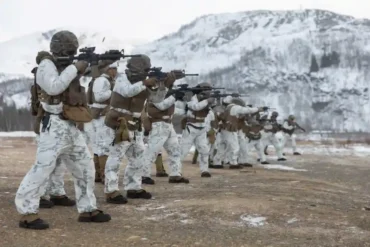
Additionally, the vessel embarks an SH-60B helicopter unit from the 10th Squadron of Navy Aircraft, enhancing its reach and flexibility. It also carries an Operational Security Team of Marine Infantry from the Northern Third, reinforcing internal and external security measures. These additions underscore that the ship is not merely hosting a staff—it is functioning as a mobile command-and-control hub.
Standing Naval Group 1: A Pillar of NATO Presence
The Standing Naval Group 1 operates as one of NATO’s principal maritime arms, with missions ranging from deterrence and collective defense to ensuring interoperability and naval presence in key strategic areas, particularly Northern Europe. SNMG-1 is a permanently deployed force, unlike crisis-specific flotillas, and is essential for rapid response and sustained forward presence.
This persistent deployment model means interoperability is a mission imperative. NATO’s credibility in contested maritime zones like the Baltic and North Seas depends on the seamless integration of ships and personnel from various member states. Spain’s command of SNMG-1 demonstrates that its navy can set the operational rhythm, manage joint tasking, and ensure real-time coordination across allied fleets.
Strategic Significance Beyond the Ship
Spain’s assumption of SNMG-1 command represents more than a symbolic rotation. It marks a strategic shift:
- From Contributor to Orchestrator: Spain transitions from merely contributing ships to commanding an operational maritime force that is instrumental in NATO’s presence strategy in Northern Europe.
- Command Influence: By running the planning and coordination from a Spanish ship, Spain positions itself as a key influencer in alliance-wide maritime operations.
- Readiness as Reputation: The emphasis on certification and multi-role capabilities sends a message that Spain is committed to excellence and operational responsibility at the highest level of naval readiness.
Historical Echoes and Evolving Role
Captain Jesus Gonzalez-Cela, commander of the 31st Surface Squadron, provided important historical context, noting that Almirante Juan de Borbón was also the first Spanish frigate to join a NATO Standing Naval Group back in 2005, coinciding with the creation of permanent SNMG structures. Spain’s involvement has since become routine—but the 2026 deployment is a turning point, evolving from participation to command leadership.
This evolution encapsulates both continuity and escalation. It affirms Spain’s longstanding NATO commitment while simultaneously amplifying its role within the alliance’s maritime architecture. By hosting the command team, Spain directly influences daily operations, maritime strategy, and alliance cohesion, all from the decks of Almirante Juan de Borbón.
Conclusion: Spain’s Flagship Moment
The deployment of Almirante Juan de Borbón as the command ship of SNMG-1 is a clear demonstration of Spanish naval capability, alliance trust, and strategic maturity. It affirms that Spain is not only able to contribute warships, but also to lead, coordinate, and safeguard NATO’s forward posture in some of the most geopolitically sensitive waters on the continent.
In an age where naval power is diplomacy by other means, Spain’s leadership of SNMG-1 ensures its voice is heard—and felt—across the high seas of Northern Europe.