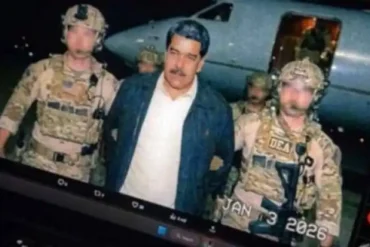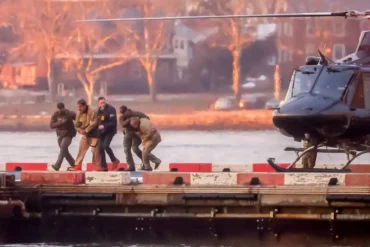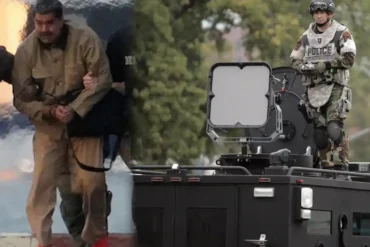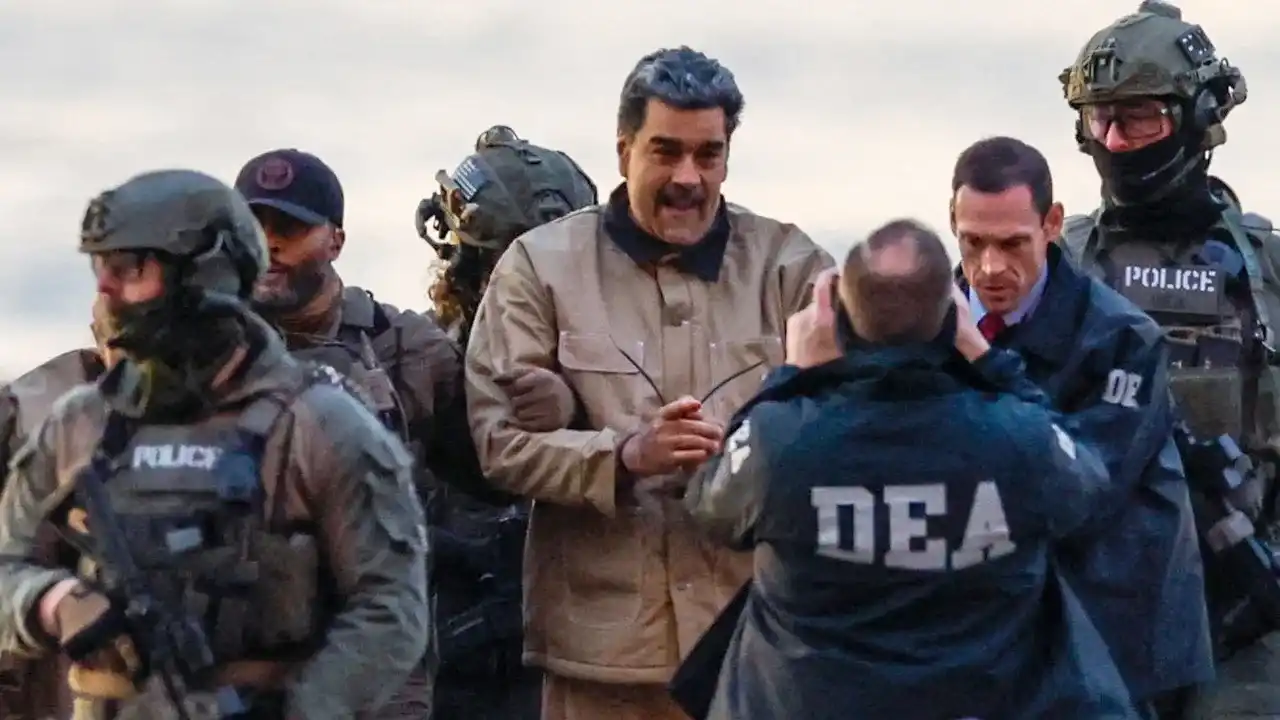
On January 3, the skyline of Caracas reportedly erupted in coordinated explosions as U.S. forces carried out a high-risk raid that Venezuelan officials say left 83 people dead. At the center of the geopolitical storm stands an explosive allegation: that the Pentagon deployed Anthropic’s Claude AI in the operation that allegedly led to the “extraction” of Venezuela’s President, Nicolás Maduro.
If verified, the implications are staggering. This would mark one of the clearest signals yet that advanced generative AI systems—once marketed as productivity assistants—have crossed into the bloodstream of active military operations.
The controversy intensified after reports suggested Claude was accessed through a partnership with Palantir Technologies, a long-time U.S. defense contractor deeply embedded in intelligence and battlefield analytics. Anthropic’s own policies explicitly prohibit violent or weapons-related applications of its models. Yet the Pentagon has made clear that it will not rely on AI systems that restrict its operational latitude in war.
The alleged deployment of Claude AI during a live military operation is already being described by some policymakers as an “Oppenheimer moment”—a reference to the physicist who led the Manhattan Project and later grappled with the moral consequences of unleashing nuclear power. The analogy is not casual hyperbole. It reflects mounting anxiety that algorithmic systems are now intertwined with decisions of life and death.
Claude AI and the Caracas Raid: What Is Known
Details remain fragmented and contested. Venezuelan authorities claim widespread bombing across the capital. U.S. officials have not confirmed operational specifics. Anthropic declined to comment on whether Claude was used in this particular mission but reiterated that any deployment must comply with its usage policies.
The unanswered question is not whether AI was used in some capacity—AI systems are now routine across intelligence analysis and logistics—but whether a large language model such as Claude played a direct role in mission planning, target identification, surveillance synthesis, or operational coordination.
Claude, like other advanced AI systems, is capable of rapidly processing vast document sets, extracting patterns, summarizing intelligence briefings, and generating structured operational insights. When integrated with platforms like Palantir’s data-fusion systems, such capabilities could theoretically assist in synthesizing:
- Satellite imagery reports
- Drone reconnaissance feeds
- Intercepted communications metadata
- Logistics and extraction pathway modeling
The leap from analytical assistance to operational influence is subtle but profound. An AI does not need to “pull a trigger” to shape the battlefield. It only needs to influence the flow of information upon which human commanders rely.
Pentagon-AI Tensions: Contracts, Control, and Compliance
The relationship between AI developers and defense agencies has been strained for years. Anthropic’s reported $200 million contract with the U.S. government illustrates the paradox facing AI firms. On one hand, defense contracts provide revenue, validation, and institutional prestige. On the other, association with lethal operations risks reputational backlash and internal dissent.
Defense Secretary Pete Hegseth’s statement that the agency will not “employ AI models that won’t allow you to fight wars” signals a hardline stance. The Department of Defense views AI as foundational to maintaining strategic superiority over rival powers such as China and Russia. From the Pentagon’s perspective, restrictions embedded in AI usage policies may conflict with national security imperatives.
If Claude was used in the Caracas raid without explicit company-level approval, it could ignite legal and ethical confrontations about control over AI deployment once systems are licensed or integrated into government infrastructures.
The core dilemma is straightforward but uncomfortable: once an AI model enters classified ecosystems, practical oversight becomes murky. Governance frameworks lag far behind deployment realities.
The Long Arc of AI in Warfare
The alleged use of Claude in Venezuela is not an abrupt rupture but the latest chapter in a decades-long evolution of AI’s entanglement with military power.
Artificial intelligence did not emerge from Silicon Valley lifestyle apps. Its intellectual roots are steeped in wartime cryptography and defense research. During World War II, Alan Turing’s codebreaking efforts against the German Enigma cipher represented an early fusion of mathematics, computation, and strategic warfare. Turing later proposed that machines could simulate human reasoning—a radical idea that seeded modern AI research.
In 1958, the U.S. established the Advanced Research Projects Agency (ARPA), later renamed DARPA, explicitly to ensure technological superiority. Military funding shaped early AI research in pattern recognition and decision modeling.
By 1991, AI-assisted logistics software such as the Dynamic Analysis and Replanning Tool (DART) was used during the Gulf War to optimize supply chains. The system saved millions of dollars and demonstrated that algorithmic efficiency could reshape battlefield operations.
The shift from logistics optimization to lethal targeting accelerated in the 2010s. In 2017, the Pentagon launched Project Maven, designed to automate target recognition from drone footage. Machine learning algorithms dramatically reduced the time required to identify objects of interest in aerial imagery.
The trajectory is unmistakable: AI systems have steadily moved closer to the core of combat decision-making.
Algorithmic Targeting in Modern Conflicts
The Russia-Ukraine war has demonstrated how AI-enhanced drones now account for a significant proportion of battlefield casualties. Machine vision systems enable autonomous navigation and target identification with increasing precision. The human operator often becomes a supervisor rather than a direct pilot.
In 2023, Israel reportedly employed AI tools known as Lavender and Gospel during operations in Gaza. According to public accounts, these systems accelerated target generation at unprecedented scale. Tasks that once required months of human intelligence labor were compressed into days.
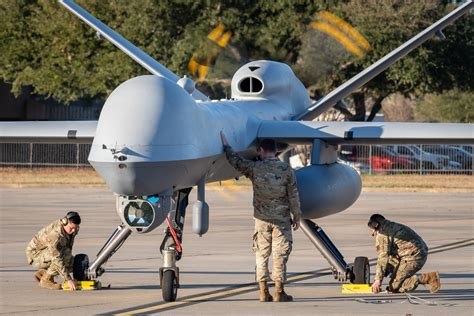
Such developments reflect a broader structural shift: AI compresses time. Decision cycles that once unfolded over weeks now occur in hours. The faster the loop, the greater the pressure on human oversight.
In this context, the alleged use of Claude AI during the Caracas raid appears less anomalous and more evolutionary. If generative AI models can synthesize complex intelligence briefs and simulate scenario outcomes, their appeal to military planners is obvious.
The Oppenheimer Parallel: Moral Shockwaves
Austrian Foreign Minister Alexander Schallenberg’s warning that this may be the “Oppenheimer moment of our generation” captures the existential dimension of the debate. The atomic bomb forced humanity to confront the consequences of unleashing unprecedented destructive capability. AI-driven warfare presents a different but equally unsettling threshold.
The central fear is not that machines will spontaneously rebel. The real concern is more banal and more dangerous: that human institutions will increasingly rely on algorithmic outputs for lethal decisions because they are faster, cheaper, and scalable.
Autonomous drones operating in swarms, algorithm-driven strike recommendations, and real-time predictive targeting systems risk turning warfare into a mechanized production line. The metaphor of a “factory” of targets, already used in discussions of AI-assisted conflicts, underscores the industrialization of lethality.
The moral discomfort intensifies when accountability becomes diffused. If an AI system contributes to a targeting error, who bears responsibility? The software developer? The contractor? The commanding officer? The policymaker who authorized deployment?
These questions remain largely unresolved.
Caracas as a Glimpse of the Future
If Claude AI was indeed involved in synthesizing intelligence during the Venezuela operation, the event may represent more than a geopolitical flashpoint. It may signal that large language models have crossed from corporate productivity tools into operational war planning.
The speed of AI evolution far outpaces regulatory frameworks. International law struggles even to define autonomous weapons clearly, let alone regulate generative AI integration into military chains of command.
Meanwhile, strategic incentives push in the opposite direction. Nations fear falling behind adversaries who aggressively integrate AI into defense architectures. The logic of deterrence fuels adoption.
In that environment, ethical hesitation becomes a competitive disadvantage.
The Convergence of Silicon Valley and the Pentagon
The entanglement between private AI firms and defense institutions is no longer peripheral—it is structural. High valuations, venture capital expectations, and government contracts form an ecosystem where technological ambition and geopolitical rivalry intersect.
Anthropic’s public discomfort contrasts with the Pentagon’s strategic urgency. The tension exposes a deeper contradiction: AI companies often promote safety and alignment while simultaneously pursuing partnerships that embed their systems in state power.
The Caracas episode, whether fully confirmed or partially obscured, crystallizes that contradiction. It suggests that generative AI is no longer merely assisting human productivity. It is potentially shaping the architecture of force.
A Threshold Crossed
AI’s role in war is not hypothetical. It is unfolding in real time. From logistics optimization to drone swarms, from intelligence synthesis to algorithmic targeting, the trajectory points toward deeper integration.
The alleged deployment of Claude AI in the extraction of Nicolás Maduro may become a historical footnote—or it may be remembered as a symbolic turning point when generative AI visibly entered the theater of kinetic conflict.
What makes this moment uniquely charged is not just the technology itself but the speed at which it has matured. In less than a decade, large language models evolved from research curiosities to instruments potentially embedded in national security operations.
The world stands at a juncture where the line between analytical tool and operational actor grows increasingly thin. Whether this becomes an era of controlled augmentation or an uncontrollable arms race depends less on code and more on governance, transparency, and restraint.
History rarely announces its pivots in advance. Sometimes they arrive disguised as a software update integrated into a battlefield dashboard.