Caracas did not fall with the sound of sirens or the thunder of massed artillery. It collapsed into darkness first. Streetlights flickered out district by district, hospitals dropped onto emergency generators, and command centers lost their digital eyes. In that engineered night, Venezuela’s capital became the testing ground for a form of warfare that does not announce itself until it is already over. What unfolded was not simply a raid, but a demonstration of how modern power disables a state from the inside, attacking perception, coordination, and the human nervous system itself.
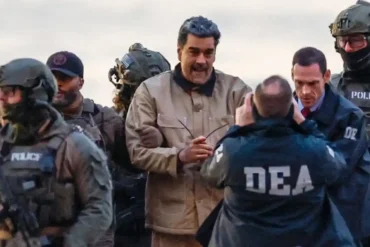
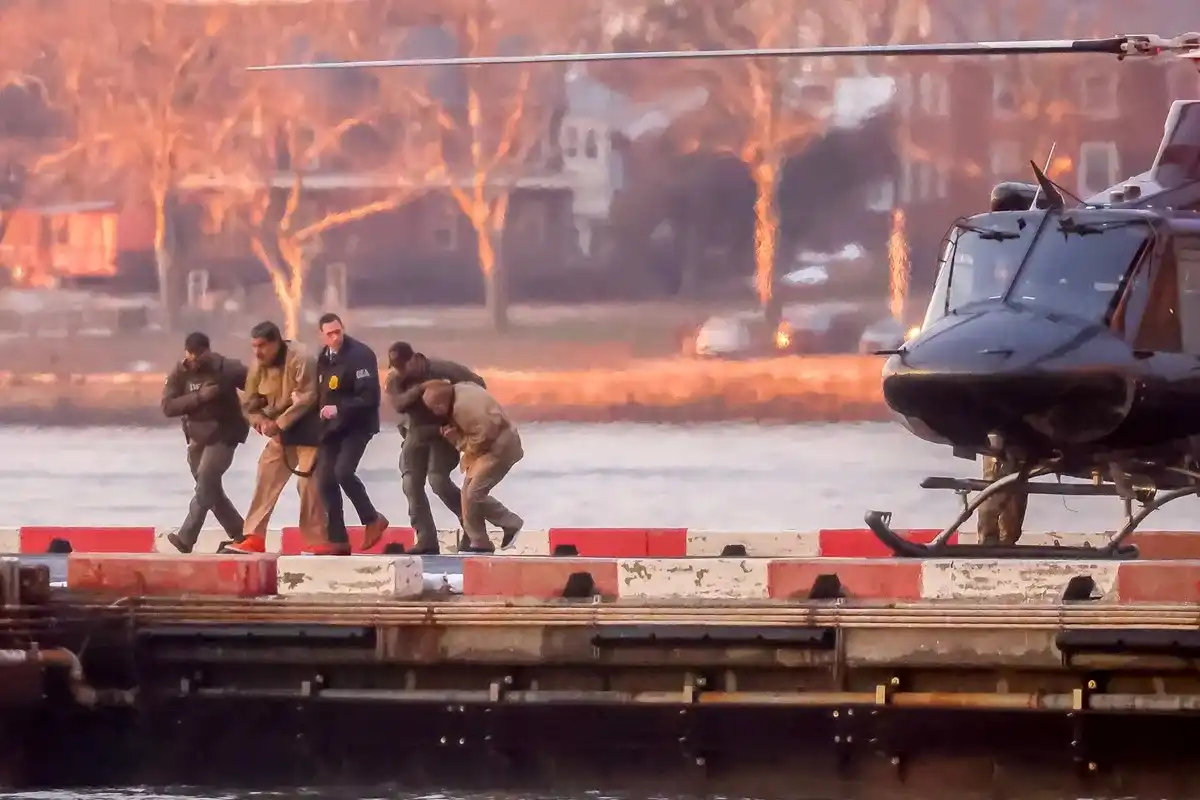
The images that followed were surreal even by the standards of modern conflict. Missiles flashing briefly over a blacked-out city. Helicopters skimming rooftops without resistance. And then the most jarring photograph of all: President Nicolás Maduro, alive, intact, and defeated, seated aboard the USS Iwo Jima under American guard. The operation took less than two and a half hours. Venezuela’s military, on full alert, never truly engaged.
To understand how an army that looked formidable on paper dissolved so quickly, the focus must shift away from conventional force ratios and toward the architecture of U.S. hybrid warfare. This was not a battle of tanks against tanks, but of systems against systems, and bodies against technologies designed to overwhelm the senses.
The Night Caracas Went Blind
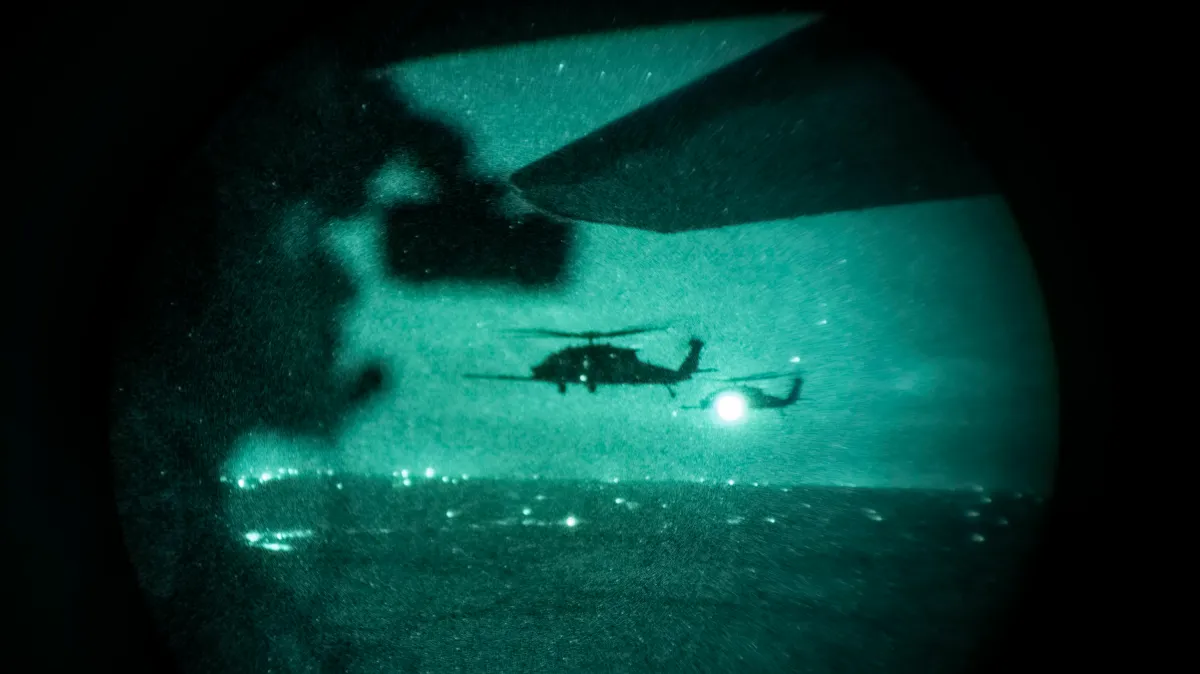
At precisely 2:00 a.m. on January 3, the southern districts of Caracas lost power. This was not the chaotic blackout of infrastructure decay but a synchronized failure that moved faster than human response. Elevators froze, surveillance cameras went dark, and air defense radars lost stable feeds. Sixty seconds later, U.S. special operations helicopters touched down at Fort Tiuna, the most heavily defended military compound in the country.

The timing was not incidental. It revealed a level of integration between cyber operations and kinetic movement that defines multi-domain warfare. Power grids are often described as isolated, insulated from the internet and therefore safe. In reality, their software supply chains, maintenance updates, and human interfaces offer countless attack surfaces. With months of preparation, access, and intelligence, those systems can be turned against their owners.
Donald Trump, speaking hours later, summarized it bluntly. “It was dark. The lights of Caracas were largely turned off due to a certain expertise that we have.” Behind the bravado was an admission of method. Darkness was not a byproduct of the raid; it was the opening weapon.
Operation Absolute Resolve and the End of Symmetry
General Dan Caine, chair of the Joint Chiefs of Staff, described how U.S. Cyber Command, Space Command, and regional combatant commands “layered different effects” to create a pathway into Venezuela. That phrase, deliberately vague, points to a doctrine where no single action wins the fight. Instead, space-based assets degrade communications, cyber units paralyze infrastructure, and air and sea forces exploit the resulting vacuum.
On January 3, two armies confronted each other from different centuries. Venezuela fielded tanks, rifles, and air defenses calibrated for visible threats. The United States arrived with a toolkit designed to erase visibility itself. By the time the first helicopter rotors echoed over Fort Tiuna, the Venezuelan command structure was already blind, deaf, and disoriented.
“My Head Was Exploding From the Inside”
What happened next transformed a successful extraction into something far more disturbing. According to a Venezuelan security guard interviewed after the raid, the firefight barely resembled combat as he understood it. American soldiers moved with unnatural speed and precision. But the most devastating moment did not involve bullets.
He described a sudden, overwhelming pressure, like an invisible force compressing his skull. “It was like a very intense sound wave,” he said. “Suddenly, I felt like my head was exploding from the inside.” Soldiers began bleeding from the nose. Some vomited blood. Many collapsed, unable to stand or even orient themselves.
This account, reposted by the White House press secretary without confirmation or denial, ignited global speculation about directed-energy weapons. The U.S. government refused to acknowledge their use. Yet former intelligence officials noted that the symptoms described align closely with known effects of focused microwave or acoustic systems, technologies that have existed in classified forms for decades.
Directed Energy and the Weaponization of Biology
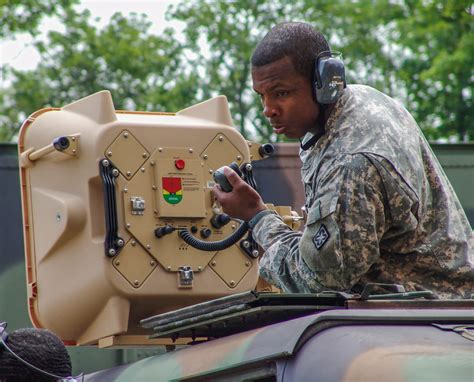
Directed-energy weapons do not seek to kill outright. Their purpose is disruption at the biological level. By flooding a target area with focused microwaves or intense acoustic pressure, these systems can induce pain, disorientation, internal bleeding, and temporary paralysis. The victim’s body becomes the battlefield, its equilibrium shattered without visible wounds.
What makes these weapons strategically valuable is deniability. Without shrapnel or burn marks, attribution becomes difficult. In Caracas, the effect was immediate. Guards trained to repel an assault were reduced to incapacitated observers, unable to raise weapons or issue coherent commands. The extraction of Maduro proceeded through a defense force that had been neutralized not by firepower, but by physiology.
The Long, Unsettling History of Sonic Warfare
While the Caracas incident feels unprecedented, it belongs to a lineage of acoustic and psychological warfare stretching back nearly a century. During the Second World War, Nazi armaments minister Albert Speer explored the concept of an “acoustic cannon,” a focused sound weapon capable of killing at close range. The technology never matured, but the idea persisted.
In Vietnam, the United States weaponized belief itself. Operation Wandering Soul exploited local spiritual fears by broadcasting ghostly wails and funeral sounds into the jungle at night, convincing some fighters that the dead were restless. The goal was not physical destruction but psychological collapse, a precursor to the sensory assaults seen today.
Domestic examples followed. During the 1993 standoff with the Branch Davidians in Waco, federal agents used high-volume noise, music, and industrial sounds to break the occupants’ mental resilience. Later, the U.S. military deployed Long Range Acoustic Devices in Iraq, capable of emitting focused beams of sound exceeding 160 decibels, enough to cause pain and disorientation at distance.
From Crowd Control to Battlefield Dominance
What differentiates earlier acoustic tools from what may have been used in Caracas is precision and lethality of effect. Crowd-control devices disperse. Battlefield sonic systems incapacitate. Reports of similar technologies have emerged globally. The Israeli Defense Forces have used devices nicknamed “The Scream” and “Thunder Generator” against protesters. The China Coast Guard has deployed LRADs to harass vessels in contested waters.
Yet none of these cases combined sonic effects with a synchronized cyber blackout and airborne assault. That integration marks a leap forward. In Operation Absolute Resolve, sound may have served as the opening shockwave, rendering defenders operationally irrelevant before the first shot was fired.
The Strategic Message to Latin America
The capture of Maduro reverberated far beyond Venezuela. Across Latin America, governments watched as a sitting president was extracted from his capital without a conventional invasion. Celebrations erupted among Venezuelan expatriates abroad, while regional leaders recalibrated their rhetoric overnight. The message was unmistakable: sovereignty offers little protection against an adversary that dominates every domain of conflict simultaneously.
Hybrid warfare thrives on this psychological spillover. By demonstrating capability rather than announcing intent, it reshapes behavior without prolonged occupation or bloodshed. Caracas became a case study in how quickly a state can be rendered helpless when its infrastructure, sensors, and soldiers are overwhelmed at once.
A Battle Fought Inside the Nervous System
Perhaps the most unsettling aspect of the operation is what it suggests about the future of war. The Venezuelan guard’s phrase, “head exploding from the inside,” is not merely descriptive. It captures a shift in military thinking, from breaking armies to breaking bodies’ ability to function. When pain, vertigo, and hemorrhage can be induced remotely, the line between combatant and test subject blurs.
In this paradigm, victory is achieved not by annihilation but by incapacitation. The enemy remains alive, but unable to resist, coordinate, or even stand. For policymakers, this offers a cleaner image of force. For those on the receiving end, it is terror without refuge.
The End of Illusions
As the dust settled over Caracas, one truth became unavoidable. Modern warfare no longer begins with explosions. It begins with silence, darkness, and invisible pressure. Venezuela’s military did not lose because it lacked courage or numbers. It lost because it was never given a battlefield it recognized.
Operation Absolute Resolve was not just an extraction. It was a declaration that the decisive terrain of conflict now lies inside networks, power grids, and human senses. For nations that still equate defense with hardware alone, the lesson from that blacked-out night is brutal and clear. By the time you realize the war has started, it may already be over.