The history of commercial aviation is often told as a story of bold innovation and ruthless timing. Few aircraft embody that tension more clearly than the Lockheed L-1011 TriStar. Designed as a technologically advanced widebody that could redefine mid-range intercontinental travel, the TriStar entered the market with groundbreaking systems, a refined cabin, and a performance profile that rivaled the best jets of its era. Yet behind the polished fuselage and whisper-quiet cabin lay a problem so severe that it nearly destroyed not just the program, but Lockheed’s position in commercial aviation altogether.
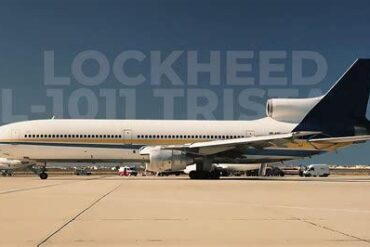
The central issue was not aerodynamic inefficiency, nor poor passenger reception, nor even weak airline demand. It was an engine. More specifically, it was the ambitious and troubled Rolls-Royce RB211 turbofan, a technological marvel that became a financial and logistical nightmare. The TriStar was engineered around this powerplant, and when the engine faltered, the entire aircraft program found itself in jeopardy.
Understanding how this happened requires looking at Lockheed’s history in civil aviation, the competitive pressures of the late 1960s, and the cascading consequences of tying an airframe’s fate to a single, unproven engine design.
Lockheed’s Civil Aviation Legacy Before The TriStar Gamble
Long before the TriStar’s first flight, Lockheed had already carved its name into the foundations of commercial aviation. Founded in 1926, the company quickly gained prestige with the Lockheed Vega, a sleek monoplane that helped pilots such as Amelia Earhart and Wiley Post set long-distance records. At a time when aviation was experimental and uncertain, Lockheed built aircraft that combined structural innovation with practical reliability.
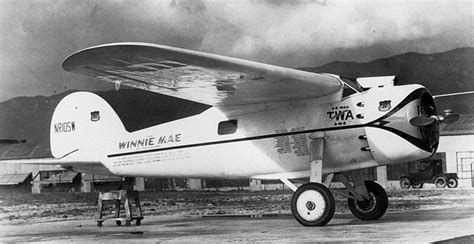
In the 1930s, the company expanded its portfolio with the Electra series, including the Model 10, Model 12, and Model 14. These twin-engine transports were used by airlines and governments worldwide. The Model 14 even formed the basis for the Hudson bomber during World War II. Lockheed demonstrated an ability to translate civil designs into military platforms and back again, blending commercial performance with structural durability.
The postwar era brought the elegant L-049 Constellation, instantly recognizable by its triple-tail configuration. The Constellation set new standards for long-range passenger comfort and cruise speed, giving Lockheed a commanding position in the piston-engine airliner market. It was fast, refined, and technologically advanced for its time.
However, the jet age reshaped the competitive landscape. When Lockheed introduced the L-188 Electra turboprop in the late 1950s, early structural failures damaged its reputation and sales momentum. Though the aircraft was eventually corrected and proved reliable, the initial setbacks hurt the company’s commercial credibility. By the early 1960s, Lockheed leaned heavily on military contracts for financial stability.
The TriStar would be its bold return to civil aviation prominence.
American Airlines And The Birth Of A New Widebody
In the late 1960s, American Airlines approached manufacturers seeking a widebody aircraft that could bridge a specific gap. It needed something larger than the Boeing 707 and Douglas DC-8, but smaller and more efficient than the massive Boeing 747. The aircraft had to operate transcontinental and transatlantic routes efficiently while offering high passenger comfort.
Boeing was already committed to the 747 and 737 programs. That left McDonnell Douglas and Lockheed as serious contenders.
McDonnell Douglas proposed the DC-10, leveraging existing technological frameworks to accelerate development. Lockheed, absent from the commercial market for years, saw an opportunity to reassert itself with a clean-sheet design. Engineers initially studied a twin-engine layout, but regulatory constraints regarding overwater operations favored a three-engine configuration at the time. This led to the TriStar’s distinctive trijet layout.
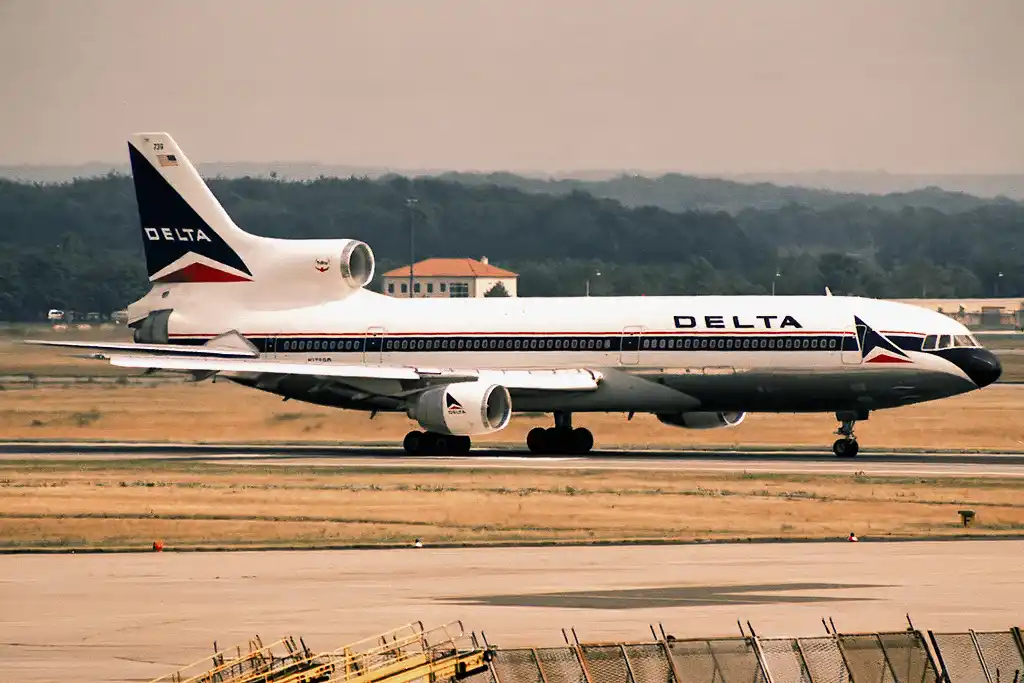
Though American Airlines ultimately selected the DC-10, Lockheed secured commitments from other carriers, including Eastern Air Lines and TWA. The program moved forward. It was ambitious, expensive, and technologically daring.
The L-1011 TriStar’s Technological Edge
The L-1011 TriStar was not a conservative design. It introduced innovations that placed it ahead of its competitors in several respects.
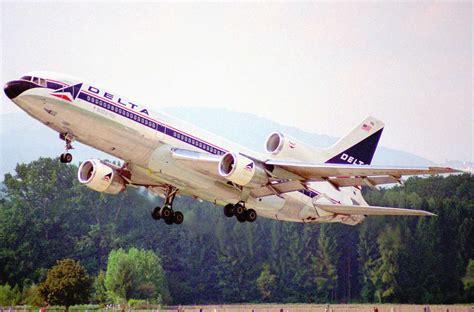
Its three-engine configuration included two underwing engines and a third mounted at the tail, fed by a carefully sculpted S-duct intake. This design provided aerodynamic cleanliness and reduced cabin noise compared to competing layouts. The aircraft’s wide fuselage allowed for comfortable seating arrangements and spacious aisles, delivering a passenger experience approaching that of the 747 but in a smaller footprint.
Inside, Lockheed introduced features that reflected obsessive attention to refinement. The aircraft could include a below-deck galley accessed by elevators, freeing main deck space and improving cabin flow. It offered polarized window shades and optional lower-level lounges. Restrooms were strategically placed to maximize usable seating capacity.
Technologically, the TriStar was years ahead of its time. Its Cat IIIB autoland system enabled operations in near-zero visibility conditions, a capability unmatched by other widebodies during the early 1970s. Direct lift control allowed spoilers to modulate descent more precisely during landing approaches. The automatic flight control system integrated navigation, speed management, and stability functions in ways that reduced pilot workload and enhanced safety margins.
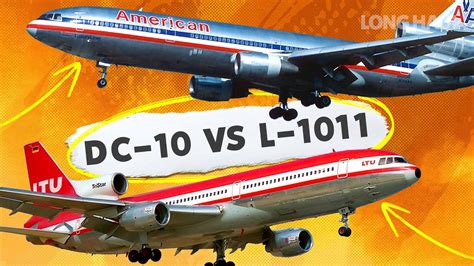
On paper, it was arguably the most advanced commercial jet of its generation.
The problem was that all of this brilliance depended on an engine that was still finding its footing.
The Rolls-Royce RB211: A Bold Technological Bet
Lockheed selected the Rolls-Royce RB211, a revolutionary three-spool turbofan engine. In simple terms, a three-spool design uses three concentric rotating shafts, each optimized for different pressure stages within the engine. This configuration promised improved efficiency, reduced noise, and better performance across varying power settings.
The RB211 also incorporated cutting-edge carbon-fiber fan blades, intended to reduce weight and increase durability. On the drawing board, the engine represented the future of turbofan design.
Reality proved harsher.
During development testing, the carbon-fiber fan blades failed durability requirements. Bird-strike tests exposed structural weaknesses. Rolls-Royce was forced to abandon the composite blades and replace them with heavier titanium alternatives. This change increased engine weight, reducing performance margins and altering fuel efficiency projections.
At the same time, development costs spiraled. Engineering complexity, certification hurdles, and redesign requirements pushed the RB211 program over budget. Rolls-Royce faced mounting financial pressure.
In 1971, the company declared bankruptcy.
The shockwaves were immediate. Lockheed’s TriStar had been designed exclusively around the RB211. Unlike the DC-10, which could be fitted with multiple engine options, the TriStar was locked into a single supplier. Switching to an alternative engine such as the General Electric CF6 would have required significant redesign of the aircraft’s structure, systems integration, and certification pathway.
Time was bleeding away.
Bankruptcy, Government Intervention, And Delays
The collapse of Rolls-Royce threatened to end the TriStar program entirely. Without engines, Lockheed had no aircraft. Airlines awaiting delivery faced uncertainty. Investors and political leaders debated whether the program should be allowed to fail.
The British government stepped in and nationalized Rolls-Royce to preserve the RB211 program. In the United States, Lockheed sought federal loan guarantees totaling $250 million. After intense debate, Congress narrowly approved the support.
These measures saved the aircraft from cancellation, but they could not restore lost time.
The TriStar’s certification was delayed until April 1972. By then, the McDonnell Douglas DC-10 had already entered service. Airlines looking for widebody capacity had options available immediately, and the DC-10 benefited from earlier market penetration and broader engine choices.
In commercial aviation, timing is oxygen. The TriStar arrived gasping.
Market Consequences And Competitive Pressure
When the L-1011 finally entered airline fleets, it impressed pilots and passengers alike. Operators praised its smooth handling, advanced automation, and quiet cabin environment. Delta Air Lines, the type’s largest operator, ultimately flew 70 examples across multiple variants.
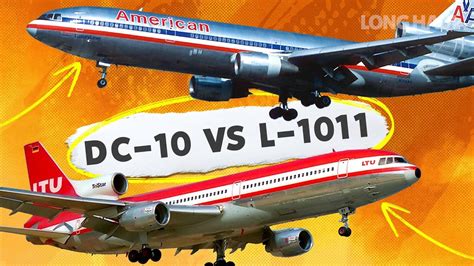
Yet the numbers tell a stark story. Lockheed produced approximately 250 TriStars. McDonnell Douglas delivered around 446 DC-10s.
The RB211 delays limited early range capabilities and prevented Lockheed from offering longer-range variants as quickly as its rival. Airlines planning ambitious intercontinental networks gravitated toward aircraft that were available sooner and offered greater flexibility.
While the TriStar eventually evolved into improved variants such as the L-1011-500, the damage had been done. Market share lost in the early 1970s could not be reclaimed.
A Technical Triumph That Became A Strategic Setback
The L-1011 TriStar remains a study in technological brilliance constrained by industrial vulnerability. It introduced advanced autoland capabilities that set new safety benchmarks. Its three-spool RB211 engine ultimately became a successful design lineage that powered future aircraft families. Its cabin design anticipated passenger comfort trends that persist today.
Yet commercial aviation rewards reliability of supply as much as aerodynamic elegance. By depending entirely on an ambitious but financially fragile engine program, Lockheed exposed itself to systemic risk. When Rolls-Royce faltered, the TriStar faltered with it.
The financial strain, combined with lower-than-expected sales, led Lockheed to exit the commercial airliner market entirely after the TriStar’s production ended. The company refocused on military and defense programs, where it would later achieve enduring success with aircraft such as the C-130 Hercules and F-35 Lightning II.
The TriStar thus stands as both a pinnacle and a pivot point. It demonstrated what was technologically possible in the widebody era, yet it also revealed how tightly integrated global aerospace supply chains could destabilize even the most advanced programs.
In aviation, engineering excellence must align with financial resilience and industrial timing. The L-1011 TriStar possessed the first in abundance. The second and third proved elusive.