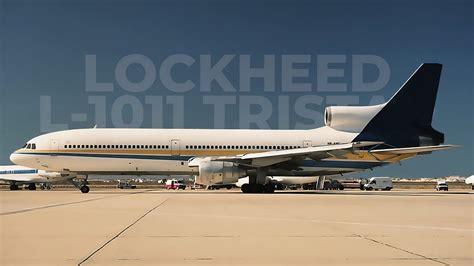
The age of the widebody airliner began with audacity. In the early 1970s, airlines demanded larger cabins, longer ranges, and technological sophistication that bordered on science fiction. Out of that ambition emerged four titans: the Boeing 747, the McDonnell Douglas DC-10, the Airbus A300, and the Lockheed L-1011 TriStar. Three of those bloodlines evolved, adapted, and survived in one form or another. One faded almost entirely from commercial skies.
Yet the Lockheed L-1011 TriStar is not extinct.
One example remains airworthy. It does not carry vacationers across oceans or freight across continents. Instead, it carries rockets.
The Widebody Revolution and the Rise of the TriStar
The Boeing 747’s debut in 1969 redefined scale in aviation. Its twin aisles and cavernous fuselage allowed airlines to move hundreds of passengers in a single flight. McDonnell Douglas followed quickly with the DC-10, a trijet designed to offer widebody capacity with flexible range. Airbus entered the fray in 1974 with the A300, introducing Europe as a serious commercial aircraft competitor.
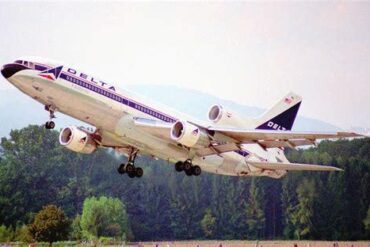
Lockheed, a company known primarily for military aircraft like the C-130 Hercules and SR-71 Blackbird, stepped into this arena with bold confidence. The Lockheed L-1011 TriStar, introduced in 1972, was conceived not merely as a competitor but as the most technologically advanced subsonic airliner in the world.
It was a trijet like the DC-10, with two engines mounted under the wings and a third integrated into the tail via an S-duct. But beneath that familiar configuration lay something different: a philosophy centered on automation, safety, and refinement.
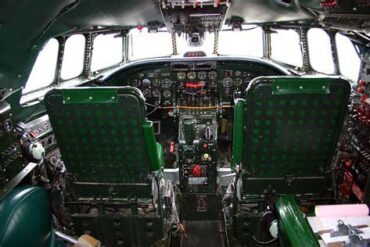
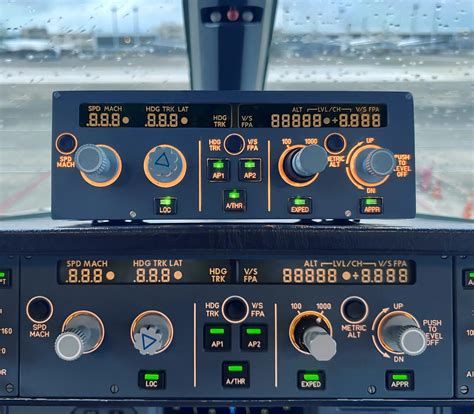
The TriStar’s flight deck featured an advanced autopilot and autoland system capable of landing the aircraft in near-zero visibility. Its automated descent mode could bring the aircraft safely down if cabin pressure was lost. At a time when aviation was still shedding analog habits, the L-1011 felt startlingly modern.
N140SC: The Last Airworthy Lockheed L-1011
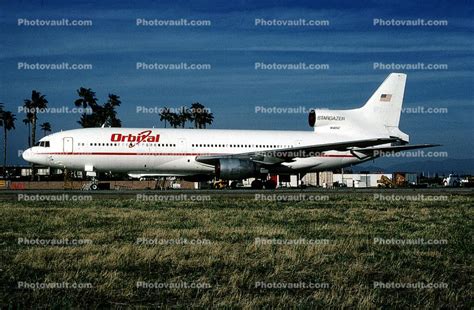
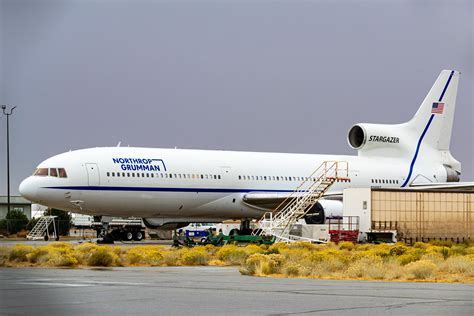
Today, only one TriStar remains operational: N140SC, known as Stargazer. This aircraft is not a museum relic kept barely alive for ceremonial flybys. It is an active aerospace platform used to launch the Pegasus rocket, an air-launched orbital vehicle developed by Orbital Sciences, now part of Northrop Grumman.
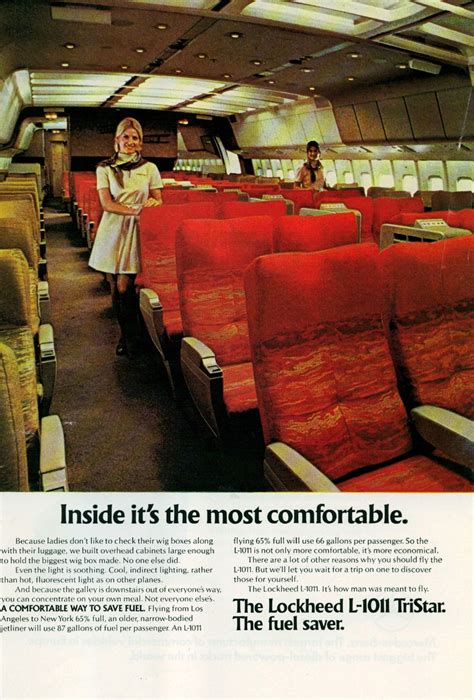
Delivered in 1974 to Air Canada as C-FTNJ, this aircraft once carried passengers in a 288-seat configuration—20 in first class and 268 in economy. Later, it was reconfigured to seat 306 passengers, reflecting shifting commercial strategies in the deregulated era.
Air Canada operated 18 TriStars between 1973 and 1996. As twin-engine aircraft like the Boeing 767-300ER gained extended overwater certification and superior fuel efficiency, the economics of three engines became harder to justify. The TriStar fleet was gradually retired. Most were scrapped or dismantled.
But C-FTNJ’s story veered into the extraordinary.
Orbital Sciences acquired the aircraft in 1992 and spent over two years modifying it into a rocket launch platform. Re-registered as N140SC and renamed Stargazer, it was fitted with more powerful Rolls-Royce RB211-524B engines, the same engine family used on early Boeing 747s.
From 39,000 feet, Stargazer releases the Pegasus rocket from its belly. The rocket then ignites and propels small satellites into orbit, carrying payloads up to 977 pounds (443 kilograms). Since entering service in 1994, the aircraft has conducted nearly 50 launches.
Engineering Depth: The L-1011 Variants and Technical Evolution
The TriStar evolved through multiple variants, each refining weight, range, and engine capability. The original L-1011-1 established the platform. Later conversions such as the L-1011-100 and L-1011-150 increased maximum takeoff weight and added center fuel tanks for extended range.
The long-range L-1011-500 featured a shortened fuselage, increased wingspan, and upgraded systems. It was designed to compete directly in intercontinental markets, offering efficiency improvements and the more powerful RB211-524 series engines.
Unlike the Boeing 747 or DC-10, however, the L-1011 never received a factory-built freighter variant. That omission would prove consequential. As passenger models aged, many 747s, DC-10s, and A300s transitioned into cargo roles, extending their commercial lives by decades. The TriStar lacked that secondary pathway.
Its engineering ambition was undeniable. Its commercial adaptability was limited.
The Economics Behind the TriStar’s Decline
The TriStar’s challenges began before it ever entered service. Its exclusive reliance on the Rolls-Royce RB211 engine became a critical vulnerability when Rolls-Royce entered bankruptcy during development. The engine’s complexity—featuring advanced composite fan blades and innovative high-bypass design—delayed certification and increased costs.
Lockheed poured enormous capital into the program. Meanwhile, McDonnell Douglas moved the DC-10 into airline fleets more quickly by leveraging proven technology and existing customer relationships. Airlines, cautious by nature, leaned toward familiarity.
When the Airbus A300 arrived as a twin-engine widebody optimized for medium routes, the strategic calculus shifted dramatically. Regulatory changes eventually allowed twin-engine aircraft to operate long overwater routes under ETOPS (Extended-range Twin-engine Operational Performance Standards). That development rendered trijets increasingly obsolete.
The TriStar sold only 250 units, compared to 386 DC-10s, 561 A300s, and more than 1,500 Boeing 747s. Production ended in 1984. Lockheed exited the commercial airliner business entirely.
The Uniqueness of Stargazer in a Vanishing Fleet
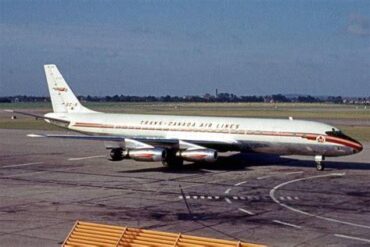
In today’s skies, a handful of Douglas DC-8s still operate in specialized roles. Nine DC-10s remain active, largely in cargo or firefighting configurations. The Airbus A300 continues as a cargo workhorse. Even the Boeing 707 survives in government and military service.
But only one Lockheed L-1011 TriStar remains airworthy.
Maintaining Stargazer is a logistical puzzle. Spare parts are scarce. Few mechanics retain certification or experience on the type. Full-flight simulators are nearly nonexistent, complicating pilot training. As other RB211-equipped aircraft retire, sourcing components becomes increasingly complex.
The aircraft is now over 50 years old. Data from flight tracking services shows an irregular schedule, reflecting the specialized nature of Pegasus launches and the careful stewardship required to keep such a machine operational.
And then there is the broader market reality. With the rise of reusable rockets from companies like SpaceX, the economics of launching small satellites from a converted trijet face stiff competition. Air-launch offers flexibility and unique mission profiles, but the cost structure must remain compelling in a rapidly evolving space industry.
Technology Ahead of Its Time
The irony of the L-1011’s story lies in its technological excellence. Pilots frequently praised the aircraft for its handling characteristics and system redundancy. The automatic landing capability was among the most advanced in civil aviation at the time. Its quiet cabin and smooth ride earned loyalty from passengers and crew alike.
The TriStar was, in many ways, a machine built for the future—just not a future aligned with market forces.
Engineering brilliance does not guarantee commercial triumph. Aviation history is littered with aircraft that were too ambitious, too expensive, or too early. The Concorde, the Boeing 2707 SST proposal, and the Airbus A380 each illustrate variations on that theme. The L-1011 belongs in that lineage: technically elegant, financially constrained.
A Trijet Echo: The Flying Eye Hospital
The TriStar is not the only elderly trijet serving a singular mission. The Orbis Flying Eye Hospital, a McDonnell Douglas MD-10-30 (registration N330AU), operates as a mobile surgical training platform. Configured with a modern glass cockpit similar to the MD-11, it travels globally to provide ophthalmic training and care.
Constructed during the Nixon administration, the MD-10 continues flying because parts remain available and MD-11-rated pilots are accessible. Its continued viability underscores a critical difference: ecosystem support. Aircraft longevity depends not only on structural integrity but on industrial backing, training pipelines, and parts supply.
The TriStar lacks that ecosystem.
The Future of the Last Lockheed L-1011
The continued operation of N140SC rests on a delicate balance of engineering discipline, economic logic, and mission necessity. There is no announced retirement date. Yet each passing year increases operational complexity.
If Stargazer eventually retires without replacement, the Lockheed L-1011 will pass fully into history—remembered in photographs, museums, and the recollections of those who flew it. Its silhouette, defined by that distinctive tail engine intake, will remain iconic.
The TriStar’s story resists simple narratives. It was neither a failure of engineering nor a triumph of commerce. It was an aircraft that embodied a moment when aerospace companies dared to chase technological perfection at immense financial risk.
Today, when N140SC climbs over the Mojave Desert carrying a rocket instead of passengers, it represents something rare: a bridge between the golden age of widebody experimentation and the modern commercial space era.
The last airworthy Lockheed L-1011 TriStar is more than an aircraft. It is a living artifact of ambition—proof that even in a market-driven industry, machines built with extraordinary care can find second lives in unexpected frontiers.