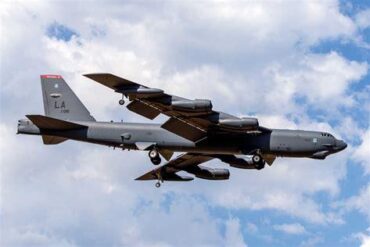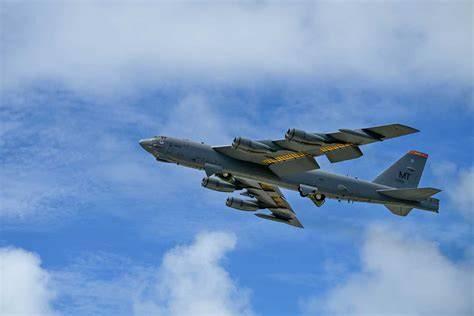
The roar of eight engines rolling across a runway in the middle of the night still sends a message no satellite feed or diplomatic statement can fully replicate. The Boeing B-52H Stratofortress, a machine conceived during the earliest years of the Cold War, continues to fly combat missions, nuclear deterrence patrols, maritime surveillance operations, and long-range strike exercises more than seven decades after its first flight. In an era dominated by stealth aircraft, hypersonic weapons, and autonomous drones, the giant bomber affectionately nicknamed the “BUFF” — Big Ugly Fat Fellow — remains one of the most feared and respected aircraft ever built.
Its continued survival is not a nostalgic accident. The B-52 endures because it was engineered with enormous structural strength, extraordinary adaptability, and unmatched operational flexibility. While other bombers disappeared into museums or desert storage yards, the Stratofortress kept evolving. Every decade transformed the aircraft into something new without changing the unmistakable silhouette that first appeared in the skies during the Eisenhower administration.
The remarkable reality is that the youngest pilots currently flying the B-52 were born decades after the aircraft entered service, yet they still trust their lives to a platform older than their grandparents’ televisions. Few military systems in history have remained strategically relevant for so long while continuously adapting to new forms of warfare.
The B-52 is not simply surviving history. It is actively shaping the future of modern airpower.
The Origins of the Boeing B-52 Stratofortress
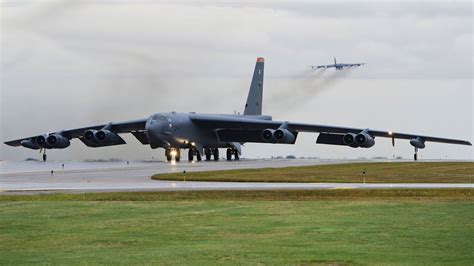
The story of the B-52 began during one of the most tense periods in modern geopolitical history. Following World War II, the United States needed a bomber capable of delivering nuclear weapons deep into Soviet territory without relying on vulnerable forward bases. Boeing answered with an aircraft so ambitious that it permanently changed strategic aviation.
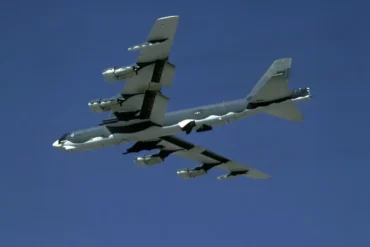
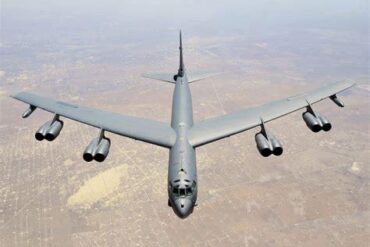
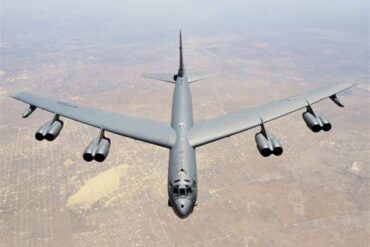
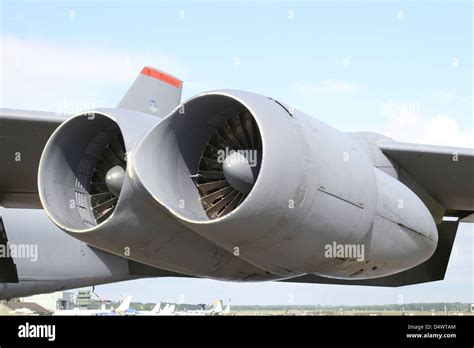
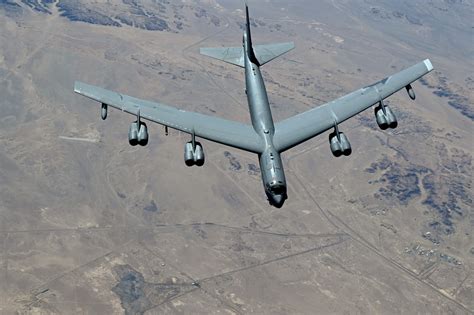
The first B-52 prototype flew in April 1952. Even by modern standards, the aircraft was massive. Its swept wings stretched 185 feet across, while its enormous fuselage carried enough fuel and payload to cross oceans and strike targets continents away. The bomber was powered by eight turbojet engines mounted in paired pods beneath the wings, giving it both speed and redundancy.
When the B-52B officially entered operational service in 1955, it instantly became the backbone of America’s strategic nuclear deterrent. At the height of the Cold War, Stratofortresses remained airborne around the clock during nuclear alert operations. Crews lived with the understanding that a single radio transmission could send them toward targets that would reshape human civilization forever.
That terrifying responsibility defined the aircraft’s early identity. Yet the genius of the design was its ability to evolve beyond the mission it was originally created for.
Engineering That Refused To Become Obsolete
Most military aircraft become outdated because they are too specialized. The B-52 escaped that fate through raw flexibility. Its enormous internal volume, powerful airframe, and unmatched payload capacity allowed engineers to continuously modernize the aircraft without redesigning the entire platform.
The current B-52H variant measures 159 feet long and can reach a maximum takeoff weight of 488,000 pounds. Its fuel load alone weighs more than many commercial airliners. Despite its age, the aircraft can still cruise at more than 500 miles per hour and operate at altitudes approaching 50,000 feet.
Those numbers remain impressive, but the true secret behind the bomber’s longevity lies in its capacity to carry almost anything.
Over time, the B-52 transformed from a gravity-bomb nuclear platform into a flying arsenal capable of launching precision-guided munitions, long-range cruise missiles, anti-ship weapons, electronic warfare systems, and stand-off strike packages. Ground crews can rapidly tailor the bomber for entirely different mission profiles with stunning efficiency.
One day the aircraft serves as a strategic nuclear deterrent. The next day it performs maritime patrol duties over contested waters. Shortly afterward it may launch precision strikes against insurgent positions thousands of miles from home.
Few aircraft in history have demonstrated such operational elasticity.
The Upcoming B-52J Upgrade Signals A New Era
The United States Air Force has no intention of retiring the Stratofortress anytime soon. Instead, it is preparing the bomber for another generation of service through the B-52J modernization program.
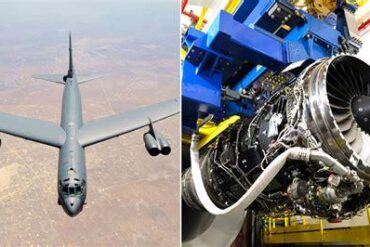
At the center of the upgrade is the replacement of the aging Pratt & Whitney TF33 engines. Those engines have powered the bomber for decades, but maintaining them has become increasingly difficult and expensive. The solution arrived in the form of the Rolls-Royce F130 engine, a modern turbofan designed to improve reliability, efficiency, and operational range.
The engine replacement alone represents one of the most significant modernization efforts in the aircraft’s history. Improved fuel efficiency means reduced aerial refueling requirements, lower maintenance demands, and extended mission endurance. For bomber crews conducting global strike missions lasting more than 30 hours, those improvements are transformational.
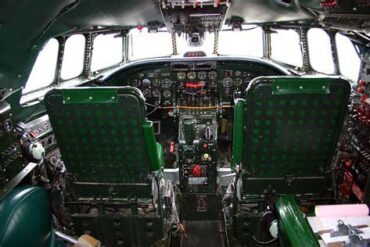
The cockpit itself is also entering the digital age. While older B-52 interiors looked more like analog submarine control rooms than modern aircraft, the B-52J introduces integrated digital displays, upgraded communications systems, and advanced networking capabilities.
Perhaps most importantly, the aircraft will receive the AN/APG-79 active electronically scanned array radar, the same radar family used aboard the F/A-18 Super Hornet. That radar dramatically improves targeting precision, situational awareness, terrain mapping, and electronic resistance in contested environments.
The modernization effort effectively turns a Cold War bomber into a 21st-century missile carrier capable of integrating with modern battlefield networks.
And yes, it still looks gloriously old-school while doing it.
The B-52’s Massive Arsenal Still Dominates Modern Warfare
The B-52 remains terrifying not because of stealth or speed, but because of overwhelming firepower. Its bomb bay and external pylons allow it to carry a staggering range of weapons simultaneously.
A single Stratofortress can launch up to 20 cruise missiles, including the AGM-86 Air-Launched Cruise Missile and other precision-guided stand-off systems capable of striking targets hundreds of miles away. These weapons allow the bomber to attack heavily defended regions without directly entering the danger zone.
Beyond cruise missiles, the aircraft can deploy:
- Joint Direct Attack Munitions (JDAMs)
- Precision-guided GPS bombs
- Naval mines
- Cluster munitions
- Conventional gravity bombs
- Nuclear weapons
- Maritime strike systems
The bomber’s versatility becomes even more important in modern warfare, where commanders demand rapid mission adaptation. A B-52 already airborne can receive updated targeting instructions mid-flight and redirect toward entirely new objectives without returning to base.
This flexibility gives bombers a strategic advantage ballistic missiles cannot match. Missiles cannot be recalled once launched. Bombers can.
That difference matters enormously during periods of geopolitical tension where military signaling and escalation control become just as important as destructive capability.
Combat History That Spans Generations
The operational history of the B-52 reads like a timeline of postwar military conflict.
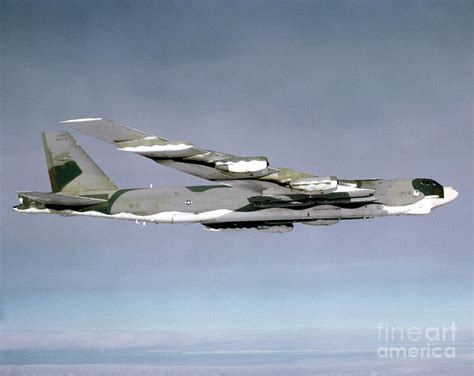
During the Vietnam War, Stratofortresses became symbols of overwhelming American airpower during Operation Linebacker II. Waves of bombers conducted massive conventional bombing raids against strategic targets in North Vietnam, unleashing payloads so enormous that entire city blocks vanished beneath explosive shockwaves.
The aircraft later proved equally valuable during Operation Desert Storm in 1991. In one of the most famous long-range strike missions ever conducted, B-52 crews launched from the continental United States, flew across the globe, conducted bombing operations against Iraqi targets, and returned home after marathon combat sorties.
That mission demonstrated the bomber’s extraordinary reach. Few aircraft on Earth could deliver meaningful combat power halfway around the planet without relying on forward deployment.
The B-52 continued operating in Bosnia, Kosovo, Afghanistan, Iraq, and anti-ISIS campaigns throughout the Middle East. Even against technologically inferior enemies, commanders repeatedly chose the Stratofortress because of its unmatched persistence and payload capacity.
When troops on the ground required sustained bombardment support, few aircraft could match the B-52’s ability to remain overhead while carrying enormous quantities of precision-guided weapons.
The bomber’s reputation evolved from nuclear apocalypse machine to dependable close-air-support heavyweight.
The Aircraft That Helped Define Strategic Deterrence
Beyond conventional warfare, the B-52 remains a pillar of America’s nuclear triad alongside ballistic missile submarines and intercontinental ballistic missiles.
Its continued relevance stems from one critical advantage: visibility.
Unlike hidden submarines or underground missile silos, bombers can be seen. They can deploy visibly to allied nations, patrol near contested regions, and demonstrate strategic readiness without firing a shot. This visibility transforms the bomber into both a military tool and a diplomatic instrument.
When multiple Stratofortresses arrive in Europe, the Pacific, or the Middle East, allies interpret the deployment as reassurance while adversaries view it as a warning. The psychological effect can alter negotiations before combat even begins.
Air Force Global Strike Command uses bomber task force missions precisely for this purpose. The aircraft’s ability to rapidly deploy across theaters demonstrates global reach while maintaining strategic ambiguity regarding payload configurations.
The B-52 essentially flies as both sword and shield simultaneously.
Why The B-52 Outlived Rival Bombers
Several bombers attempted to replace or outperform the Stratofortress over the decades, yet none fully eliminated its usefulness.
The Rockwell B-1B Lancer introduced supersonic speed and lower radar visibility, but its operational costs and maintenance complexity limited flexibility. The stealthy B-2 Spirit offered unmatched penetration capability, yet its tiny fleet size and astronomical costs prevented large-scale deployment.
Meanwhile, Russia’s Tupolev Tu-95 Bear continues flying in parallel service, but the aging turboprop aircraft lacks the speed, modernization depth, and weapons integration capabilities of the B-52.
The Stratofortress succeeded because it occupied a uniquely practical middle ground. It could carry enormous payloads, operate across intercontinental distances, accept continuous upgrades, and deploy at comparatively sustainable operating costs.
Military planners consistently discovered that replacing the B-52 entirely would require multiple specialized aircraft performing different portions of its mission set.
Sometimes the oldest machine in the hangar remains because nobody has built anything genuinely better at its core task.
Human Crews Still Matter In The Age Of Drones
Modern military discussions often focus heavily on autonomous systems and artificial intelligence, yet the B-52 highlights why human crews remain essential in high-stakes warfare.
Drone systems excel in permissive environments where communications remain uninterrupted. But sophisticated electronic warfare environments introduce signal jamming, spoofing, cyber interference, and rapidly changing tactical conditions.
In those moments, experienced aircrews become irreplaceable.
B-52 crews routinely operate during missions lasting well beyond 30 hours, managing navigation, targeting, electronic warfare coordination, weapons deployment, and strategic communications under intense operational stress. Human judgment allows crews to improvise when battlefield conditions evolve unpredictably.
This matters particularly during nuclear deterrence operations, where decisions carry civilization-level consequences.
Rather than replacing bombers, unmanned systems increasingly operate alongside them. Future combat concepts envision crewed bombers coordinating swarms of drones that conduct reconnaissance, electronic attack, or decoy operations ahead of the main strike package.
The bomber remains the command hub while autonomous systems expand its reach.
That combination represents the likely future of strategic air warfare.
The Last Boeing-Built Heavy Bomber Still Flying
The most astonishing aspect of the B-52 story is not its age, but its future. The United States Air Force expects the aircraft to remain operational well into the 2050s. By then, some airframes will approach nearly 100 years of active service.
That projection sounds absurd until one remembers how thoroughly the bomber has adapted across generations. From nuclear standoff patrols during the Cold War to precision-guided counterterrorism strikes in the Middle East, the Stratofortress repeatedly reinvented itself without abandoning the characteristics that made it successful in the first place.
The aircraft embodies a rare balance of brute force, endurance, adaptability, and strategic symbolism. It lacks stealth. It lacks elegance. It certainly lacks modern aesthetics.
Yet when a B-52 appears overhead, everyone notices.
That enduring presence explains why the last Boeing-built heavy bomber still airworthy remains one of the most important military aircraft ever created — a living monument to aerospace engineering that somehow refuses to grow old.