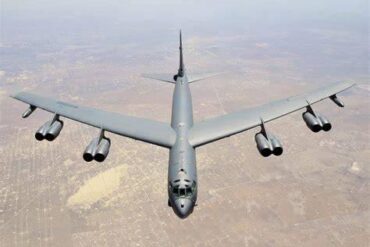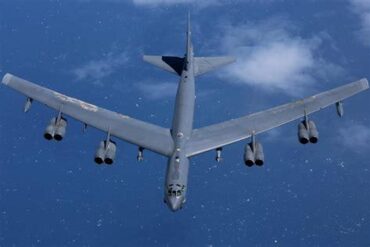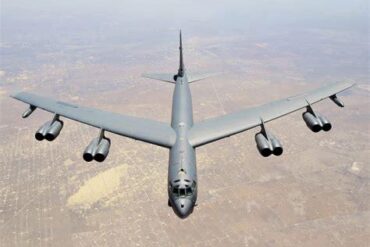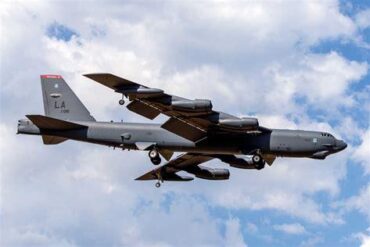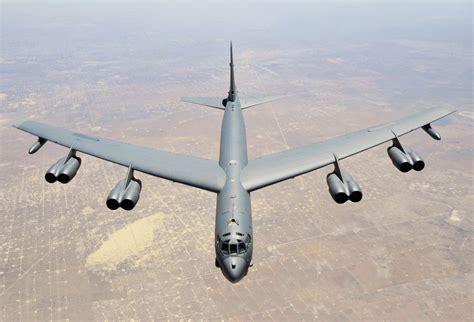
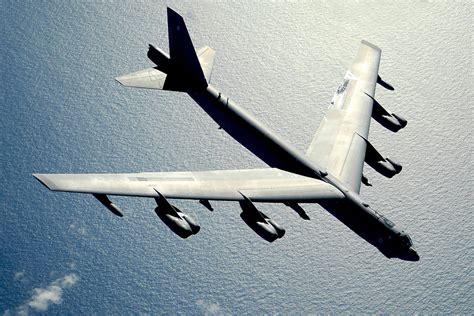
The history of aviation is filled with revolutionary aircraft that dazzled for a decade, then disappeared into museums. Speed records fade, cutting-edge fighters become obsolete, and once-dominant airliners are retired to desert storage yards. Yet one aircraft continues to defy that cycle with almost stubborn consistency: the B-52 Stratofortress. First flown in 1952 and introduced into operational service in 1955, this American long-range bomber has already outlasted generations of aircraft that once seemed far more advanced. If current modernization plans continue, the B-52 may achieve something no jet-powered military aircraft has ever done—100 years of continuous flying service.
That possibility sounds extraordinary because it is. Most military jets serve roughly 25 to 40 years before retirement pressures become overwhelming. Airframes fatigue, avionics become outdated, spare parts vanish, and new threats demand new designs. The B-52, however, was built differently. It was designed not simply as a bomber for one era, but as a durable platform capable of evolving with changing missions, weapons, and technologies. That distinction may prove to be the reason it survives into the 2050s and beyond.
Rather than being a relic preserved by nostalgia, the B-52 remains an active strategic asset. It still performs nuclear deterrence duties, long-range conventional strike missions, maritime support roles, and global presence operations. Few aircraft in history have transitioned so effectively from one geopolitical age into another.
Born for the Cold War, Built for the Long Haul
The B-52 emerged during one of the most intense strategic periods in modern history. After the Second World War, the United States required a bomber capable of reaching distant targets deep inside Soviet territory while carrying heavy payloads. Intercontinental ballistic missiles did not yet dominate deterrence planning, and overseas basing options could not always be guaranteed. Strategic airpower needed range, payload, and reliability above all else.
Boeing’s answer was massive, elegant, and practical. The company evolved early concepts into a swept-wing bomber powered by eight jet engines. While some early strategic aircraft chased extreme speed or altitude, the B-52 prioritized endurance and payload capacity. It was designed to fly far, carry enormous ordnance loads, and remain structurally dependable under demanding operational use.
That conservative engineering philosophy became one of the smartest decisions in military aviation history. Boeing built the airframe with generous structural margins because future requirements were impossible to predict. Instead of designing to the edge of acceptable limits, engineers left room for growth. Decades later, that extra margin would allow repeated modernization without condemning the aircraft to structural exhaustion.
The result was not just a bomber—it was a flying foundation.
From Nuclear Deterrent to Combat Veteran
Many strategic bombers spend careers as symbols. The B-52 became something more: a combat veteran across multiple generations of warfare.
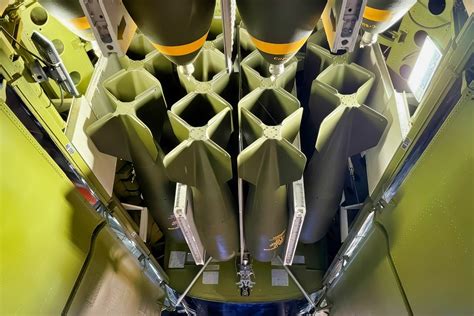
Its first major wartime role came during the Vietnam War. In Operation Arc Light and later Linebacker campaigns, B-52s delivered enormous conventional bomb loads against military targets and infrastructure. These missions demonstrated the aircraft’s unmatched ability to sustain high-volume strike operations over long distances.
The Gulf War marked another transformation. Rather than relying solely on mass bombing, B-52 crews launched cruise missiles and delivered precision-guided weapons from standoff distances. The aircraft’s role shifted from brute-force area attack to strategic precision strike.
That evolution continued in Afghanistan and Iraq. Equipped with GPS-guided munitions and connected to digital battlefield networks, B-52s provided close air support and time-sensitive strikes in coordination with troops on the ground. Few would have imagined a 1950s bomber supporting 21st-century counterinsurgency operations with satellite-guided weapons—but the B-52 did exactly that.
Its service record reveals an uncomfortable truth for newer aircraft programs: capability matters more than age when upgrades keep pace with threats.
Why the Airframe Refuses to Die
Aircraft longevity usually ends with metal fatigue. Pressurization cycles, wing stress, corrosion, and repeated load exposure gradually consume useful life. Yet the B-52’s structure has remained unusually resilient.
The bomber’s enormous wings, robust fuselage, and comparatively moderate flight profile reduce the kind of stress concentration seen in agile fighter aircraft. It does not pull violent high-G maneuvers. It was designed for long-range cruising, stable weapons delivery, and sustained operations. That gentler stress environment has helped preserve the fleet.
Extensive depot maintenance has also played a critical role. The U.S. Air Force regularly inspects, repairs, reinforces, and replaces aging components before they become mission-threatening. Structural upgrades over decades have extended usable life well beyond original expectations.
Equally important is the aircraft’s internal volume. The B-52 has room—room for wiring, electronics, cooling systems, new racks, upgraded displays, mission computers, and future technologies not imagined when it was designed. Many modern aircraft are tightly packed engineering masterpieces with little spare capacity. The B-52, by contrast, has the practical advantage of physical space.
That makes modernization easier, cheaper, and faster than starting over.
The Engine Upgrade That Changes Everything
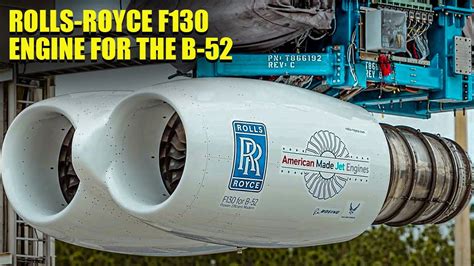
Perhaps the most important reason the B-52 can realistically reach a century in service is its re-engining program. For decades, the bomber relied on aging Pratt & Whitney TF33 engines. They were dependable but increasingly expensive, inefficient, and difficult to sustain.
The solution arrived through the Commercial Engine Replacement Program. New Rolls-Royce F130 turbofan engines are being integrated onto the fleet, creating the updated B-52J standard. This is far more than a maintenance refresh—it is a strategic reset.
Modern engines bring:
- Improved fuel efficiency
- Greater range and loiter time
- Reduced maintenance burden
- Better reliability
- Lower lifecycle cost
- More onboard electrical power for future systems
That final point matters enormously. Future combat aircraft depend on electrical generation for radar, communications, defensive systems, computing, and networking. New engines effectively give the B-52 room to grow technologically for decades.
When propulsion is modernized, one of the largest barriers to continued service disappears.
Digital Cockpits and Modern Sensors
Engines keep the aircraft airborne. Sensors keep it relevant.
The B-52 is receiving advanced radar upgrades, including Active Electronically Scanned Array (AESA) technology derived from modern combat aircraft systems. AESA radar dramatically improves target detection, mapping, tracking, and resistance to jamming. For a bomber originally born in the analog era, this is a leap across generations.
Modern cockpit plans also include digital displays, updated avionics, and improved crew interfaces. Instead of relying on legacy instruments and fragmented systems, future B-52 crews will operate a more integrated battlespace platform.
These upgrades matter because today’s warfare depends on information dominance. Detecting threats sooner, networking with allied forces, employing standoff weapons, and adapting in contested environments all require digital capability. A bomber can no longer survive on payload and range alone.
The B-52’s transformation proves that old airframes can become modern combat nodes when properly updated.
Why Other Jets Probably Will Not Match It
Could another jet equal this century-long achievement? History suggests it is unlikely.
Commercial aircraft often retire after 25 to 40 years because fuel efficiency economics drive fleet replacement. Airlines replace older jets even when structurally sound because newer models save money.
Military aircraft face different pressures. Fighters become obsolete quickly as radar, stealth, missiles, and electronic warfare evolve. Their airframes also endure punishing maneuver loads that accelerate fatigue. Strategic bombers are rare and expensive, but many were produced in smaller numbers with less upgrade flexibility than the B-52.
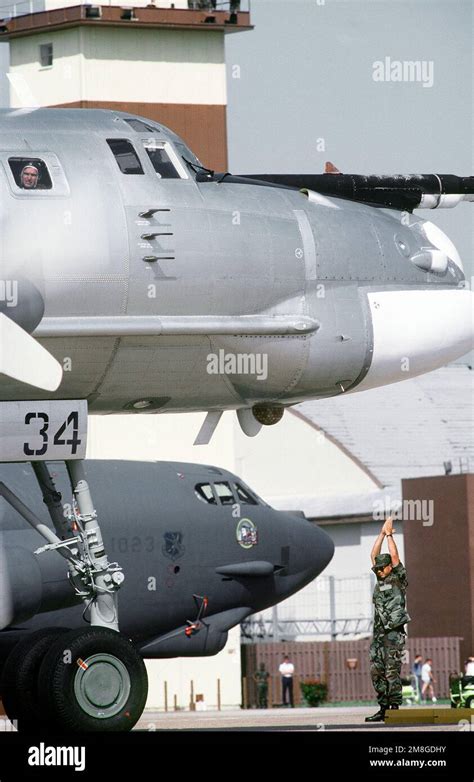
The closest parallel is Russia’s Tupolev Tu-95 Bear, another Cold War-era long-range aircraft still in service. Yet it uses turboprop propulsion rather than jets, and many operational airframes are younger than the oldest surviving B-52s.
No active jet aircraft has combined all the necessary ingredients the way the Stratofortress has:
- Large and durable airframe
- Low-stress operational profile
- Huge internal upgrade capacity
- Strong industrial support base
- Continuous strategic mission relevance
- Political willingness to modernize instead of replace
That combination is exceptionally rare.
The Economics of Keeping a Legend Alive
Replacing a strategic bomber fleet is staggeringly expensive. Designing, testing, producing, and sustaining a new platform can consume tens of billions of dollars over decades. Even when replacements exist, capacity gaps and procurement delays often emerge.
Keeping the B-52 flying is financially rational because the airframe already exists, crews understand it, logistics chains are established, and modernization can be phased over time. The United States is also fielding the stealthy B-21 Raider, but that does not eliminate the value of the B-52. Instead, both aircraft can complement each other.
The B-21 is optimized for penetrating contested airspace. The B-52 excels at carrying huge payloads, launching stand-off weapons, and projecting visible strategic presence worldwide. One is the knife. The other is the hammer.
That division of labor strengthens the case for retaining the Stratofortress well into mid-century.
Could It Really Reach 100 Years?
If the benchmark is first flight in 1952, then 2052 marks the century milestone. If measured from operational service entry in 1955, then 2055 becomes the symbolic date. Both are within realistic planning horizons.
The U.S. Air Force has already signaled intent to operate the fleet into the 2050s. With new engines, avionics, radar, structural sustainment, and continuing weapons integration, that target is no fantasy.
The more surprising question may be this: what would finally retire it?
Not age alone. Not lack of usefulness. Not inability to modernize.
Only a deliberate strategic decision—or the arrival of something dramatically better at reasonable cost—seems capable of ending the B-52 era.
A Century of Flight and a Lesson in Engineering
The B-52 Stratofortress represents more than military endurance. It is proof that thoughtful engineering can outlast technological fashion. Built in the early jet age, it has survived the missile revolution, the stealth revolution, the digital revolution, and the rise of autonomous warfare.
Many aircraft were faster. Many were stealthier. Many looked more futuristic. Yet few matched the B-52’s ability to adapt.
If it reaches 100 years of continuous flying service, the achievement will not simply be a record. It will be a statement that durability, upgradeability, and strategic usefulness can matter more than glamour.
And somewhere in the sky decades from now, a bomber designed when Elvis was topping charts may still be flying combat patrols—calmly embarrassing aircraft generations younger than itself.