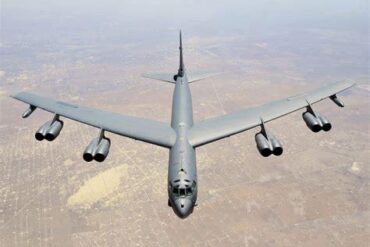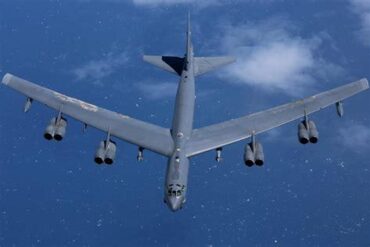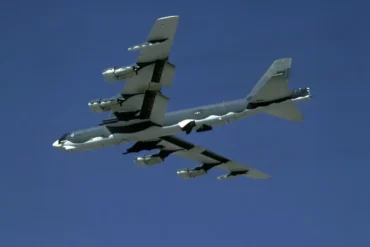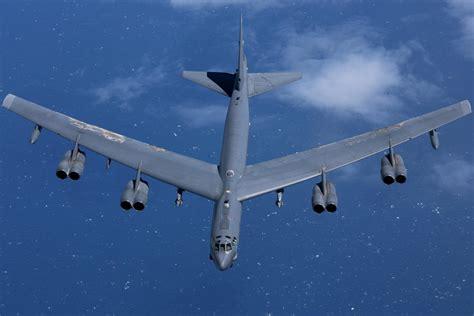
The Boeing B-52 Stratofortress is more than a relic of Cold War engineering—it is a living, evolving symbol of strategic airpower that continues to define the United States Air Force’s global reach in 2026. While newer, stealthier aircraft dominate headlines, the B-52 persists with quiet authority, delivering unmatched versatility, staggering payload capacity, and a cost-efficiency that modern platforms struggle to replicate.
At first glance, its age seems like a liability. Yet, paradoxically, the B-52’s longevity is precisely what makes it indispensable. Decades of upgrades, battlefield validation, and structural resilience have transformed it into something rare in military aviation: a platform that improves with time rather than fades into obsolescence.
Its continued operation is not a matter of nostalgia—it is a deliberate, strategic choice grounded in capability. Across nuclear deterrence, conventional warfare, and emerging missile technologies, the B-52 remains a cornerstone of American power projection. Understanding why requires a deeper look at the seven defining advantages that keep this aircraft firmly in frontline service.
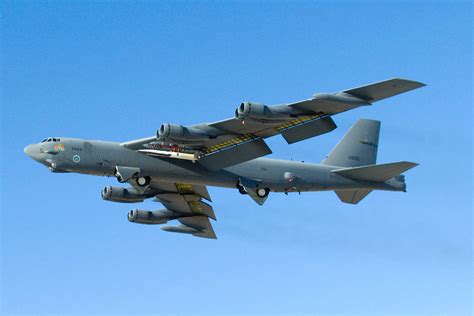
Unmatched Payload Capacity: The Ultimate Bomb Truck
The B-52’s most defining characteristic is its extraordinary payload capacity, which remains unmatched among Western bombers. Capable of carrying up to 70,000 pounds (32,000 kg) of ordnance, the aircraft functions less like a traditional bomber and more like a flying arsenal.
This immense capacity translates into real battlefield dominance. A single B-52 can deploy a wide mix of munitions, including precision-guided JDAMs, AGM-86B cruise missiles, naval mines, and long-range standoff weapons like JASSM-ER. In practical terms, it can saturate entire target zones in one sortie—something no other bomber can achieve at the same scale.
Historically, this capability proved decisive. During operations such as Desert Storm and Iraqi Freedom, B-52 strikes delivered both overwhelming physical destruction and a powerful psychological effect. Entire grid squares could be neutralized in minutes, reinforcing the aircraft’s reputation as the ultimate “BUFF” (Big Ugly Fat Fellow).
Even in today’s precision-focused warfare environment, mass still matters. The ability to deliver large volumes of coordinated firepower remains essential in scenarios where speed, scale, and sustained bombardment are required. The B-52 doesn’t just participate in combat—it reshapes it.
Global Reach Without Dependence on Foreign Bases
Few aircraft embody true global reach like the B-52. With an unrefueled range exceeding 8,800 miles (14,200 km), and virtually unlimited endurance when supported by aerial refueling, the Stratofortress can strike targets anywhere on Earth.
This capability fundamentally alters strategic planning. Unlike shorter-range aircraft that depend on forward-deployed bases, the B-52 can launch directly from the United States—typically from Barksdale Air Force Base or Minot Air Force Base—execute its mission, and return home without ever touching foreign soil.
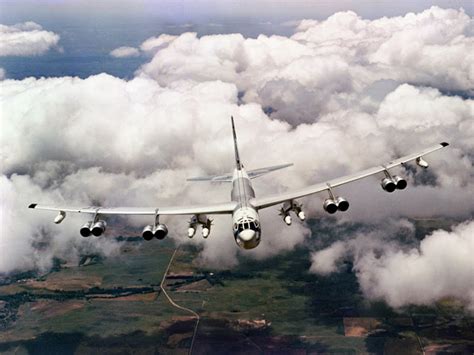
This independence is not just convenient; it is strategically critical. In a world where access to overseas bases can be politically constrained or outright denied, the B-52 ensures that the United States retains a reliable, sovereign strike option.
Moreover, its endurance allows for in-flight flexibility. Missions can be adjusted, targets reassigned, or strikes aborted entirely—something impossible with ballistic missiles. This combination of reach and controllability transforms the B-52 into a tool not just of war, but of nuanced geopolitical signaling.
Multi-Role Flexibility Across Modern Warfare
Adaptability is where the B-52 quietly outperforms many of its more advanced counterparts. Designed with growth in mind, the aircraft has evolved into a true multi-role platform capable of handling an astonishing range of missions.
Today, the B-52 supports:
- Strategic nuclear strike
- Conventional precision bombing
- Close air support
- Air interdiction
- Suppression of enemy air defenses (SEAD)
- Maritime surveillance and anti-ship operations
This versatility is amplified by modern targeting systems such as the Sniper and Litening pods, which allow crews to identify and engage targets with pinpoint accuracy—capabilities unimaginable when the aircraft first entered service.
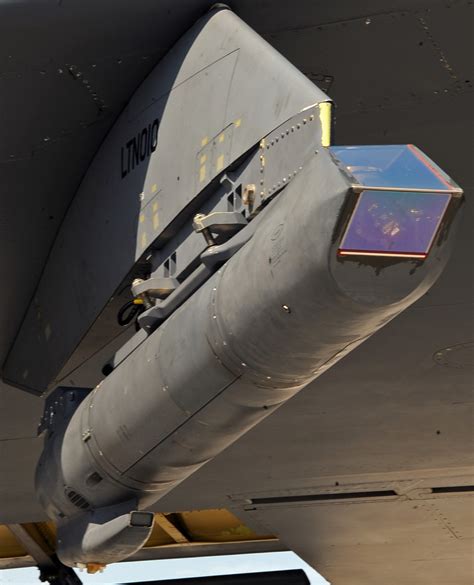
Particularly notable is its maritime role. Armed with Long-Range Anti-Ship Missiles (LRASM), the B-52 can threaten naval formations across vast oceanic distances, adding a powerful dimension to U.S. naval strategy.
Where specialized aircraft excel in narrow roles, the B-52 thrives as a flexible workhorse, capable of adapting to evolving mission demands without requiring entirely new airframes.
A Critical Pillar of the Nuclear Triad
The B-52 remains a central component of the United States’ nuclear triad, specifically its airborne leg. This role is not symbolic—it is operationally essential.
Unlike stealth bombers such as the B-2, which rely on penetrating enemy defenses, the B-52 specializes in standoff nuclear strike. It carries air-launched cruise missiles that can be deployed from outside heavily defended airspace, ensuring survivability even against advanced adversaries.
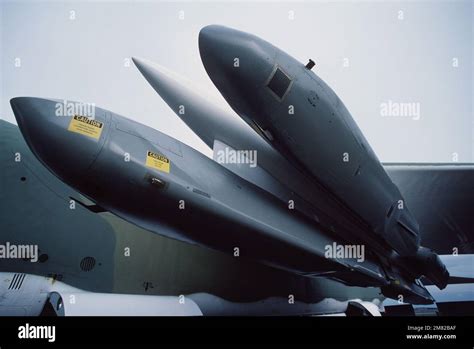
The upcoming AGM-181 Long Range Standoff (LRSO) missile further enhances this capability. Designed to evade modern air defense systems, the LRSO ensures that the B-52 remains a credible nuclear deterrent well into the future.
Until the B-21 Raider is produced in sufficient numbers, the B-52’s role in nuclear deterrence is irreplaceable. Its ability to be visible, recallable, and controllable adds a layer of strategic flexibility that no other nuclear delivery system can match.
Cost Efficiency That Modern Bombers Can’t Match
In an era of skyrocketing defense budgets, the B-52 stands out for its remarkable cost-effectiveness. While newer bombers bring advanced capabilities, they also introduce significantly higher operational and maintenance costs.
The B-52 benefits from:
- Decades of established logistics and maintenance infrastructure
- Mechanically simpler systems compared to stealth aircraft
- Higher mission availability rates
Aircraft like the B-2 Spirit require specialized facilities and intensive maintenance to preserve their stealth characteristics. The B-1 Lancer, with its variable-sweep wings and supersonic systems, also demands complex upkeep. By contrast, the B-52 is comparatively straightforward and reliable.
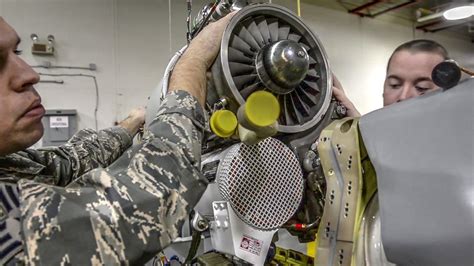
This affordability allows the Air Force to deploy the B-52 for missions where stealth is unnecessary, preserving more expensive assets for high-threat environments. It is not just a cheaper option—it is a strategically efficient allocation of resources.
The Perfect Launch Platform for Next-Generation Weapons
Far from being outdated, the B-52 is rapidly becoming a central node in next-generation warfare, particularly as a launch platform for advanced standoff weapons.
Its large payload and external hardpoints make it ideal for carrying:
- JASSM-ER and JASSM-XR
- LRASM anti-ship missiles
- AGM-181 LRSO nuclear missiles
- AGM-183A hypersonic weapons
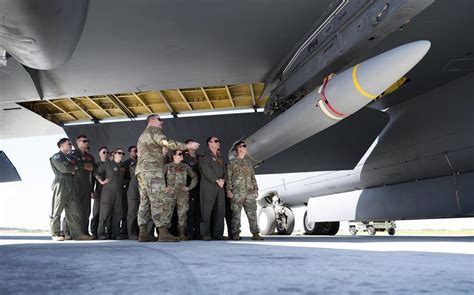
Operating from outside contested airspace, the B-52 can release waves of highly sophisticated munitions without exposing itself to enemy defenses. This concept aligns perfectly with modern warfare doctrine, where stand-off engagement is increasingly dominant.
Rather than competing with stealth bombers, the B-52 complements them. While aircraft like the B-21 penetrate defenses, the B-52 delivers overwhelming firepower from a safe distance, creating a layered and highly resilient strike architecture.
B-52J Modernization: A Clear Path to the 2050s
The strongest argument for the B-52’s continued service lies in its future. The ongoing B-52J modernization program is transforming this Cold War icon into a 21st-century combat platform.
At the heart of this upgrade is the Commercial Engine Replacement Program (CERP), which replaces the aging TF33 engines with modern Rolls-Royce F130 turbofans. These engines promise:
- Improved fuel efficiency
- Reduced maintenance requirements
- Extended operational range
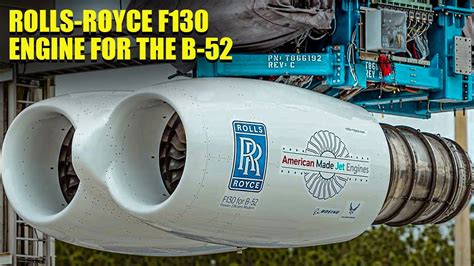
Beyond engines, the aircraft is receiving upgraded avionics, communications systems, and digital interfaces, ensuring compatibility with future weapons and network-centric warfare environments.
Critically, modernization is far more cost-effective than replacement. Building an equivalent fleet of new bombers would require enormous investment and decades of production. Upgrading existing B-52s achieves similar strategic outcomes at a fraction of the cost.
By the time the B-52J reaches full operational capability, the aircraft will be approaching a century in service—yet still fully relevant. That is not just longevity; it is engineering endurance paired with strategic foresight.
Why the B-52 Refuses to Fade Away
The continued operation of the B-52 is not an accident—it is the result of a rare convergence of design brilliance, adaptability, and strategic necessity. Each of its core strengths reinforces the others, creating a platform that remains uniquely capable even in an era of rapid technological change.
It carries more weapons than its peers, flies farther than most aircraft ever built, adapts to roles that didn’t exist when it was designed, and does all of this at a cost that keeps it relevant in budget-conscious defense planning. Add to that its critical role in nuclear deterrence and its seamless integration with next-generation weapons, and the picture becomes clear.
The B-52 is not just surviving—it is evolving with purpose. And as long as global strategy values reach, payload, flexibility, and cost efficiency, this iconic bomber will continue to fly—long after many of its supposed replacements have come and gone.