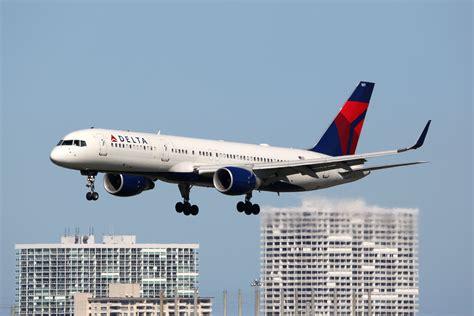
The modern airline industry moves quickly. New aircraft models promise improved fuel efficiency, quieter cabins, and lower emissions, pushing airlines toward rapid fleet renewal. Yet one aircraft continues to resist this cycle of replacement: the Boeing 757. For Delta Air Lines, the aircraft remains an essential part of its network strategy even after more than four decades in service. In an era dominated by next-generation narrowbody jets like the Airbus A321neo and the upcoming A321XLR, Delta’s commitment to the 757 stands out as both unusual and remarkably strategic.
Rather than viewing the aircraft as outdated, Delta sees it as a uniquely capable tool—one that fills operational niches newer jets still struggle to match. With around 90 Boeing 757 aircraft in active service as of 2026, the airline remains the largest operator of the type in the world. The continued reliance on this aircraft reveals much about Delta’s fleet philosophy, the evolving economics of aviation, and the still-unfilled gap in the so-called “middle of the market.”
The Boeing 757 was originally introduced in the early 1980s to replace the aging Boeing 727, but its design philosophy pushed far beyond simple replacement. Engineers built the aircraft with remarkable excess performance, giving it extraordinary thrust and range for a narrowbody jet. Decades later, this same design decision allows the aircraft to outperform many modern competitors in specific operating environments.
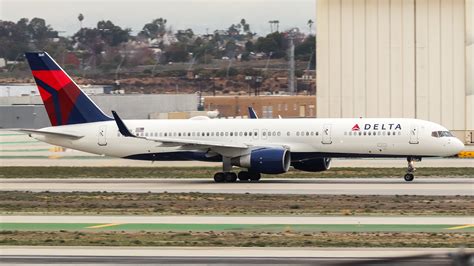
The Boeing 757: Aviation’s Legendary “Pocket Rocket”
Among pilots and aviation enthusiasts, the Boeing 757 carries a famous nickname: the “pocket rocket.” The name is well deserved. Powered by either Rolls-Royce RB211 or Pratt & Whitney PW2000 engines, the aircraft delivers exceptional thrust relative to its size. The result is one of the most powerful narrowbody airliners ever built.
This performance advantage is not just a point of pride; it translates directly into operational flexibility for Delta Air Lines. The aircraft’s high thrust-to-weight ratio allows it to climb rapidly and operate effectively in conditions where other narrowbody aircraft must impose payload restrictions.
In practical terms, this means the Boeing 757 can take off from shorter runways, climb more aggressively in noise-restricted environments, and operate efficiently from airports located at high elevations. These capabilities allow Delta to maintain profitable routes that might otherwise require larger aircraft or suffer from limited passenger capacity.
For an airline with a vast domestic network and numerous challenging airports, these characteristics are extremely valuable. Instead of forcing operational compromises, the 757 enables Delta to maintain full passenger loads while preserving range and performance.
Conquering “Hot and High” Airports
One of the most difficult environments for any commercial aircraft is the combination of high altitude and high temperature, commonly referred to as “hot and high” conditions. When air becomes thinner due to altitude or heat, aircraft wings generate less lift while engines produce less thrust. This creates a significant performance challenge during takeoff.
Few places illustrate this problem better than Mexico City International Airport, which sits more than 7,300 feet above sea level. During the summer months, temperatures can exceed 38°C (100°F), dramatically reducing aircraft performance.
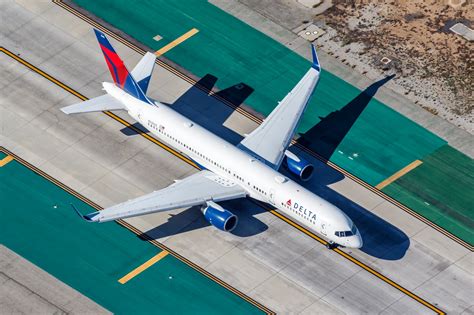
For many modern narrowbody aircraft—including the Airbus A321neo—operating long routes from Mexico City often requires weight restrictions. Airlines may have to leave seats empty or reduce cargo loads in order to maintain safe takeoff margins.
The Boeing 757, however, handles these conditions with remarkable ease. Its powerful engines and large wing allow it to depart fully loaded without sacrificing range. This capability enables Delta to maximize revenue by filling every seat while still flying long routes back to major hubs such as Atlanta, Los Angeles, or Minneapolis.
This same advantage appears at airports with short runways or strict noise restrictions, such as John Wayne Airport in Orange County or Jackson Hole Airport in Wyoming. In these environments, steep climb performance is not merely beneficial—it is essential.
While competitors may deploy larger widebody aircraft to overcome these challenges, Delta can rely on the 757 to deliver similar performance at a fraction of the operating cost.
The Northwest Airlines Legacy That Reshaped Delta’s Fleet
Delta’s unusually large Boeing 757 fleet can be traced directly to a major moment in aviation history: the 2008 merger between Delta Air Lines and Northwest Airlines. The merger created one of the world’s largest airline networks and brought a substantial fleet of Boeing 757 aircraft into Delta’s operations.
Instead of quickly phasing them out, Delta recognized the aircraft’s strategic value. Over time, the airline integrated these jets into both domestic and international routes, creating a versatile fleet capable of serving numerous market segments.
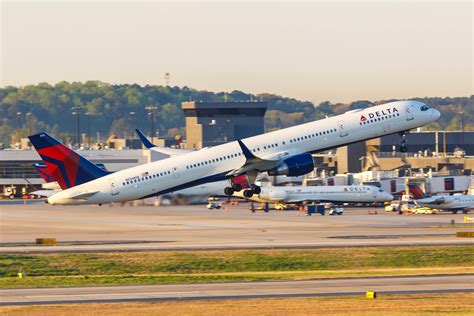
Today, Delta operates both the 757-200 and the stretched 757-300, with the latter offering higher passenger capacity for busy domestic routes. With around 90 aircraft in service, Delta remains the largest 757 operator globally, long after many airlines have retired the type.
During the global pandemic, several carriers accelerated their retirement plans for older aircraft. Airlines such as American Airlines and United Airlines moved aggressively to simplify their fleets and focus on newer, more efficient models.
Delta took the opposite approach.
Rather than abandoning the 757, the airline doubled down on its investment, even acquiring additional second-hand aircraft while market prices were low. This contrarian strategy allowed Delta to maintain operational flexibility while competitors reduced capacity.
Cabin Upgrades That Rival New Aircraft
A common assumption about older aircraft is that they offer an outdated passenger experience. Delta has actively challenged that perception through extensive cabin modernization programs.
Over the past decade, the airline has invested millions of dollars in interior refurbishments for its Boeing 757 fleet. These upgrades include:
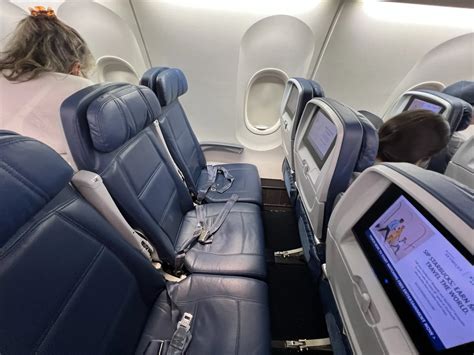
- Modern slimline seats that increase passenger comfort while maximizing cabin space
- High-definition seatback entertainment screens across most seats
- New LED cabin lighting systems that improve ambience and reduce power consumption
- Updated galleys and lavatories designed to match the airline’s newest aircraft interiors
The result is a passenger experience that often feels comparable to brand-new aircraft. Many travelers may not even realize they are flying on a jet designed in the early 1980s.
For Delta, this approach allows the airline to maintain a consistent brand experience across its fleet without the enormous capital expenditure required for large numbers of new aircraft.
The Financial Advantage of a Paid-Off Fleet
While fuel efficiency often dominates discussions about airline economics, capital costs play an equally critical role in profitability. This is where the Boeing 757 becomes particularly valuable to Delta.
Most of the airline’s 757 aircraft are fully owned and paid off, meaning they carry no major financing obligations. In contrast, a brand-new Airbus A321neo has a list price of roughly $140 million, with monthly lease payments often reaching $460,000 to $500,000 per aircraft.
These financial differences dramatically affect how airlines operate their fleets. Airlines with expensive new aircraft must keep them flying almost constantly—often 12 to 14 hours per day—to justify the financing costs.
Delta’s paid-off 757 fleet offers a completely different kind of flexibility.
During peak travel periods such as summer vacations or holiday seasons, the aircraft can be deployed aggressively on high-demand routes. When demand declines, the airline can temporarily reduce utilization without worrying about expensive lease payments draining cash reserves.
This flexibility acts as a strategic buffer against market volatility, giving Delta a financial advantage during uncertain economic conditions.
Maintenance vs. Fuel Efficiency: The Ongoing Trade-Off
Of course, operating older aircraft comes with its own challenges. As airframes age, maintenance requirements increase significantly. Heavy structural inspections, known as C-checks, become more frequent and labor-intensive.
The Boeing 757’s powerful Rolls-Royce RB211 engines are legendary for their durability, but they are also expensive to overhaul. Modern engines used on aircraft like the A321neo are designed with modular components and advanced monitoring systems that simplify maintenance.
Fuel efficiency also favors newer aircraft. The A321neo can burn 20–30 percent less fuel per seat than the Boeing 757.
However, when Delta calculates total operating costs—including capital expenses—the economics still make sense for the aircraft’s specialized missions. As long as fuel prices remain manageable, the 757 continues to generate strong returns.
The Rise of the Airbus A321XLR
The aircraft most frequently discussed as the Boeing 757’s eventual successor is the Airbus A321XLR. Designed to serve the “middle of the market,” the XLR offers an impressive range of approximately 4,700 nautical miles.
This capability allows airlines to operate long routes between smaller cities that previously required larger widebody aircraft. With dramatically lower fuel consumption, the XLR opens the door to new long-haul routes that were once considered economically impossible.
For many airlines around the world, the A321XLR represents the future of narrowbody aviation.
Yet even this advanced aircraft does not fully replace the Boeing 757.
When Raw Power Still Matters
The A321XLR excels in long-range efficiency, but it lacks the raw thrust that defines the Boeing 757. To achieve its remarkable range, the aircraft relies on additional fuel tanks that increase its overall weight.
As a result, the A321XLR often requires longer runways for takeoff, particularly when operating at maximum range. In hot and high conditions, it may still face payload restrictions.
The Boeing 757, by contrast, was designed with significant excess power. Its large wing and high-thrust engines allow it to lift heavy loads from runways that would challenge many modern aircraft.
This means the two aircraft ultimately serve different operational roles.
The A321XLR is ideal for long, thin routes across oceans or between secondary cities. The Boeing 757 remains the specialist for high-performance operations in demanding environments.
For Delta Air Lines, maintaining both capabilities provides a valuable competitive advantage.
A Gradual Decline, Not a Sudden Goodbye
Despite its continued usefulness, the Boeing 757 is slowly approaching the end of its commercial life. Delta has already reduced 757 flight operations by roughly 26 percent over the past year, reflecting the gradual introduction of newer aircraft into its fleet.
Even so, the airline has no immediate plans to retire the aircraft entirely. Refurbished 757-300 aircraft are expected to remain in service until at least 2032, continuing to serve high-density domestic routes across the United States.
This phased retirement strategy allows Delta to maintain operational continuity while carefully transitioning to newer aircraft types.
The Last True “Pilot’s Airplane”
Among pilots, the Boeing 757 holds a special place in aviation history. The aircraft was designed during an era when raw performance was prioritized over pure efficiency. It offers responsive handling, powerful engines, and remarkable climb capability.

Many aviators describe the aircraft as the “Ferrari of the skies.” It responds quickly to control inputs and provides a level of performance rarely seen in modern airliners optimized primarily for fuel efficiency.
Today’s aircraft rely more heavily on sophisticated flight computers, aerodynamic refinement, and advanced automation. While these technologies improve efficiency and safety, they also mark a philosophical shift in aircraft design.
The Boeing 757 represents the final chapter of an era when engineers built aircraft with performance margins far beyond minimum requirements.
The Legacy of an Aviation Icon
The Boeing 757 accomplished something remarkable during its decades of service. It proved that a narrowbody aircraft could cross oceans, climb out of mountain airports, and connect distant cities with unmatched versatility.
Although production ended in 2004, its influence remains visible throughout the aviation industry. Modern aircraft such as the Airbus A321XLR exist largely because the 757 demonstrated the commercial potential of long-range narrowbody operations.
For Delta Air Lines, the aircraft remains more than just a piece of aviation history. It is a strategic asset that continues to deliver value in ways newer aircraft sometimes cannot match.
Eventually, the final Boeing 757 will make its last commercial flight. But until that day arrives, the aircraft will continue doing what it has always done best—climbing faster, flying farther, and outperforming expectations decades after its debut. ✈️