A Once-Pioneering Aircraft Faces a Strategic Retreat
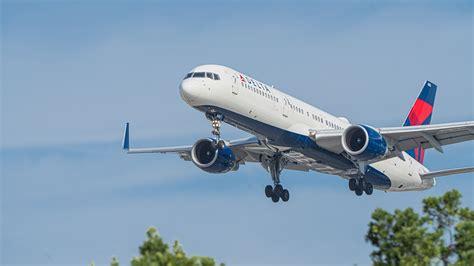
The Boeing 757 once stood as a quiet disruptor in transatlantic aviation, bridging the gap between narrowbody efficiency and long-haul capability. Initially designed for short-haul and domestic operations, the aircraft’s true transformation came with the introduction of ETOPS regulations, which unlocked its ability to cross oceans safely. Airlines quickly realized the potential: thinner transatlantic routes could now be profitable without deploying larger, costlier widebody jets.
For Delta Air Lines, the 757 became a tactical asset, enabling access to secondary European cities that couldn’t sustain widebody demand. It was nimble, powerful, and perfectly suited for markets that lived in the gray area between niche and mainstream. Yet, as of 2026, that expansive vision has narrowed dramatically. The aircraft that once stitched together a web of transatlantic connections now operates just two scheduled European routes.
This shift isn’t sudden—it’s the result of evolving passenger expectations, competitive pressure, and a broader transformation in fleet strategy. The 757 hasn’t failed; it has simply been outpaced.
Delta’s Only 757 European Routes in 2026
In 2026, Delta’s Boeing 757-200 operates regularly on just two transatlantic routes, both converging on a single destination: Reykjavík Keflavík International Airport (KEF) in Iceland. These routes originate from Minneapolis–Saint Paul (MSP) and Detroit (DTW), two of Delta’s major hubs.
Between May and October, Minneapolis sees approximately 151 departures, while Detroit contributes around 122 departures between May and September. These frequencies effectively translate into daily seasonal service, but the limited scope tells a much bigger story.
Reykjavík’s unique geographic position makes it an ideal candidate for the 757. The relatively shorter transatlantic distance aligns perfectly with the aircraft’s range capabilities, while Iceland’s tourism demand ensures consistent seasonal traffic. In other words, this isn’t a coincidence—it’s a carefully chosen niche where the 757 still makes economic sense.
Beyond these routes, the aircraft makes only a token appearance on the New York JFK–Keflavík corridor, with minimal supplementary service. For a fleet that once spanned multiple European destinations, this is a striking contraction.
The Onboard Experience Gap Driving Change
A major factor behind the 757’s reduced role lies inside the cabin. While Delta has made efforts to modernize the aircraft, the onboard experience still lags behind its widebody counterparts in critical ways.
Delta’s transatlantic-configured 757s feature Delta One lie-flat seats, a notable upgrade from domestic recliners. However, the layout is arranged in a 2-2 configuration, meaning not every passenger enjoys direct aisle access. In today’s premium travel market, that detail matters more than ever.
By contrast, Delta’s widebody aircraft—such as the Airbus A330 or Airbus A350—offer 1-2-1 configurations, ensuring every business class passenger has aisle access and a greater sense of privacy. The difference is not subtle; it’s experiential.
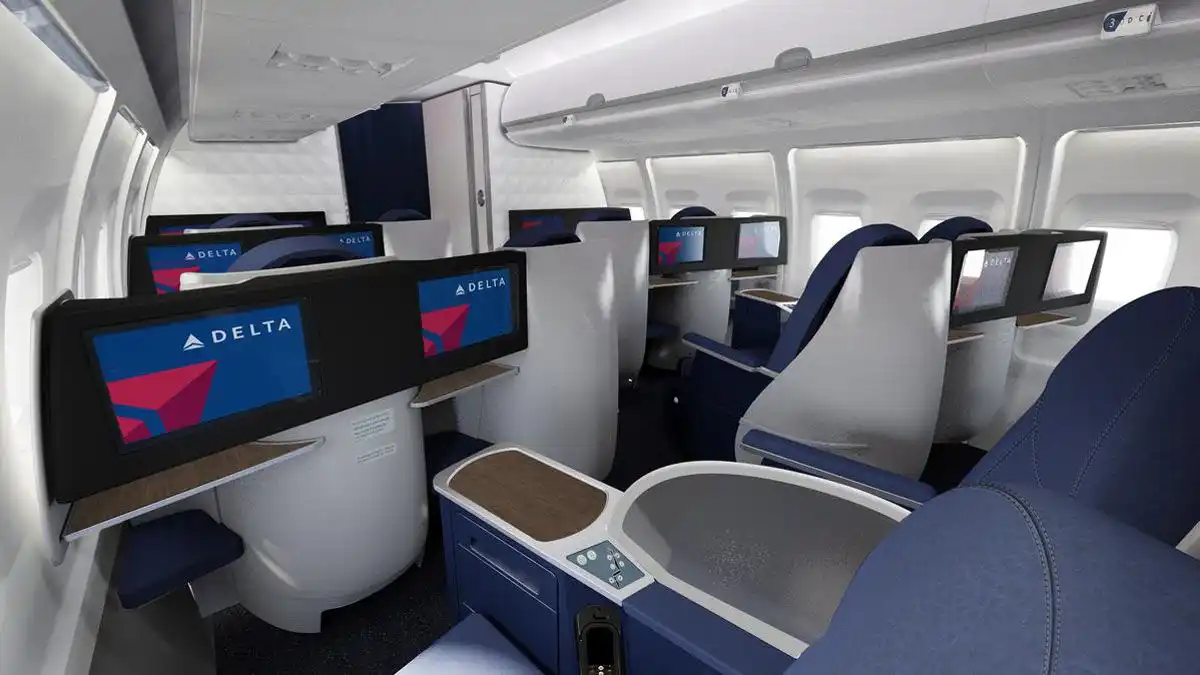
Even in economy, the narrower fuselage of the 757 creates a more confined atmosphere compared to widebodies. While perfectly acceptable for shorter routes, this becomes a competitive disadvantage on overnight transatlantic flights where comfort directly impacts customer satisfaction.
Delta President Glen Hauenstein’s remarks underscore this reality, pointing to “product and brand issues” as a key reason for stepping away from narrowbody transatlantic flying. In an era where airline branding is deeply tied to cabin experience, the 757 simply doesn’t align with Delta’s premium aspirations.
From European Network Diversity to Strategic Minimalism
The current limited presence of the 757 in Europe stands in stark contrast to its role just a few years ago. As recently as 2019, Delta deployed the aircraft across a surprisingly diverse network of transatlantic routes.
From New York JFK, the 757 connected passengers to cities like Edinburgh, Lisbon, Glasgow, Málaga, Shannon, and Ponta Delgada. Meanwhile, Boston served as another gateway, linking to Dublin, Edinburgh, and Lisbon using the same aircraft type.
These routes weren’t random—they represented a deliberate strategy to tap into underserved markets. The 757 made it possible to operate flights that would have been economically unviable with larger aircraft. It was, in many ways, the backbone of Delta’s secondary European expansion.
However, the COVID-19 pandemic disrupted this model. Demand patterns shifted, and airlines were forced to reassess network efficiency. As travel rebounded, a different priority emerged: consistency in product and profitability. Widebodies, despite higher operating costs, delivered both.
The result is a leaner, more focused transatlantic network where fewer routes are flown, but with greater emphasis on premium experience and operational efficiency.
Why the Boeing 757 Still Has a Future—Just Not Here
Despite its retreat from Europe, the Boeing 757 is far from obsolete within Delta’s fleet. In fact, the airline still operates over 90 units, underscoring its continued value.
The aircraft has effectively returned to its original role as a domestic and short-haul workhorse, where its performance characteristics—strong thrust, short runway capability, and operational flexibility—remain highly relevant. On routes within North America, the 757 continues to deliver reliability and efficiency without the same level of competitive pressure seen on international services.
There’s also a strategic layer to this. Replacing the 757 isn’t straightforward. Few modern aircraft match its unique blend of range and capacity, which is why it has endured longer than many of its contemporaries. Yet, when it comes to transatlantic travel, newer narrowbodies like the Airbus A321LR and XLR are beginning to fill that space—with better fuel efficiency and more refined cabin options.
A Symbol of Transition in Modern Aviation
The story of Delta’s Boeing 757 in Europe is less about decline and more about evolution. Aviation is an industry defined by constant recalibration, where aircraft roles shift in response to technology, economics, and passenger expectations.
The 757 once thrived in a niche that barely existed before it. Today, that niche has been reshaped by more advanced aircraft and a sharper focus on customer experience. Delta’s decision to limit its 757 European operations to just two routes reflects a broader truth: success in modern aviation isn’t just about reaching a destination—it’s about how passengers feel along the way.
And in that equation, the 757, for all its strengths, has gracefully stepped aside from the transatlantic spotlight.