
Delta Air Lines is accelerating the sunset of its venerable Boeing 757 fleet, sharply reducing flying activity for the aging narrowbody icon. According to Cirium Diio data, the carrier is operating an average of 250 daily round-trip Boeing 757 flights in December—a 26% year-over-year drop, amounting to 88 fewer daily services. The airline still operates more passenger 757s than any carrier worldwide, yet the shift marks a decisive pivot toward modern, fuel-efficient aircraft that better fit Delta’s long-term cost and sustainability goals.
The airline currently maintains 92 Boeing 757s across both –200 and –300 variants. These aircraft are fully paid off, making them inexpensive from a capital standpoint. However, their low ownership cost is increasingly overshadowed by higher fuel burn, complex maintenance requirements, and parts scarcity. As Delta accelerates the transition toward the Airbus A321neo and the incoming Boeing 737 MAX 10, the longstanding workhorse is finally losing its grip on Delta’s short- and medium-haul scheduling strategy.
Delta has already removed 23 Boeing 757-200s from service this year—more than double last year’s retirements. Most of these aircraft were the 199-seat configuration that formed the backbone of the airline’s domestic 757 operations. Two retired frames featured the rarer 168-seat configuration. All retired aircraft are now in storage or partially scrapped, signaling a clear shift away from the variant most heavily used across Delta’s network.
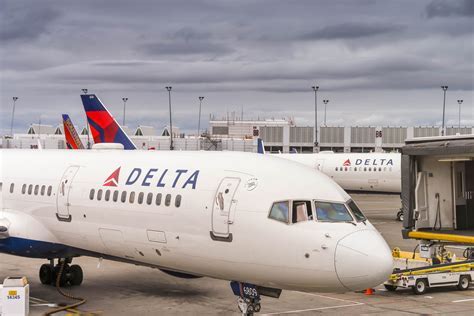
While the –200 variant faces accelerating retirement, the 757-300—the airline’s high-capacity “flying pencil”—remains safe for now. These 16 stretched airframes were inherited from Northwest Airlines and are known for their strong economics on dense domestic routes. Delta is refurbishing the interiors of these jets rather than retiring them, preserving their niche advantage in leisure-heavy and hub-to-hub markets.
The most recent retirement occurred on November 25, when aircraft N545US completed a final passenger flight from New Orleans to Atlanta before departing for storage in Victorville. Delivered in 1996, the 29.5-year-old airframe spent its entire career with Northwest and Delta, closing out service on one of Delta’s most heavily trafficked corridors.
Delta’s Boeing 757-200 domestic activity has fallen 28% year-over-year. Several markets have lost the type entirely, including Charleston, Cincinnati, Indianapolis, Raleigh/Durham, and Savannah. Meanwhile, the 757-300—though not retired—has seen domestic activity fall 15%, in part due to its increasing average stage length, now at 1,091 nautical miles.
International 757 flying, always a smaller slice of Delta’s operations, has been hit the hardest. With nearly all long-haul missions relying on the 199-seat 757-200s now being retired, international 757 flights dropped 40% compared to last December. Lima and Punta Cana, both previously served by the type, no longer see 757 operations.
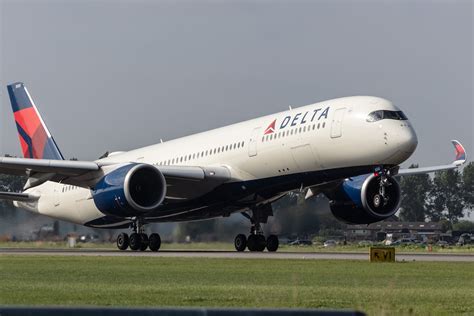
Atlanta: The Heart of Delta’s 757 Network Sees Deep Cuts
Atlanta, Delta’s largest hub and long considered synonymous with the 757, has experienced major capacity reductions. The airline will operate 182 daily round-trip 757 flights from ATL in December, representing more than 30% of all Delta 757 movements. Even with this dominance, activity at the hub is down nearly one-third year-over-year.
The decline is especially sharp for the 757-300, whose Atlanta activity has fallen 62%, leaving the type representing just one in seven single-aisle flights at the hub—down from one in five last December. Delta will deploy the 757 across 43 Atlanta routes in December, though some markets—such as Baltimore, Salt Lake City, and Portland—will see only two or three flights during the entire month.
The busiest 757 destinations from Atlanta remain Orlando, Tampa, Miami, Detroit, and Fort Lauderdale, reaffirming the aircraft’s enduring value on high-volume corridors even in its twilight years.
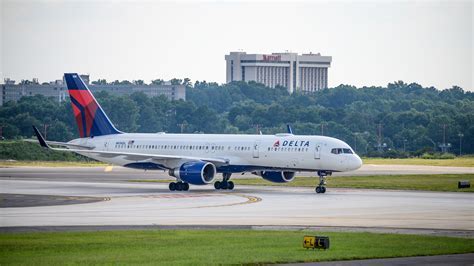
Outlook: A Gradual Farewell to an American Classic
The Boeing 757 has been a linchpin of Delta’s route network for decades, prized for its power, range, and versatility. Yet the shift is unmistakable: new-generation narrowbodies now deliver superior operating economics across nearly every mission profile the 757 once dominated. As retirements accelerate through 2026, Delta’s reliance on the aircraft will continue to fade.
Still, the type’s presence—especially the 757-300—will linger in key markets where its unique blend of capacity and performance remains unmatched. The aircraft’s gradual exit marks the end of a defining chapter in Delta’s fleet history, ushering in a new era anchored by quieter, more efficient, and more sustainable narrowbody jets.
As this transition continues, Delta’s reshaped fleet strategy signals a broader industry shift: even aviation’s most iconic workhorses eventually give way to the pressures of efficiency, modernization, and evolving customer expectations.