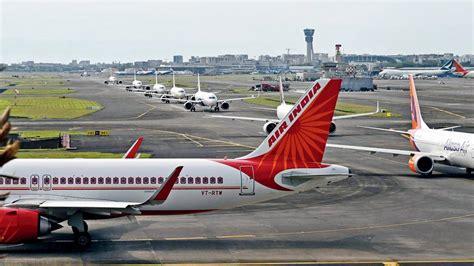
Air India has taken the decisive step of reducing its international wide-body operations by at least 15% until mid-July, citing a convergence of operational disruptions that have put its long-haul network under pressure. This decision, which became effective immediately in mid-June, represents a strategic retreat aimed at stabilizing performance, minimizing cascading delays, and managing an aircraft availability crunch.
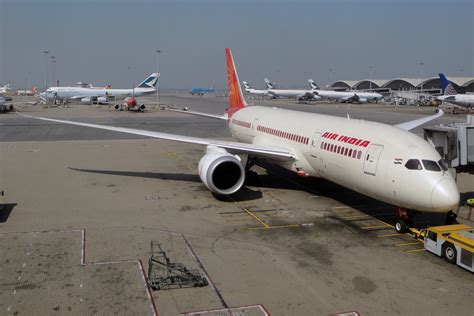
The airline, which operates a fleet of Boeing 787 Dreamliners, Boeing 777s, and Airbus A350s, has been forced to re-align its flight schedules in response to two major developments: prolonged airspace restrictions over critical westbound routes and enhanced maintenance inspections on Boeing 787s, triggered by a recent incident.
Airspace Restrictions and the Westbound Bottleneck
Over the past weeks, global tensions and geopolitical turbulence have resulted in the closure of key air corridors, especially those stretching across parts of the Middle East and Eastern Europe. These closures have forced wide-body aircraft to adopt longer flight paths, significantly increasing block times on long-haul routes connecting India to North America and Europe.
The result has been a dramatic strain on aircraft utilization rates. Each round trip that previously required, for instance, 16 hours now stretches to 18 or more, reducing the number of rotations each aircraft can perform within a 24-hour window. The airline’s 70 daily international wide-body services have thus become increasingly difficult to sustain without encountering delays, aircraft turnarounds, or potential service gaps.
Boeing 787 Scrutiny Following AI171 Incident
Compounding the issue is the enhanced inspection protocol implemented after a recent incident involving Air India Flight AI171, a Boeing 787 operating between London and Ahmedabad. Though the airline has not released comprehensive findings, preliminary reports indicate that the aircraft experienced a technical anomaly mid-flight. In response, regulatory bodies and Air India’s engineering team initiated precautionary checks across the fleet of Dreamliners.
This unplanned maintenance schedule has reduced the availability of twin-aisle aircraft, especially as inspections require grounding planes for extended periods. According to internal data, Air India operated 462 wide-body flights between June 2 and June 17, yet 83 flights were canceled, revealing an effective disruption rate of 15.2%.
This rate has now been formalized into schedule changes, ensuring the airline no longer promises services it may be unable to deliver. Instead, flights have been trimmed across various long-haul destinations in North America, Europe, and East Asia.
Managing Capacity Through Controlled Curtailment
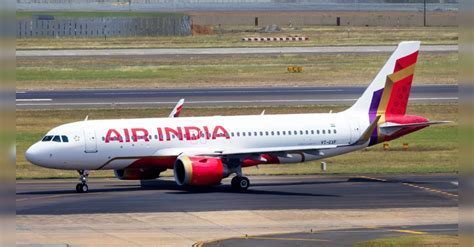
Rather than risking further customer dissatisfaction due to last-minute cancellations, Air India has strategically pulled back. The affected flights include key city pairs such as Delhi-Newark, Mumbai-London, and Bengaluru-San Francisco, routes that depend heavily on wide-body aircraft due to payload and range considerations.
The airline has not publicly released a route-by-route breakdown, but insider sources confirm that the 15% reduction is spread across various regions, ensuring that no single market faces a disproportionate impact. In particular, North American services — already stretched thin due to flight duration increases — are experiencing the most significant adjustments.
Additionally, codeshare partners such as Lufthansa, United Airlines, and Singapore Airlines have been looped in to potentially accommodate overflow passengers wherever interline agreements exist.
Passenger Fallout and Customer Service Strain
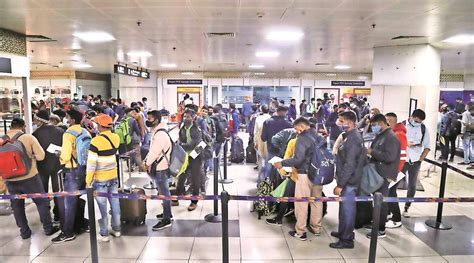
For passengers, the sudden flight reductions translate to rescheduled itineraries, rebookings, or in some cases, forced refunds. Air India has deployed additional customer support staff to handle the surge in queries, while its call centers and social media teams are experiencing an unprecedented workload.
Travelers affected by cancellations have reported frustration over short-notice alerts, particularly for flights booked months in advance. Frequent flyers in the U.S. and Europe — especially students and business travelers — have voiced concerns about limited rebooking options on alternate dates. In many instances, passengers are being accommodated on narrow-body connecting routes via Middle Eastern hubs.
Industry Reactions and Competitive Ripples
This move comes at a time when Air India is aggressively expanding and modernizing its fleet, and thus the rollback may appear counterintuitive. However, aviation analysts see this as a pragmatic decision in the face of unforeseen headwinds.
By owning up to its capacity constraints and streamlining operations, Air India may avoid the reputational damage that often accompanies chronic delays or last-minute cancellations. Competing carriers such as Emirates, Qatar Airways, and British Airways may see short-term benefits as displaced passengers seek alternative long-haul options.
Meanwhile, airline competitors operating over the same constrained airspace — including Lufthansa, Turkish Airlines, and Air France — are also grappling with extended block times, but most have diversified fleets and higher spare ratios, offering them better absorption capacity.
Strategic Implications for Tata Group and Vihaan.AI
For Air India’s parent company, Tata Group, and its transformation roadmap Vihaan.AI, the current disruption represents both a challenge and an opportunity. While the flight cuts may slightly dent revenue forecasts for the quarter, the situation underscores the importance of fleet flexibility, maintenance resilience, and operational transparency.
As part of its five-year transformation blueprint, Vihaan.AI has committed to tripling Air India’s international footprint by the end of 2027. The current scenario will likely push internal teams to accelerate contingency planning, improve predictive maintenance capabilities, and bolster the carrier’s spare aircraft pool.

Long-Term Path: Fleet Diversification and Crew Optimization
The strain on the 787 fleet has highlighted a critical need for aircraft diversification. With the Airbus A350 slowly entering service, Air India gains a potential buffer against wide-body groundings. However, current A350 deployments are limited and ramp-up is expected to take time.
The airline is also exploring crew optimization strategies, including flexible crew pairing and rotational fatigue management, to cope with the longer duty hours necessitated by stretched flight durations. Simulators and pilot retraining programs have already been mobilized to create wider deployable crew pools for long-haul sectors.
In addition, Air India has initiated a comprehensive route profitability audit, assessing whether each international sector justifies its resource allocation in the current operating climate.
Passenger Advisory and Booking Adjustments
Air India has issued an official travel advisory urging customers to reconfirm their flight status before departure. Those with bookings until mid-July are advised to check email and SMS notifications regularly and to use the Air India mobile app or website for real-time updates.
Affected passengers have the option of rebooking at no extra charge, accepting full refunds, or choosing alternate flights via interline partners. Travel agents and OTAs have been briefed on updated fare rules, penalties waivers, and schedule re-alignments.

Looking Ahead: A Test of Operational Maturity
This temporary flight reduction marks a critical test of Air India’s maturing operational backbone. Unlike past episodes where disruptions spiraled into chaotic meltdowns, this response has been proactive, measured, and designed to reset expectations.
The next few weeks will determine how effectively the airline manages customer satisfaction amid adversity and whether its fleet rejuvenation efforts can absorb such shocks in the future. With the monsoon travel peak approaching and India’s outbound tourism surging, capacity crunches must be addressed swiftly to avoid long-term revenue erosion.
In the broader picture, this episode underscores the volatile nature of international aviation, where even the most ambitious growth stories must contend with sudden geopolitical shifts, technical contingencies, and atmospheric constraints. For Air India, it is not merely a pause — but a recalibration of its path to global re-emergence.