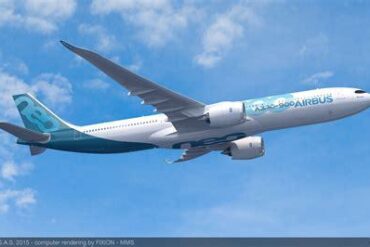
Since the dawn of the jet age, Boeing’s wide-body aircraft have played a pivotal role in transforming long-haul aviation. From the revolutionary Boeing 747 Jumbo Jet to the technologically advanced 787 Dreamliner, each model has pushed the boundaries of aerospace design and passenger experience. Boeing’s wide-body fleet—comprising the 747, 767, 777, 777X, and 787 families—has not only served commercial airlines but also shaped global logistics, VIP transport, and military operations.
Boeing’s strategy has always revolved around building versatile, long-range aircraft that satisfy both high-capacity needs and economic constraints. Each model has evolved to address distinct operational gaps, maximizing payload, range, and fuel efficiency while enhancing onboard comfort. These engineering marvels now serve as the backbone of many intercontinental fleets, from legacy carriers to emerging international players.
The Boeing 747: The Original Jumbo Jet That Changed Everything
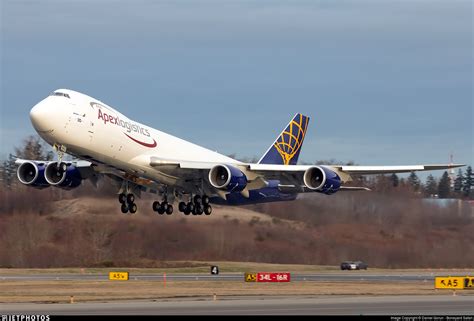
The Boeing 747, first flown in 1969 and entering service in 1970 with Pan Am, was a groundbreaking innovation—the world’s first wide-body airliner. Its iconic hump-backed design allowed for a dual-deck configuration and unprecedented seating capacity, initially exceeding 400 passengers. Designed during the golden age of aviation, the 747 was meant to democratize air travel by reducing per-seat operating costs and enabling nonstop long-haul flights.
Over the decades, the 747 has seen multiple iterations:
- 747-100/200/300: Early variants that laid the foundation for long-range, high-capacity air travel.
- 747-400: Introduced in 1989, featuring winglets, modern avionics, and improved range.
- 747-8: The final commercial variant with new GEnx engines, advanced aerodynamics, and the capacity to carry over 600 passengers in an all-economy layout.
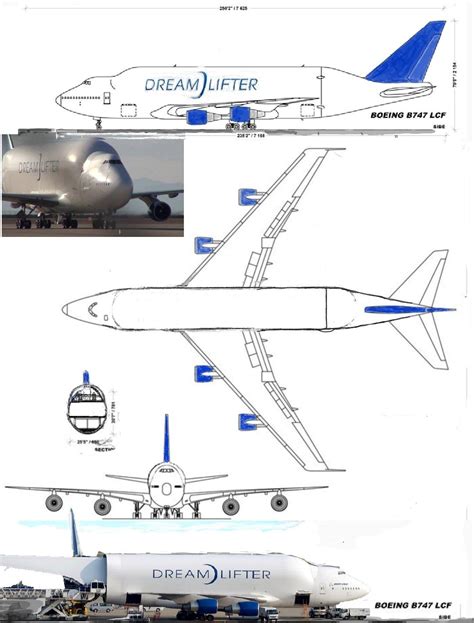
Beyond commercial aviation, the 747 has also served as the U.S. Air Force One, a cargo workhorse in the 747-400F, and as the Dreamlifter, transporting oversized aircraft parts.
The Boeing 767: The Wide-Body Workhorse in Versatility and Utility
Launched in the early 1980s, the Boeing 767 was designed as a twin-engine alternative for medium- to long-range routes. With a narrower fuselage than the 747 but broader than narrow-body aircraft, it created a new market segment. Airlines could now serve transatlantic and transcontinental routes more economically than with a four-engine jumbo.
The aircraft featured a two-aisle configuration, advanced flight deck systems (including one of the first glass cockpits), and compatibility with ETOPS (Extended-range Twin-engine Operations Performance Standards), allowing overwater operations previously reserved for four-engine aircraft.
Key commercial variants include:
- 767-200/300/400ER: Varying in fuselage length, range, and maximum takeoff weight.
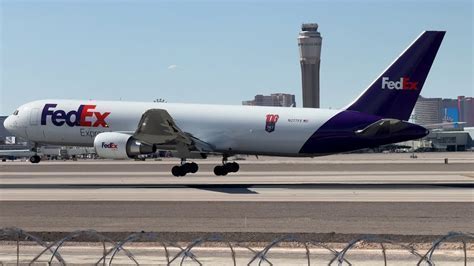
- 767F: One of the most popular freighters globally, heavily used by logistics giants like FedEx and UPS.
The 767 also serves in military roles—notably as the base airframe for the KC-46 Pegasus aerial refueler.
The Boeing 777: Long-Range Leader and Market-Dominating Twinjet
Unveiled in 1995, the Boeing 777 emerged from extensive airline collaboration, particularly with United Airlines. Designed for long-range, high-capacity missions, it was the first commercial aircraft entirely digitally preassembled. Boeing’s use of computer-aided design (CAD) revolutionized production and ensured seamless integration of complex systems.
The 777 features a twin-engine configuration, with GE90 engines providing up to 115,000 pounds of thrust—the most powerful commercial jet engines in operation. With a 10-abreast seating layout, its cabin offers a balance of passenger density and comfort.
Major variants include:
- 777-200/200ER: Suitable for medium- to long-haul routes.
- 777-300/300ER: Extended fuselage with increased range and payload.
- 777F: A freighter version based on the 777-200LR, with optimized cargo capacity.
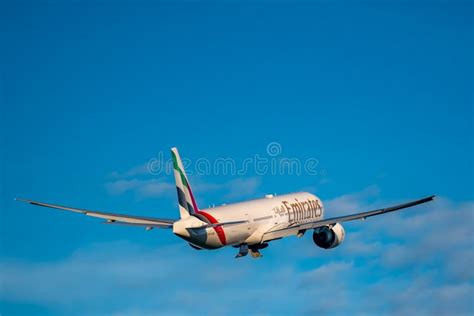
The 777-300ER quickly became the best-selling wide-body model in its class due to its versatility, reliability, and lower cost per seat-mile compared to older quad-jets.
The Boeing 777X: The Future of Wide-Body Twinjets
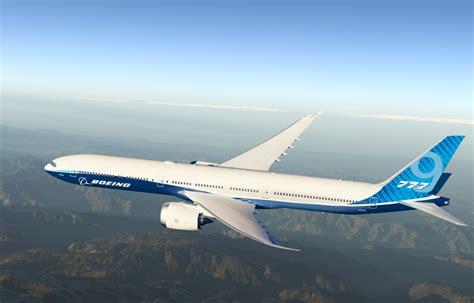
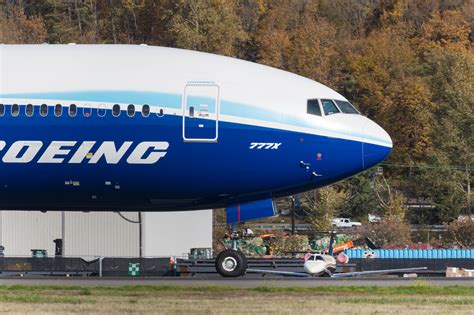
The 777X is Boeing’s answer to rising demand for ultra-long-range, fuel-efficient wide-body aircraft in the post-quad-jet era. Based on the 777 family, the 777X combines proven performance with next-generation features.
Equipped with GE9X engines, the world’s largest turbofans, and foldable wingtips to maximize aerodynamic efficiency without airport gate incompatibility, the aircraft promises a 10% fuel savings compared to its competitors. The 777-8 and 777-9 variants offer range flexibility between 8,730 and 7,285 nautical miles, respectively, while seating between 384 to over 426 passengers.
Inside, the 777X introduces a wider cabin, larger windows, and improved pressurization, setting new benchmarks for comfort on long-haul flights. Its high degree of commonality with the 777 family ensures operational continuity for existing operators.
The Boeing 787 Dreamliner: Efficiency Meets Passenger Experience
Perhaps Boeing’s most ambitious wide-body project since the 747, the 787 Dreamliner represents a leap in materials science, fuel efficiency, and passenger well-being. First flown in 2009 and introduced by All Nippon Airways (ANA) in 2011, the Dreamliner was built with composite materials making up over 50% of the airframe, significantly reducing weight and fuel burn.
The 787 is available in three main variants:
- 787-8: Carries ~242 passengers with a range of 7,305 nautical miles.
- 787-9: Extended version, seating ~296 passengers and flying up to 7,565 nautical miles.
- 787-10: Highest capacity but slightly reduced range (~6,330 nautical miles).
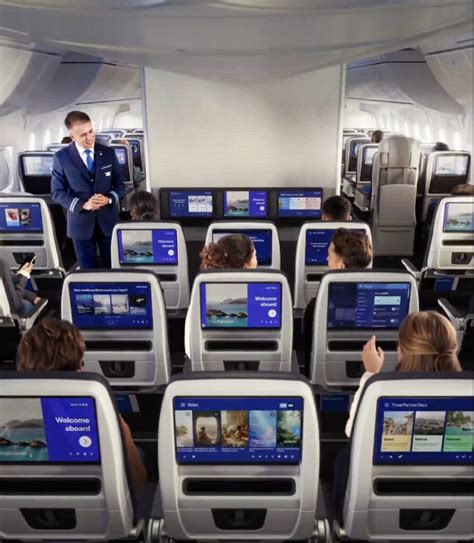
What sets the 787 apart is its passenger-focused design: higher humidity levels, lower cabin altitude, larger windows with electronic dimming, and a quieter ride. This aircraft enabled new point-to-point routes, bypassing traditional hubs due to its lower operational costs.
The 787 BBJ (Boeing Business Jet) variant caters to VIP and government clients, offering long-range luxury transportation.
Wide-Body Dominance and Strategic Positioning in the Global Market
Boeing’s wide-body fleet collectively addresses nearly every segment of long-haul aviation:
- The 747 serves high-density, ultra-long-haul routes and niche cargo needs.
- The 767 remains a bridge model, straddling medium- and long-haul roles, especially in cargo.
- The 777 leads the pack in international routes, thanks to its operational economics.
- The 777X aims to replace aging quad-jets with an efficient twin-engine solution.
- The 787 Dreamliner has redefined what efficiency and comfort mean in mid-size long-range travel.
Boeing’s ability to evolve aircraft across decades ensures continued relevance. These models are not just aircraft—they are the infrastructure of global mobility, economic interconnection, and cultural exchange.
Conclusion: Engineering Triumphs That Span the Skies
From the skies above London, Dubai, Tokyo, and New York, Boeing’s wide-body aircraft have transported billions of passengers and tons of cargo across every continent. They represent a fusion of aerospace ingenuity, market insight, and a commitment to innovation. Whether carrying dignitaries in BBJs, fueling global trade via freighters, or flying millions across oceans, Boeing’s wide-body lineup remains central to commercial aviation’s present—and its future.
As the industry continues to adapt to evolving fuel, environmental, and capacity demands, the Boeing wide-body family will likely lead the way in shaping the next era of intercontinental flight.