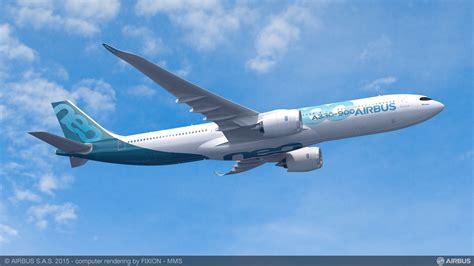
The Airbus A330neo represents a calculated and technologically sophisticated response to evolving airline demands and fierce market competition. As a refined successor to the A330ceo, the A330neo is Airbus’s wide-body answer to the Boeing 787 Dreamliner. Designed for superior fuel efficiency, enhanced passenger experience, and operational commonality, the aircraft exemplifies Airbus’s ability to adapt legacy platforms to meet next-generation standards without reinventing the wheel.
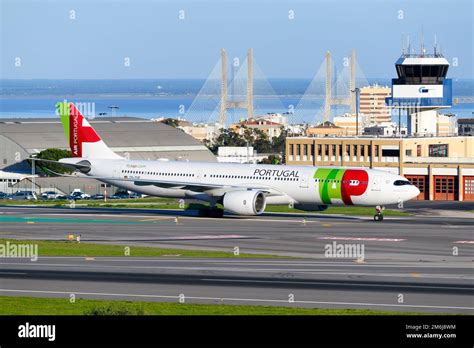
With over 384 orders and 155 deliveries as of March 2025, the A330neo has earned its place among long-haul aircraft by offering airlines a balance of modern efficiency and proven reliability. Introduced into service by TAP Air Portugal on 15 December 2018, the A330neo family—comprising the A330-800 and A330-900—caters to diverse route structures and operator profiles.
Origins: Re-Engineering a Classic for the 21st Century
The conceptual birth of the A330neo was driven by mounting pressure from Boeing’s 787 program and explicit requests from major low-cost and full-service airlines, including AirAsia X. Airbus initially considered re-engining as early as the late 2000s, but formal launch came on 14 July 2014 at the Farnborough Airshow. With a focus on achieving 12–15% fuel burn reduction, the A330neo incorporated not just new Rolls-Royce Trent 7000 engines but also composite sharklets that improved aerodynamic efficiency by an additional 2%.
What set the A330neo apart was its clever balance of innovation and commonality. Airbus retained 95% parts commonality with the A330ceo, reducing certification time and training costs for existing operators. The A330neo wasn’t a revolution—it was an evolutionary leap built with surgical precision.
Program Execution: Timelines, Delays, and Global Shocks
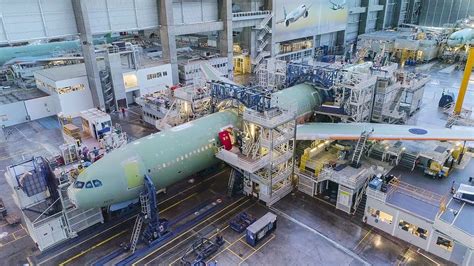
Developed on a relatively conservative $2 billion budget, Airbus proceeded quickly. By September 2015, the first center wingbox was assembled, and final assembly for the A330-900 commenced that same month in Toulouse. However, the program wasn’t immune to industrial challenges. Engine integration delays pushed the maiden flight to 19 October 2017, and service entry was deferred to December 2018.
Compounding delays came in 2020 with the onset of the COVID-19 pandemic, which collapsed international air traffic and prompted Airbus to cut production rates to just 2 aircraft per month. The A330neo weathered these disruptions better than expected, aided by its mid-range focus and appeal to lean, long-haul carriers.
Flight Test and Certification: Rigorous Trials Across Extremes
Airbus conducted one of the most exhaustive certification programs in its wide-body history. The A330neo test campaign involved three prototypes and a production-standard aircraft, racking up over 1,400 hours of flight time. Tests included ETOPS validation, flutter trials, extreme weather exposure, and automated landing cycles.
Certification milestones followed a structured cadence:
- EASA approval for A330-900: 26 September 2018
- EASA approval for A330-800: 13 February 2020
- CAAC (China) approval: 13 January 2025
This global certification allowed Airbus to confidently market the A330neo to a diverse clientele, including state-run carriers and leasing giants in Asia.
Variants: Two Fuselage Options, One Unified Philosophy
The A330neo family includes two primary models:
- A330-900: Based on the A330-300 fuselage, it offers a 7,200 nautical mile range and standard seating for 287 passengers, expandable to 460 in high-density layouts. It launched with TAP Air Portugal.
- A330-800: Derived from the A330-200, it offers extended range at 8,150 nautical miles and a standard capacity of 257 passengers. The first customer was Kuwait Airways.
In addition, Airbus has proposed special variants such as the A330 MRTT+ (aerial refueling tanker) and the ACJ330neo (corporate jet configuration), both of which exploit the platform’s versatility and range.
Market Penetration: Operators and Orders by 2025
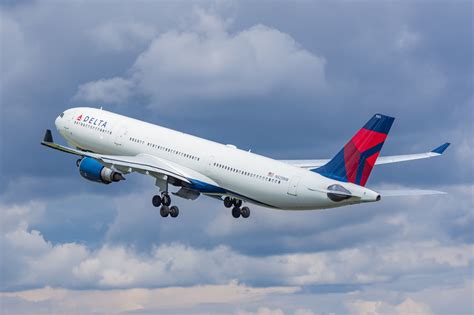
As of March 2025, the A330neo has been adopted by 21 global operators, with major stakeholders including:
- Delta Air Lines (33 aircraft)
- TAP Air Portugal (19)
- Condor (18)
- ITA Airways (11)
- Cebu Pacific (11)
In total, Airbus has logged 384 orders (372 for A330-900, 12 for A330-800), with 229 jets still on backlog. While the -900 has dominated orders, the -800 fills a critical role for ultra-long-haul missions in thinner markets.

Design Advantages: Efficiency, Comfort, and Affordability
The A330neo’s design choices serve three strategic pillars: operational efficiency, passenger comfort, and financial accessibility.
At the core of its performance is the Rolls-Royce Trent 7000 engine, generating 68,000 to 72,000 pounds of thrust. This next-gen turbofan is tuned specifically for the A330neo’s mission profile, optimizing both cruise performance and fuel burn.
Other major enhancements include:
- Sharklets adapted from the A350, improving lift-to-drag ratios.
- Cabin improvements like the Airspace by Airbus interior, Space-Flex galleys, and Smart-Lav lavatories, which increase usable seating without compromising comfort.
- Commonality with the A330ceo, reducing training and spares costs.
Combined, these features yield a 14% per-seat fuel cost reduction, a critical metric for airlines operating thin long-haul routes or balancing low-cost models.
Specifications Snapshot: Key Technical Highlights
- Engines: 2 × Rolls-Royce Trent 7000
- Maximum Takeoff Weight (MTOW): Up to 251 tonnes
- Cruise Speed: Mach 0.82 to 0.86
- Range: 7,200 nmi (A330-900), 8,150 nmi (A330-800)
- Cabin Width: 5.26 meters
- Typical Seating: 257–287 passengers (max 465)
These figures place the A330neo firmly within the medium-to-long haul category, offering flexibility and efficiency in key intercontinental corridors.
Strategic Positioning: Boeing 787 Rival with a Different Value Equation
While the Boeing 787 Dreamliner is often viewed as the technological benchmark in this space, the A330neo competes by offering airlines a lower capital cost, greater fleet continuity, and nearly equivalent efficiency in the right missions. Airlines not looking to overhaul pilot training programs or support infrastructure have found the A330neo’s value proposition difficult to ignore.
Whereas the 787 is a clean-sheet design, the A330neo thrives on its modular improvements, including fewer maintenance surprises and better parts availability. This positioning has made it a compelling option for operators in Asia, Europe, and the Americas seeking dependable performance without the upfront financial shock.
Conclusion: A Future-Proofed Legacy Jet
The Airbus A330neo may not wear the badge of radical innovation, but in many ways, that is its greatest strength. It takes a proven airframe and equips it with the technology, economics, and passenger appeal required for the next generation of global travel. In an era defined by fluctuating demand, climate scrutiny, and narrow profit margins, the A330neo is built not just to fly—but to thrive.
Its success among flagship carriers like Delta and TAP, alongside its adoption by up-and-coming low-cost long-haul operators, demonstrates its universal appeal. As Airbus continues refining its production strategy post-pandemic and expanding into markets like China and the Middle East, the A330neo stands ready to solidify its role as the smart long-haul choice in a world of shifting aviation economics.