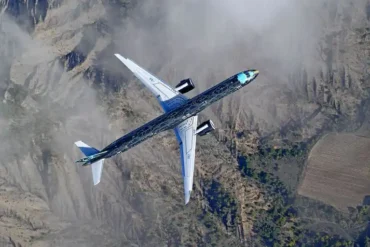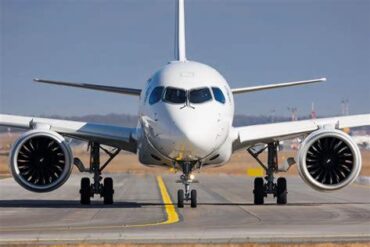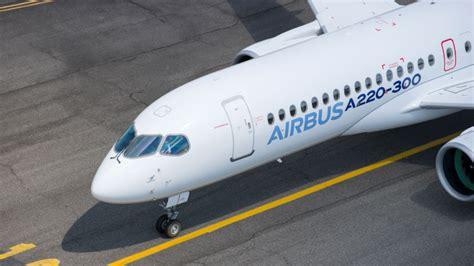
The Airbus A220 is not just a success story in modern aviation — it is a strategic revolution that reshaped the 100–150 seat aircraft market. Born as the Bombardier CSeries, the aircraft’s journey from an ambitious Canadian gamble to a globally celebrated Airbus product exemplifies the power of innovation, resilience, and strategic partnership. With exceptional performance metrics, cutting-edge design features, and growing operator enthusiasm, the A220 has firmly established itself as a leader in its segment.
A Bold Vision: Origins of the A220 Program
The story of the A220 began in the late 1990s, as Bombardier Aerospace sought to break beyond regional aircraft and challenge entrenched players like Boeing and Airbus in the narrow-body market. Bombardier’s initial concept, the BRJ-X, aimed to fill the 85–110 seat niche, but faced market and technical headwinds. By 2004, focus shifted to a cleaner sheet design — one that would become the CSeries — with a bold promise: 20% lower operating costs than legacy aircraft like the DC-9, Boeing 737 Classic, and BAe 146.
Bombardier envisioned two variants: the CS100 and the CS300, later rebranded as the A220-100 and A220-300. The company poured billions into R\&D, pursued partnerships with global suppliers, and selected the newly developed Pratt & Whitney PW1500G geared turbofan engine to ensure superior fuel efficiency.
Design Philosophy: Advanced, Efficient, Passenger-Centric
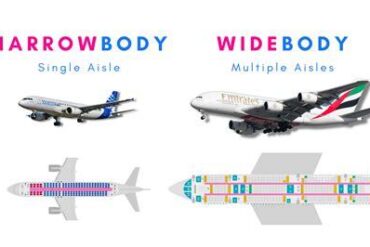
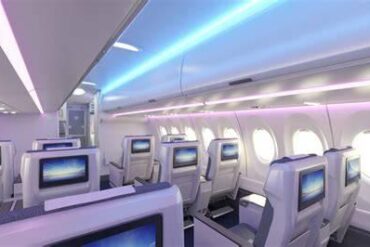
The A220’s engineering reflects a no-compromise philosophy centered on aerodynamic refinement, fuel efficiency, and passenger comfort. Its carbon composite wings, aluminum-lithium fuselage, and fly-by-wire flight control system embody the latest advances in aerospace design. Unlike most narrow-bodies, the A220 features a five-abreast cabin layout, delivering unmatched passenger comfort in its class — larger windows, more headroom, and wider seats.
The A220-100 accommodates 108–133 passengers, while the longer A220-300 stretches capacity to 130–160, both with ranges exceeding 3,400 nautical miles. The aircraft offers quieter engines, reducing community noise footprints, while consuming significantly less fuel: up to 25% better than older generation jets.
Development Hurdles and Technological Breakthroughs
Bombardier’s path was anything but smooth. From 2005 to 2016, the CSeries program encountered significant delays, engine issues, and supplier setbacks. First flight of the CS100 occurred in September 2013, after years of delay. During testing, an uncontained engine failure in 2014 halted progress, followed by software reconfigurations and aerodynamic retests.
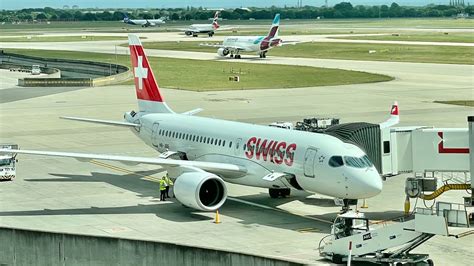
However, the results of this rigorous process paid off. Upon delivery, both aircraft exceeded performance expectations. airBaltic and Swiss, the early launch customers, reported exceptional reliability and lower than anticipated fuel burn. In revenue service, dispatch reliability reached 99.9%, showcasing the aircraft’s maturity and operational robustness.
Market Disruption and Competitive Tensions
The success of the A220 rattled competitors. It directly challenged Boeing’s 737 MAX 7 and Embraer’s E2 series, delivering superior range, better economics, and higher passenger satisfaction. Boeing, threatened by Bombardier’s Delta order in 2016, initiated a dumping complaint with the U.S. International Trade Commission, alleging that the CSeries was sold below cost due to Canadian government subsidies.
While the U.S. Department of Commerce proposed massive tariffs (nearly 300%), the case was ultimately dismissed. In the wake of this, Bombardier formed a joint venture with Airbus in 2017, ceding a 50.01% controlling stake in exchange for market reach, supply chain leverage, and credibility. The aircraft was officially rebranded the Airbus A220 in July 2018, breathing new life into the program.
Airbus Partnership: The Turning Point
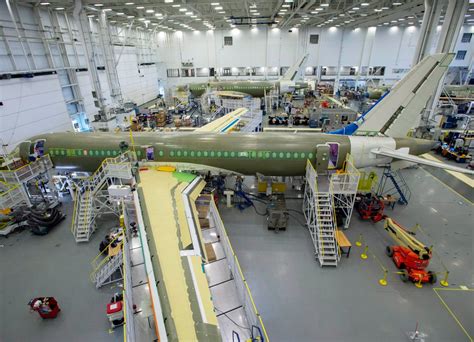
Airbus’s acquisition of the CSeries program fundamentally changed its trajectory. Renamed Airbus Canada Limited Partnership (ACLP) and headquartered in Mirabel, Quebec, the A220 became Airbus’s only commercial program managed outside Europe. Airbus brought supply chain clout, global marketing strength, and expanded production capability.
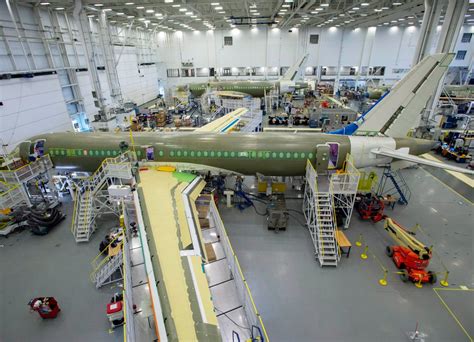
The A220’s final assembly lines (FALs) are now in Mirabel and Mobile, Alabama, with production ramping up significantly since 2020. In 2024, Airbus extended its commitment to the Canadian government, ensuring Quebec’s manufacturing leadership and securing thousands of high-value aerospace jobs.
Performance in Service: What Operators Are Saying
Airlines operating the A220 consistently highlight the aircraft’s operational versatility, fuel savings, and passenger appeal. Delta Air Lines, JetBlue, Air France, and airBaltic praise the A220’s performance on both short regional and longer transcontinental routes.
Pilots note the A220’s intuitive cockpit design, common type rating for both variants, and fly-by-wire responsiveness. Airlines report daily utilization exceeding 12 flight hours, with typical turnaround times under 30 minutes. Passengers appreciate the quiet cabin, larger overhead bins, and superior seat width, making the A220 a favorite even among premium carriers.
airBaltic claims that the A220-300 burns 20% less fuel than the Airbus A319ceo, while Swiss has used the A220-100 for steep approaches into London City Airport, something few jets its size can perform reliably. These metrics underscore the A220’s unique position: small jet economics with big jet capabilities.
Business Jet Variant: The ACJ TwoTwenty
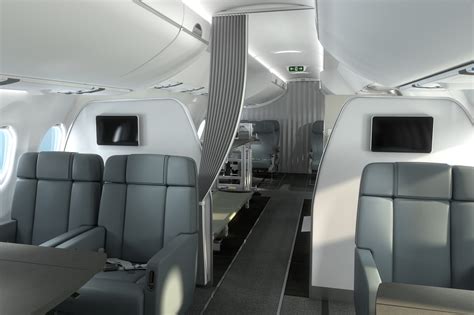
In 2020, Airbus launched the ACJ TwoTwenty, a business jet variant of the A220-100. Designed for elite travel, it offers 6,000 nmi range, a spacious 787 ft² cabin, and luxurious interiors tailored for heads of state, corporate leaders, and ultra-high-net-worth individuals. The ACJ TwoTwenty brings long-range intercontinental travel to a new class of private flyers with far greater fuel efficiency and cabin volume than traditional large-cabin bizjets.
Production Expansion and Future Outlook
As of April 2025, over 900 orders have been placed and 413 aircraft delivered. Airbus is targeting production of 14 A220s per month by the mid-2020s, with Quebec and Alabama sharing output. By leveraging Airbus’s purchasing power, the program has achieved supply chain cost reductions of up to 30%.
The A220 now commands over 55% of the 100–150 seat market, and analysts forecast a long-term market of more than 6,000 aircraft in this segment. The aircraft’s versatility — suitable for regional routes, point-to-point transcons, and constrained airports — ensures its long-term relevance.
In economic terms, the A220 has already generated an estimated US\$40 billion in economic activity in Canada, supporting a robust ecosystem of suppliers, engineers, and aerospace professionals.
Conclusion: The Definitive Aircraft for the 21st Century
The Airbus A220 represents a triumph of persistence, design excellence, and strategic realignment. What began as a risky venture by Bombardier is now a cornerstone of Airbus’s global strategy, reshaping the landscape for small narrow-body aircraft. It is more than a product — it is a proof point that innovation and vision, when executed well, can redefine an entire segment of aviation.
For airlines seeking fuel-efficient, comfortable, and flexible aircraft, and for passengers desiring a modern flying experience, the A220 stands as the new benchmark. Its quiet engines, elegant cabin, and excellent economics will continue to win customers and routes for decades to come — and in doing so, the A220 has claimed its rightful place in aviation history.