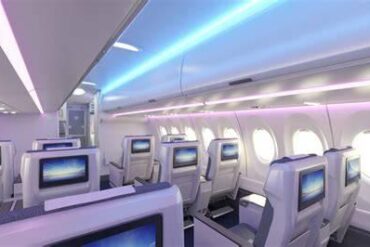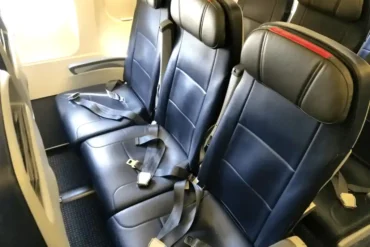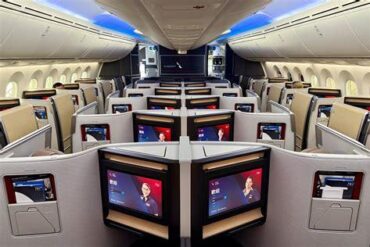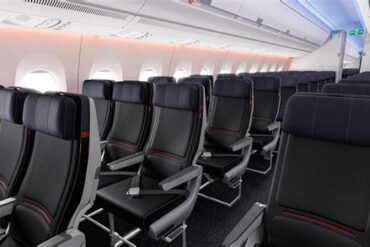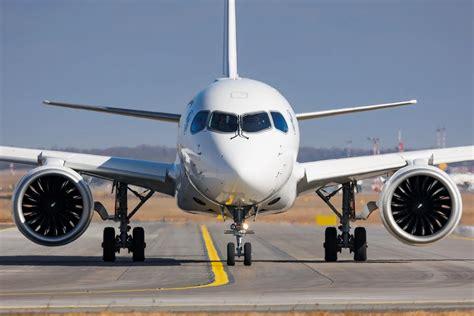
The Airbus A220 has always been recognized as one of the most passenger-friendly narrowbody aircraft in commercial aviation. Spacious seats, oversized windows, generous overhead bins, and one of the quietest cabins in its class have made it a favorite among frequent travelers since its introduction. Yet Airbus is now pursuing a far more ambitious objective. Rather than merely improving an already successful aircraft, the European manufacturer is quietly redefining what passengers should expect from long-haul narrowbody flying.
A seemingly routine supplier announcement in June 2026 revealed just how serious Airbus has become about this strategy. The company’s new long-term agreement with 3M to provide advanced thermal and acoustic insulation for the Airbus A220 may have attracted little attention outside aerospace circles, but it represents another deliberate step toward transforming the aircraft into something remarkably different. Instead of focusing exclusively on range, fuel efficiency, or operating economics, Airbus is investing heavily in the invisible aspects of cabin comfort that passengers experience during every minute of a six- to eight-hour journey.
This approach reflects a broader shift taking place throughout commercial aviation. Airlines are increasingly opening “long-thin” routes—city pairs with sufficient demand for nonstop service but insufficient traffic to justify deploying widebody aircraft. These routes require an aircraft that combines long-range capability with exceptional passenger comfort. Airbus believes the A220 can fill that niche, not by becoming a miniature widebody, but by delivering many of the comfort characteristics travelers associate with twin-aisle aircraft.
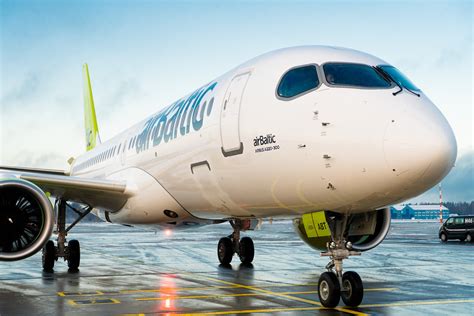
The Airbus A220 Has Grown Far Beyond Its Original Mission
When the aircraft first entered development as Bombardier’s CSeries, its intended role was relatively straightforward. It would replace aging regional jets while competing against smaller variants of the Boeing 737 and Airbus A320 family. Efficiency, operating costs, and passenger comfort were priorities, but nobody envisioned the aircraft regularly operating flights approaching eight hours.
Everything changed after Airbus acquired majority control of the CSeries program in 2018 and renamed it the Airbus A220.
With Airbus’ global sales network, engineering resources, and customer relationships, airlines quickly began viewing the aircraft differently. Its exceptional fuel efficiency, modern aerodynamics, lightweight composite construction, Pratt & Whitney geared turbofan engines, and surprisingly long range created opportunities that extended far beyond traditional regional markets.
Instead of simply replacing older narrowbodies, the A220 began opening entirely new routes.
Rather than funneling passengers through congested international hubs, airlines discovered they could profitably connect secondary cities directly. Markets that could never consistently support a 300-seat widebody suddenly became viable with a 130- to 150-seat aircraft offering comparable nonstop convenience.
This transformation has fundamentally altered how airlines think about network planning. Instead of asking whether a route can fill a widebody, carriers increasingly ask whether a smaller aircraft can provide daily nonstop service while maintaining healthy yields.
Why Long-Thin Routes Are Becoming Aviation’s New Battleground
The North Atlantic has traditionally been dominated by large aircraft carrying hundreds of passengers between major global hubs.
That model is gradually evolving.
Passengers increasingly prefer nonstop service over connections, even when traveling between smaller metropolitan areas. At the same time, airlines want greater flexibility, lower financial risk, and aircraft capable of generating profits without requiring exceptionally high passenger loads.
Long-thin routes perfectly satisfy these objectives.
Instead of operating a widebody only during peak seasons, airlines can maintain year-round service with smaller aircraft whose capacity better matches actual demand.
The economic advantages are significant.
A smaller aircraft reduces trip costs, lowers fuel consumption, minimizes financial exposure during weaker travel periods, and provides airlines with greater scheduling flexibility.
For passengers, the benefits are equally compelling.
Nonstop flights eliminate unnecessary transfers, reduce total travel time, decrease missed-connection risk, and create a far smoother travel experience.
As these routes become increasingly common, however, airlines face a new challenge.
Passengers flying seven or eight hours expect far more than simply reaching their destination efficiently.
Comfort becomes part of the product.
Passenger Comfort Matters More Than Ever on Eight-Hour Flights
Cabin comfort is often underestimated because its benefits are difficult to quantify.
Passengers rarely purchase tickets specifically because an aircraft offers superior insulation.
Instead, they remember how they felt after landing.
Were they exhausted?
Did they struggle to sleep?
Could they comfortably work on a laptop?
Was conversation possible without constantly raising their voices?
Did the cabin remain consistently comfortable throughout the flight?
These seemingly subtle factors become increasingly important once flight times exceed six hours.
Noise accumulates.
Vibration becomes noticeable.
Temperature fluctuations become irritating.
Fatigue builds gradually.
Widebody aircraft have traditionally maintained an advantage precisely because their larger cabins naturally provide a calmer environment.
Airbus cannot change the physical width of the A220’s fuselage.
Instead, it is reducing the sensory differences passengers experience throughout the journey.
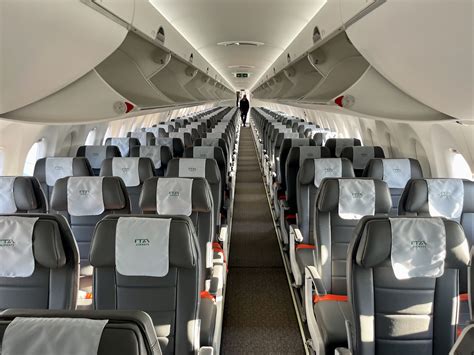
The Airbus-3M Partnership Is About More Than Insulation
The June 2026 agreement between Airbus and 3M illustrates how modern aircraft development increasingly focuses on passenger perception rather than visible hardware.
Most travelers will never notice the insulation hidden beneath cabin panels.
Yet they will immediately notice its effects.
The advanced materials supplied by 3M are designed to improve two critical aspects of the passenger experience.
First, enhanced acoustic insulation reduces the amount of engine, airflow, and structural noise reaching the cabin.
Second, improved thermal insulation creates a more stable cabin climate by reducing heat transfer through the aircraft’s fuselage.
Together, these improvements help create a quieter, more relaxing cabin throughout long-duration flights.
Importantly, Airbus is not correcting a weakness.
The A220 already ranks among the quietest single-aisle aircraft in service.
Instead, Airbus is strengthening one of the aircraft’s greatest competitive advantages.
Rather than chasing competitors, it is widening the gap.
Why Cabin Noise Has Become a Competitive Advantage
Commercial aviation has traditionally competed on measurable metrics.
Fuel burn.
Operating cost.
Range.
Payload.
Maintenance expenses.
Today, another factor is becoming increasingly influential.
Silence.
Numerous studies have shown that continuous background noise contributes directly to passenger fatigue.
Lower cabin noise improves sleep quality, reduces stress, makes conversations easier, enhances productivity, and creates an overall perception of luxury.
These psychological effects influence how travelers evaluate an airline long after the flight ends.
The Pratt & Whitney PW1500G geared turbofan engines already provide the A220 with one of the quietest operating environments in commercial aviation.
Their gearbox allows the fan and turbine to rotate at optimal speeds independently, reducing both external and internal noise.
Combined with the aircraft’s modern airframe design, this produces a remarkably peaceful cabin.
The new insulation technologies reinforce that advantage by preventing even more engine and structural noise from reaching passengers.
Instead of relying on one technological breakthrough, Airbus is layering multiple incremental improvements together.
The cumulative result is greater than any individual enhancement.
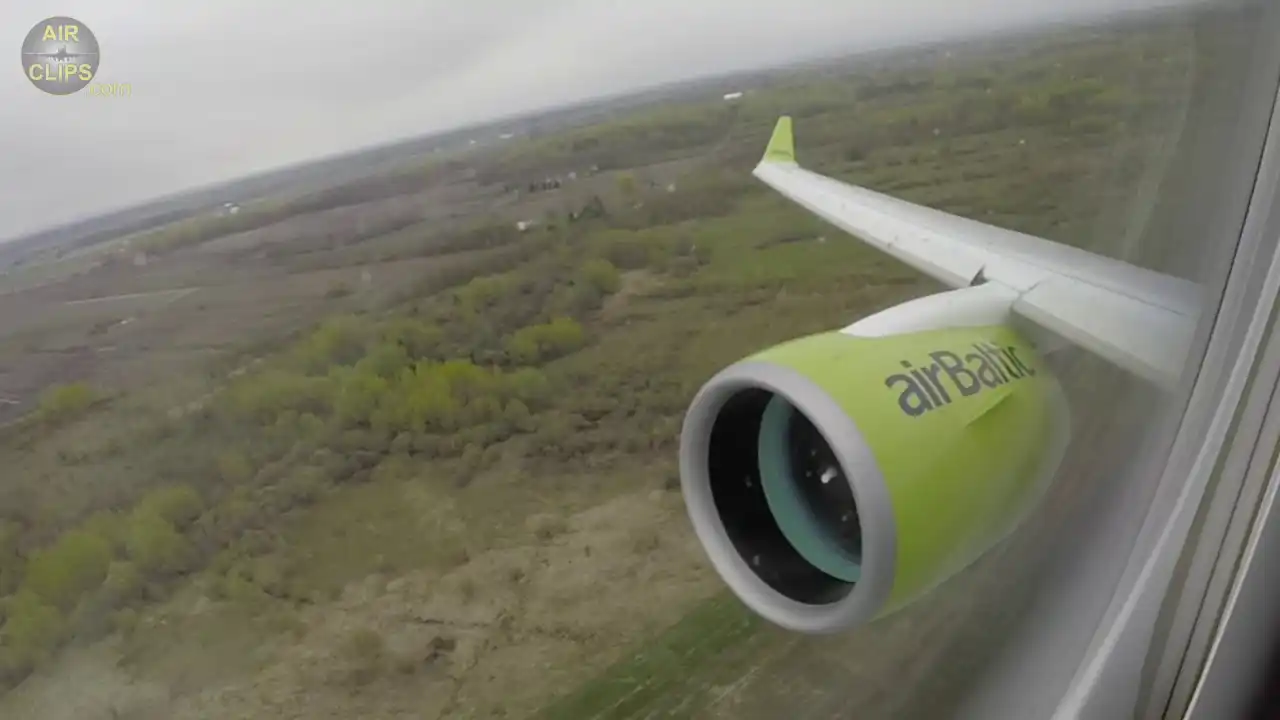
Airlines Are Already Betting on the A220’s Expanding Role
Several major airlines have already demonstrated confidence in the A220’s long-term potential.
Delta Air Lines operates the world’s largest A220 fleet, integrating the aircraft across domestic and international networks while steadily increasing its operational flexibility.
JetBlue has incorporated the A220 alongside the A321LR and A321XLR as part of a broader strategy emphasizing passenger experience on premium leisure and transatlantic markets.
Breeze Airways has built much of its business around connecting underserved city pairs that larger aircraft cannot economically serve.
Meanwhile, airBaltic has become the world’s first airline operating an all-A220 fleet, demonstrating the aircraft’s remarkable versatility across varying route lengths.
Although each airline follows a different business model, all recognize the same underlying opportunity.
The future belongs to aircraft capable of combining efficiency with exceptional passenger comfort.
Beyond Comfort: Operational Benefits Hidden Inside the Aircraft
The benefits of Airbus’ insulation strategy extend well beyond passenger satisfaction.
Thermal insulation directly affects aircraft efficiency.
By reducing heat transfer between the outside atmosphere and cabin interior, environmental control systems require less energy to maintain comfortable temperatures.
Although the savings from any individual flight may appear modest, they accumulate significantly over tens of thousands of flight hours.
Long-haul operations amplify these gains.
Environmental systems remain active for extended periods, making thermal efficiency increasingly valuable.
Additionally, durable insulation materials reduce long-term maintenance requirements.
Since cabin insulation is deeply integrated into the aircraft structure, reliability becomes essential.
Operators prefer solutions capable of performing consistently throughout decades of commercial service without requiring frequent replacement.
For airlines balancing operating costs with premium customer expectations, these hidden efficiencies contribute directly to overall profitability.
Narrowbody Economics, Widebody Perception
Perhaps the most interesting aspect of Airbus’ strategy is that it focuses on perception as much as engineering.
Passengers rarely compare aircraft specifications.
They compare experiences.
If travelers finish an eight-hour A220 flight feeling less tired than expected, the aircraft succeeds regardless of whether it technically remains a narrowbody.
This represents a subtle but powerful shift.
Instead of asking whether the A220 can match a widebody’s physical dimensions, Airbus asks whether it can deliver a similarly satisfying travel experience.
Many comfort characteristics have surprisingly little relationship with cabin width.
Lower noise.
Stable temperatures.
Large windows.
Higher ceilings.
Spacious seat design.
Modern lighting.
Reduced vibration.
These collectively shape passenger perception far more than a single measurement like fuselage diameter.
That philosophy allows Airbus to narrow the experiential gap without fundamentally redesigning the aircraft.
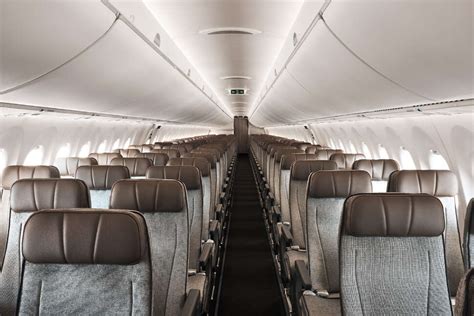
The A220 Is Occupying a Unique Position in the Market
The global single-aisle market has become increasingly polarized.
On one side sit larger aircraft such as the Airbus A321LR and A321XLR, offering impressive range and higher seating capacity.
On the other remain traditional widebodies capable of carrying hundreds of passengers across oceans.
The A220 occupies a unique middle ground.
It cannot match the passenger capacity of larger narrowbodies.
Nor can it replicate the spacious cabins of twin-aisle aircraft.
Instead, it offers something neither category delivers as effectively.
An aircraft optimized for markets where demand is limited but passenger expectations remain exceptionally high.
This positioning gives Airbus an increasingly valuable competitive identity.
Rather than competing solely on economics, the A220 competes on quality.
That distinction may prove decisive as airlines continue expanding nonstop service between secondary international destinations.
Airbus Is Quietly Redefining Long-Haul Narrowbody Flying
The new partnership between Airbus and 3M is far more significant than a routine supplier agreement.
It demonstrates a long-term commitment to refining every aspect of the A220’s passenger experience as the aircraft assumes increasingly demanding missions.
Each improvement—whether quieter cabins, better thermal management, improved environmental control, or enhanced long-term durability—reinforces Airbus’ broader vision.
The company is not attempting to transform the A220 into a miniature widebody.
Instead, it is carefully eliminating the disadvantages traditionally associated with narrowbody aircraft on long-haul flights.
As airlines increasingly evaluate aircraft based not only on operating economics but also on customer satisfaction, premium revenue, and passenger fatigue, these refinements become strategic investments rather than engineering details.
The Airbus A220 has already established itself as one of the most advanced narrowbody aircraft ever built. Its next evolution is even more ambitious. By continuously improving the invisible elements that define how passengers actually experience a flight, Airbus is quietly creating a new category of long-haul aircraft—one that combines narrowbody economics with a cabin environment increasingly approaching the comfort standards travelers have long associated with widebody jets. That transformation may ultimately become one of the most influential competitive advantages in the next generation of transatlantic aviation.