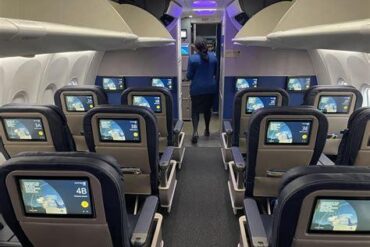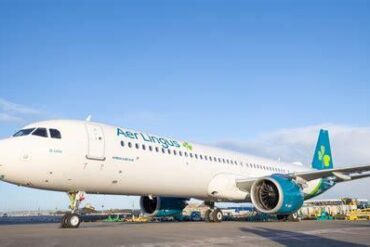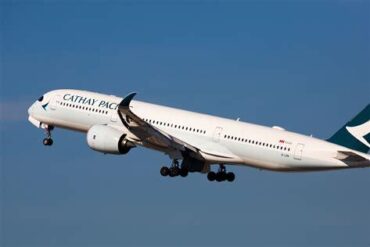
The idea of crossing the Atlantic Ocean on a narrowbody aircraft once seemed improbable. For decades, long-haul travel demanded massive widebody jets—machines like the Boeing 777 or Airbus A330 designed specifically for intercontinental journeys. Yet aviation engineering rarely stands still. With the arrival of the Airbus A321XLR, airlines are quietly reshaping the economics and geography of long-haul travel. Routes that once required large aircraft and high passenger demand can now be operated by a single-aisle jet capable of flying nearly 10 hours nonstop across the Atlantic.
This aircraft is not simply an incremental upgrade. It represents a structural shift in how airlines deploy fleets, open new routes, and manage financial risk. The XLR—short for “Extra Long Range”—extends the range of the A321 family to roughly 4,700 nautical miles, allowing carriers to connect mid-sized cities that previously lacked viable nonstop service. In 2026, that capability is already transforming transatlantic networks.
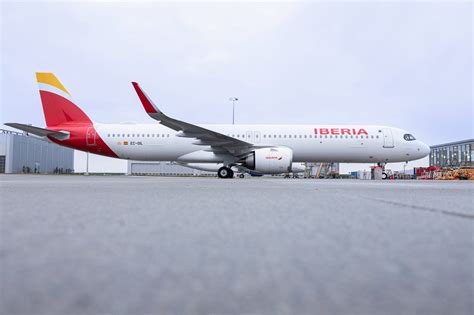
By early March, American Airlines became the first North American carrier to schedule transatlantic flights using the Airbus A321XLR, marking a symbolic turning point for the aircraft’s global rollout. Soon after, other operators including Air Canada, Aer Lingus, and Iberia began preparing their own deployments, each targeting markets where the XLR’s long legs and lower operating costs could unlock entirely new travel patterns.
Why the Airbus A321XLR Changes the Transatlantic Equation
The secret behind the A321XLR’s disruptive potential lies in its efficiency. Traditional widebody aircraft are expensive to operate and require substantial passenger demand to remain profitable. Filling 250–300 seats every day between two cities is a logistical challenge, especially outside the busiest global hubs.
The A321XLR solves this dilemma by offering a much smaller capacity—typically around 180 seats—while maintaining intercontinental range. This dramatically reduces the financial risk of launching new routes. Airlines can test markets that previously could not sustain widebody service, connecting secondary cities directly rather than funneling passengers through major hubs.
This shift aligns perfectly with evolving traveler preferences. Many passengers increasingly prefer direct flights over connecting itineraries, even if the aircraft is smaller. A single nonstop flight from Dublin to Nashville or Madrid to San Juan saves hours of travel time and eliminates the uncertainty of tight connections.
For airlines, the economic math is compelling. Lower trip costs, combined with strong demand for nonstop travel, mean carriers can explore routes that were once dismissed as commercially impossible.
The Longest Airbus A321XLR Transatlantic Flights in 2026
As airlines experiment with the XLR’s capabilities, several routes have emerged as particularly impressive demonstrations of the aircraft’s endurance. The longest scheduled transatlantic flights approach the 10-hour mark, pushing the boundaries of what a narrowbody jet can achieve.
Among the most notable routes in 2026 are:
- Madrid – Washington Dulles (Iberia): up to 9 hours 40 minutes
- Madrid – Santo Domingo (Iberia): up to 9 hours 35 minutes
- Dublin – Nashville (Aer Lingus): up to 9 hours 20 minutes
- Madrid – New York JFK (Iberia): up to 9 hours 15 minutes
- Dublin – Barbados (Aer Lingus): up to 9 hours 10 minutes
- Madrid – San Juan (Iberia): up to 9 hours 10 minutes
- Copenhagen – Toronto (Air Canada): about 9 hours
- Madrid – Toronto (Iberia): about 9 hours
- Madrid – Recife (Iberia): about 9 hours
- Madrid – Fortaleza (Iberia): about 8 hours 55 minutes
These block times—measured from chocks-off to chocks-on—highlight the remarkable endurance of the A321XLR. For comparison, earlier narrowbody aircraft typically struggled to maintain routes longer than six or seven hours.
Iberia and Aer Lingus Lead the XLR Expansion
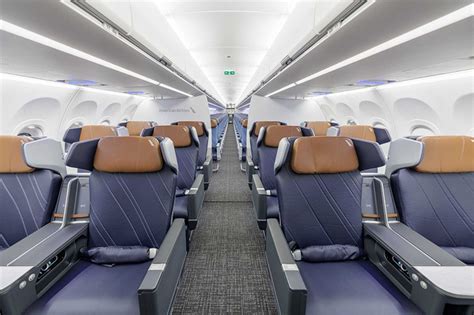
Two airlines have emerged as particularly enthusiastic adopters of the aircraft: Iberia and Aer Lingus. Their networks reveal how the XLR fits naturally into airlines that specialize in connecting Europe with North America and the Caribbean.
Iberia’s strategy revolves around transforming Madrid into a highly flexible transatlantic hub. With the A321XLR, the airline can connect Spain’s capital to destinations that would not justify a large widebody aircraft. Routes such as Madrid–Recife and Madrid–Fortaleza demonstrate this philosophy perfectly. These Brazilian cities generate steady travel demand, yet historically lacked the passenger volume required for daily widebody service.
Aer Lingus has taken a similar approach from Dublin, using the aircraft to link Ireland directly with emerging North American markets. Its route to Nashville stands out as one of the longest narrowbody transatlantic flights currently scheduled. Meanwhile, the airline’s new service to Barbados demonstrates the aircraft’s ability to serve leisure destinations with seasonal demand fluctuations.
Air Canada’s Unique Winter Strategy
While Iberia and Aer Lingus dominate the longest-route rankings, Air Canada is deploying the XLR in a different way. Instead of focusing purely on new destinations, the airline is using the aircraft to stabilize routes that previously struggled with seasonal demand.
A prime example is the Copenhagen–Toronto route, which has existed since 2010 but historically relied on widebody aircraft during the busy summer months. Operating such a large aircraft during winter, however, was financially risky due to reduced passenger demand.
The A321XLR changes that equation. With fewer seats and lower operating costs, the route can now be maintained year-round, providing consistent connectivity between Denmark and Canada while minimizing financial exposure during slower travel periods.
This strategy highlights one of the aircraft’s most underrated strengths: network resilience. Instead of launching entirely new routes, airlines can maintain existing ones more efficiently.
Routes That Nearly Made the Top Ten
The list of long A321XLR routes could easily be longer. Many flights narrowly missed the top rankings by just a few minutes of block time, illustrating how close numerous city pairs are to the aircraft’s operational limits.
Several routes clock in at approximately 8 hours 50 minutes, including:
- Iberia’s upcoming Madrid–Newark service
- Aer Lingus’ Dublin–Indianapolis route
Other near-contenders include Lyon–Montreal, Madrid–Boston, and Barcelona–New York JFK, each reaching around 8 hours 45 minutes.
These figures reveal an intriguing reality: the A321XLR’s sweet spot covers an enormous portion of the North Atlantic map. Dozens of city pairs now fall within comfortable operating range.
American Airlines and the Competitive Impact
American Airlines is also embracing the aircraft to strengthen its transatlantic network. The carrier currently plans several routes with the XLR, including services from New York JFK and Philadelphia to cities such as Barcelona, Edinburgh, Amsterdam, Lisbon, and Porto.
The airline’s longest expected flight will be Barcelona to New York JFK, with a maximum block time approaching 8 hours 45 minutes. This route carries particular strategic importance. American has served the market since 2008, but the service became seasonal in 2024 due to fluctuating demand.
Deploying the A321XLR allows the airline to restore year-round operations, improving its competitive position while reducing operational costs. The aircraft effectively restores routes that might otherwise disappear.
A New Era of Long-Haul Narrowbody Travel
The Airbus A321XLR represents something rare in aviation: a technological shift that quietly redraws the map. Instead of relying exclusively on giant aircraft flying between mega-hubs, airlines can now build thinner, more precise networks, connecting cities that were once separated by inconvenient layovers.
Passengers gain faster journeys and new nonstop options. Airlines gain flexibility, reduced risk, and the freedom to experiment with emerging markets. In the background, a single-aisle jet quietly stretches its wings across oceans that once belonged only to widebody giants.
A decade ago, a 10-hour narrowbody flight across the Atlantic would have sounded like science fiction. Today it is simply another line in the airline schedule—a reminder that aviation progress rarely arrives with fireworks, but with a subtle shift in what suddenly becomes possible.